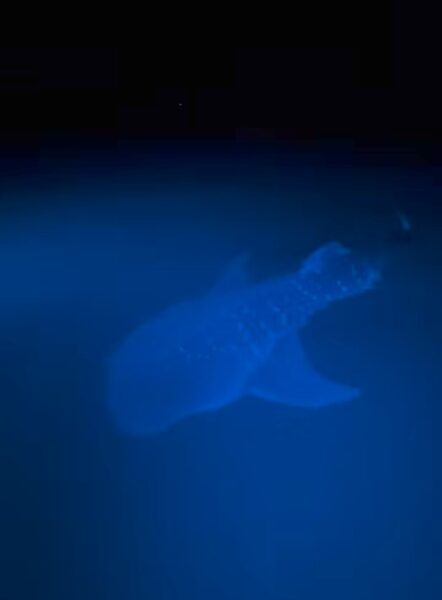
A whale shark was caught on camera over the weekend in the waters of Medina, Misamis Oriental, thrilling tourists and resort owners alike.
In a video uploaded Saturday, August 2, by tourist Donna Pepito-Lim of Cebu, she and her companions filmed the whale shark, known locally as a butanding, swimming near their boat.
“When the sea decides to blow your mind. Hello, whale shark! Please excuse my voice,” Lim posted on her Facebook account. As of this posting, the video had garnered 23,000 views and 89 shares.
Jose Mari Pelaez, a former vice governor and one of the owners of the resort in Medina, said the whale shark’s presence is a sign of a protected and healthy marine environment.
“The resort has endeavored to protect the corals and marine resources … by making it a marine protected area. The appearance of a whale shark signifies a healthy marine environment of Duka Bay,” Pelaez said.
According to Pelaez, the resort is a popular diving destination for both local and international tourists and is also a habitat for turtles.
Dr. Josefino Bascug, a doctor in sustainable development studies with a background in integrated coastal resources management, said whale sharks are filter feeders that consume plankton, small fish and other microorganisms.
He explained that the coastal waters of Medina, like other areas in Northern Mindanao, offer a rich supply of these food sources, making it an attractive feeding ground.
Bascug added that the presence of whale sharks in Medina is often seasonal, indicating a migratory pattern linked to the availability of food. He said the seasonal appearance of the whale sharks “has sparked interest in developing ecotourism opportunities, allowing visitors to observe these magnificent creatures in their natural habitat.”
However, he emphasized that sustainable practices must be observed to minimize disturbance to the whale sharks and their environment.
Researchers at the Rufford Foundation, he said, are currently working to understand the whale sharks’ behavior, patterns and movements in the area through surveys and plankton analysis.