 Supplied photo
Training during this pandemic can be quite a challenge, fortunately, CIFS managed to smoothly adapt to the teaching and learning paradigms in the new normal. The lectures conducted by TESDA trainers are delivered fully online.
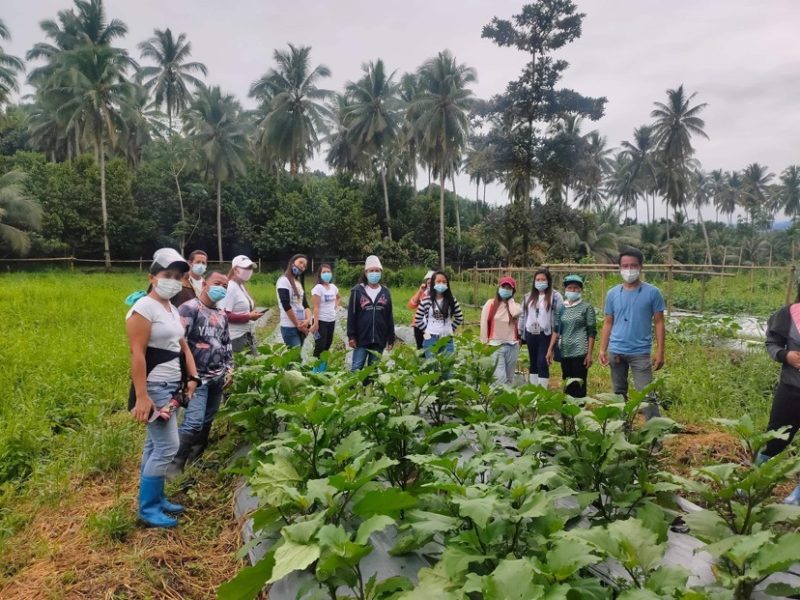
The setup allows the school to gather a minimal number of participants in an open space while also accommodating students who have access to the internet to attend the virtual lectures. Hands-on activities that require face to face classes are done in small batches that strictly follow a schedule. “Our school is adopting the blended learning approach which combines face-to-face, modular, and online. Our face-to-face activities are compliant to the requirements set by the Inter-Agency Task Force (IATF) for the Management of Emerging Infectious Diseases and adhere to the minimum health and safety protocols as mandated by IATF,” explains Cher.
“It is very convenient that there is an internet connection in the farm. Our trainers can easily conduct their pieces of training thru Zoom. They can also immediately provide feedback and answer questions from our participants during classes,” says Jay Lloyd Serencio, one of the facilitators of CIFS.
In the curriculum of the second batch of Organic Agriculture Production student-farmers, CIFS in partnership with @SM Foundation’s Kabalikat sa Kabuhayan (KSK) Program, integrated Smart’s Digital Farmers Program (DFP) 101 module. The DFP video courses can help the students enhance their digital skills which they can apply in their farming journey such as how to safely navigate and sell products online and how to use agriculture mobile applications endorsed by the Department of Agriculture.
“The Digital Farmers Program aims to ensure that our farmers do not get left behind by the digital revolution and that they can participate in the digital economy. In partnership with DA-ATI we at Smart train smallholder farmers on basic digital skills and how to make the internet and social media work for them to increase access to information and expand their market online,” shares Stephanie V. Orlino, AVP Smart Community Partnerships.
To enable farm schools like CIFS, the Philippines' largest integrated telco PLDT, and its wireless arm Smart are expanding their fixed and wireless networks across the country. As of December 2020, PLDT's extensive fiber infrastructure is currently more than 429,000 kilometers. This fiber infrastructure supports Smart's mobile networks, which now cover 96% of the population and is available in 95% of the country's cities and municipalities. Heeding the government's call to elevate the country's telecommunications industry and deliver world-class services, PLDT announced that it was prepared to invest between Php 88 billion and Php 92 billion this year to meet the requirements of its mobile and fixed-line customers. (PR)
Supplied photo
Training during this pandemic can be quite a challenge, fortunately, CIFS managed to smoothly adapt to the teaching and learning paradigms in the new normal. The lectures conducted by TESDA trainers are delivered fully online.
The setup allows the school to gather a minimal number of participants in an open space while also accommodating students who have access to the internet to attend the virtual lectures. Hands-on activities that require face to face classes are done in small batches that strictly follow a schedule. “Our school is adopting the blended learning approach which combines face-to-face, modular, and online. Our face-to-face activities are compliant to the requirements set by the Inter-Agency Task Force (IATF) for the Management of Emerging Infectious Diseases and adhere to the minimum health and safety protocols as mandated by IATF,” explains Cher.
“It is very convenient that there is an internet connection in the farm. Our trainers can easily conduct their pieces of training thru Zoom. They can also immediately provide feedback and answer questions from our participants during classes,” says Jay Lloyd Serencio, one of the facilitators of CIFS.
In the curriculum of the second batch of Organic Agriculture Production student-farmers, CIFS in partnership with @SM Foundation’s Kabalikat sa Kabuhayan (KSK) Program, integrated Smart’s Digital Farmers Program (DFP) 101 module. The DFP video courses can help the students enhance their digital skills which they can apply in their farming journey such as how to safely navigate and sell products online and how to use agriculture mobile applications endorsed by the Department of Agriculture.
“The Digital Farmers Program aims to ensure that our farmers do not get left behind by the digital revolution and that they can participate in the digital economy. In partnership with DA-ATI we at Smart train smallholder farmers on basic digital skills and how to make the internet and social media work for them to increase access to information and expand their market online,” shares Stephanie V. Orlino, AVP Smart Community Partnerships.
To enable farm schools like CIFS, the Philippines' largest integrated telco PLDT, and its wireless arm Smart are expanding their fixed and wireless networks across the country. As of December 2020, PLDT's extensive fiber infrastructure is currently more than 429,000 kilometers. This fiber infrastructure supports Smart's mobile networks, which now cover 96% of the population and is available in 95% of the country's cities and municipalities. Heeding the government's call to elevate the country's telecommunications industry and deliver world-class services, PLDT announced that it was prepared to invest between Php 88 billion and Php 92 billion this year to meet the requirements of its mobile and fixed-line customers. (PR)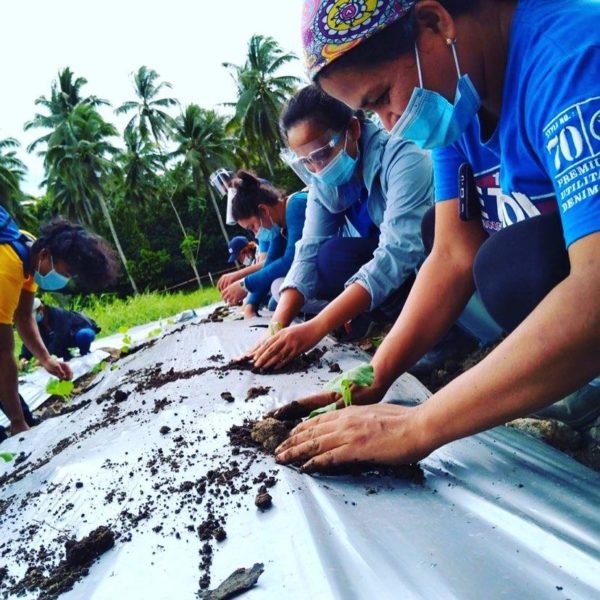 Supplied photo
Training during this pandemic can be quite a challenge, fortunately, CIFS managed to smoothly adapt to the teaching and learning paradigms in the new normal. The lectures conducted by TESDA trainers are delivered fully online.
The setup allows the school to gather a minimal number of participants in an open space while also accommodating students who have access to the internet to attend the virtual lectures. Hands-on activities that require face to face classes are done in small batches that strictly follow a schedule. “Our school is adopting the blended learning approach which combines face-to-face, modular, and online. Our face-to-face activities are compliant to the requirements set by the Inter-Agency Task Force (IATF) for the Management of Emerging Infectious Diseases and adhere to the minimum health and safety protocols as mandated by IATF,” explains Cher.
“It is very convenient that there is an internet connection in the farm. Our trainers can easily conduct their pieces of training thru Zoom. They can also immediately provide feedback and answer questions from our participants during classes,” says Jay Lloyd Serencio, one of the facilitators of CIFS.
In the curriculum of the second batch of Organic Agriculture Production student-farmers, CIFS in partnership with @SM Foundation’s Kabalikat sa Kabuhayan (KSK) Program, integrated Smart’s Digital Farmers Program (DFP) 101 module. The DFP video courses can help the students enhance their digital skills which they can apply in their farming journey such as how to safely navigate and sell products online and how to use agriculture mobile applications endorsed by the Department of Agriculture.
“The Digital Farmers Program aims to ensure that our farmers do not get left behind by the digital revolution and that they can participate in the digital economy. In partnership with DA-ATI we at Smart train smallholder farmers on basic digital skills and how to make the internet and social media work for them to increase access to information and expand their market online,” shares Stephanie V. Orlino, AVP Smart Community Partnerships.
To enable farm schools like CIFS, the Philippines' largest integrated telco PLDT, and its wireless arm Smart are expanding their fixed and wireless networks across the country. As of December 2020, PLDT's extensive fiber infrastructure is currently more than 429,000 kilometers. This fiber infrastructure supports Smart's mobile networks, which now cover 96% of the population and is available in 95% of the country's cities and municipalities. Heeding the government's call to elevate the country's telecommunications industry and deliver world-class services, PLDT announced that it was prepared to invest between Php 88 billion and Php 92 billion this year to meet the requirements of its mobile and fixed-line customers. (PR)
Supplied photo
Training during this pandemic can be quite a challenge, fortunately, CIFS managed to smoothly adapt to the teaching and learning paradigms in the new normal. The lectures conducted by TESDA trainers are delivered fully online.
The setup allows the school to gather a minimal number of participants in an open space while also accommodating students who have access to the internet to attend the virtual lectures. Hands-on activities that require face to face classes are done in small batches that strictly follow a schedule. “Our school is adopting the blended learning approach which combines face-to-face, modular, and online. Our face-to-face activities are compliant to the requirements set by the Inter-Agency Task Force (IATF) for the Management of Emerging Infectious Diseases and adhere to the minimum health and safety protocols as mandated by IATF,” explains Cher.
“It is very convenient that there is an internet connection in the farm. Our trainers can easily conduct their pieces of training thru Zoom. They can also immediately provide feedback and answer questions from our participants during classes,” says Jay Lloyd Serencio, one of the facilitators of CIFS.
In the curriculum of the second batch of Organic Agriculture Production student-farmers, CIFS in partnership with @SM Foundation’s Kabalikat sa Kabuhayan (KSK) Program, integrated Smart’s Digital Farmers Program (DFP) 101 module. The DFP video courses can help the students enhance their digital skills which they can apply in their farming journey such as how to safely navigate and sell products online and how to use agriculture mobile applications endorsed by the Department of Agriculture.
“The Digital Farmers Program aims to ensure that our farmers do not get left behind by the digital revolution and that they can participate in the digital economy. In partnership with DA-ATI we at Smart train smallholder farmers on basic digital skills and how to make the internet and social media work for them to increase access to information and expand their market online,” shares Stephanie V. Orlino, AVP Smart Community Partnerships.
To enable farm schools like CIFS, the Philippines' largest integrated telco PLDT, and its wireless arm Smart are expanding their fixed and wireless networks across the country. As of December 2020, PLDT's extensive fiber infrastructure is currently more than 429,000 kilometers. This fiber infrastructure supports Smart's mobile networks, which now cover 96% of the population and is available in 95% of the country's cities and municipalities. Heeding the government's call to elevate the country's telecommunications industry and deliver world-class services, PLDT announced that it was prepared to invest between Php 88 billion and Php 92 billion this year to meet the requirements of its mobile and fixed-line customers. (PR)