RAGAYAN Elementary School in Butig town, Lanao del Sur province was severely damaged in the conflict between government security forces and a non-state armed group in 2016, along with houses and farms in the two most severely affected villages (barangays) of Ragayan and Poctan.
Some 390 families (approximately 1,950 people) fled to Marawi but were displaced again after a larger armed conflict devastated this city in 2017.
The conflict’s impact on the remote municipality was somehow forgotten after the hostilities shifted to Marawi.
Since 2017, over 250 pupils and their teachers endured an unsafe space in Ragayan—when the rains poured, the pupils get wet because of the bullet-riddled structure, while the teacher’s scribbles on the blackboards get erased.
“Nahihirapan kami kasi noon…yung bata namin na hindi sila… Kasi nahihirapan kami yung bata namin na, kapag nagsusulat, tinu(tu)luan ng ulan at saka yung teacher namin (kapag) nagsusulat sa blackboard na nae-erase kasi yung ulan,” said Ragayan Elementary School principal Namraida Bao.
With only two functional classrooms from a previous six, the school had to group students in shifts, with kindergartners and 1st to 3rd graders in the mornings, and 4th to 6th graders in the afternoons.
“Masakit kasi na nag-aaral kami na inuulanan. Tapos, kapag nagsusulat si teacher na yung blackboard namin na nae-erase kasi kinokuhanan (tinutuluan) ng ulan,” Nor-jannah Abedin, a Grade 6 pupil, recounted.
The International Committee of the Red Cross (ICRC), which has access to this town through the humanitarian aid is provided during the 2016 hostilities, sought in 2019 the support of the community and the ministry of education of the Bangsamoro Autonomous Region in Muslim Mindanao to help the pupils of Ragayan to have a conducive space to study.
“Nakita namin na nagkaklase yung mga bata sa ganitong kondisyon nung eskwelahan. Sira yung mga… butas-butas yung dingding. May mga bakal sa mga major foundations niya, mga columns niya na naputol na. So we’re worried na baka kung magkaroon ng isang malakas na lindol habang nagkaklase yung mga bata, baka bumigay yung structure,” said ICRC engineer Zulficar Pangato.
Plans to build a temporary learning space and to build a new school structure were pegged for 2020, but the Covid-19 pandemic caused delays.
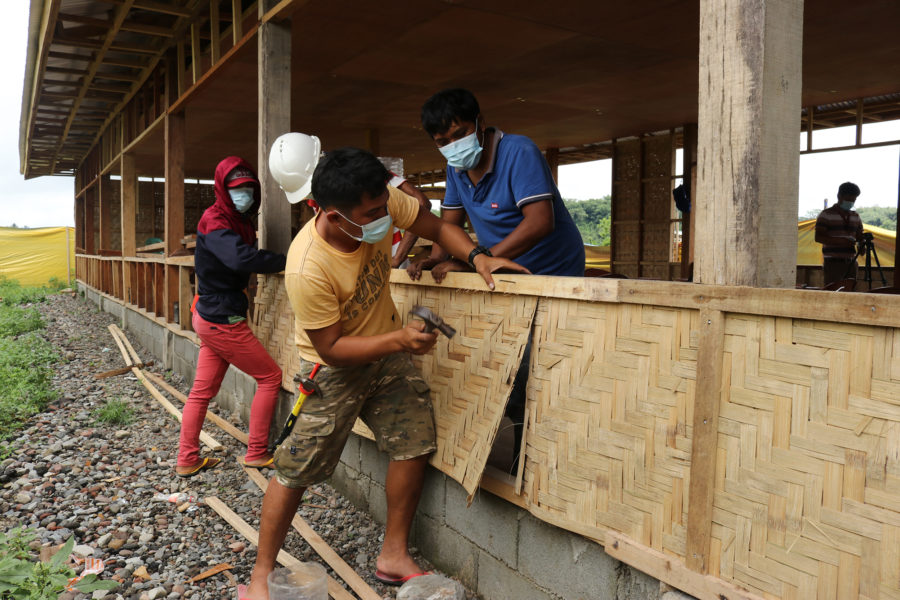
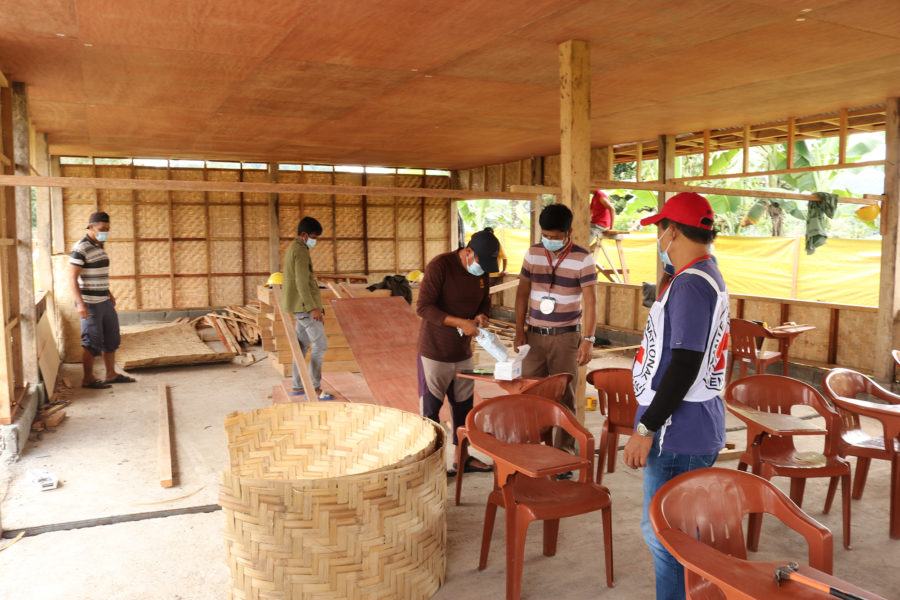
After the easing of some restrictions, 90 members of the community finally managed to work together to build and complete the wooden temporary learning space by end-September through ICRC’s cash-for-work project.
“Lisod ka da kapenggalebekan ami. Giya basak ami na tonganay a miyakarabong so otanon ka da ba ayam, miyatay so ayam. Da ba perak a baon kikowan, kiyapaningkamotan ami a miyaririk ami angkaya lupa,” shared Ibra Macalandap, a farmer who took part in the cash-for-work project to build the temporary learning space.
Macalandap expressed gratitude to the ICRC for helping them.
With this project, the students now have a conducive space where they can study while the old and bullet-riddled buildings will be demolished and rebuilt into permanent classrooms complying with the standards of the Department of Education.
Today, due to restrictions for face-to-face learning, Ragayan’s pupils are unable to use the new space and are staying home to study through modules and two-way radio, with the support of their dedicated teachers and parents. But they now have something to look forward to as the ICRC plans to build the new, more permanent structure next year. (ICRC)