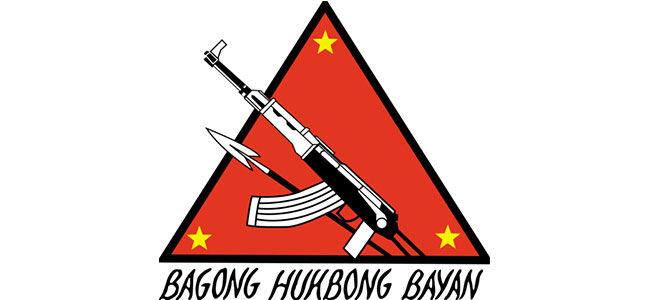
THE Communist Party of the Philippines (CPP) on Monday, July 28, refuted President Ferdinand Marcos Jr.’s claim in his fourth State of the Nation Address (SONA) that there are “no more guerrilla groups” in the country.
In an emailed statement today, July 28, Marco L. Valbuena, the CPP’s chief information officer, asserted that units of the New People’s Army (NPA) “continue to persevere and enjoy the deep and wide support of the people in the countryside.”
Valbuena claimed Marcos’ statements are “directly contradicted by his own actions,” noting that despite repeated government announcements of the Armed Forces of the Philippines (AFP) shifting focus to “external defense,” the majority of its combat battalions “remain deployed against the guerrilla fronts of the NPA across the country.”
The CPP believes this “grand declaration of having crushed the people's armed resistance will explode in Marcos’ face,” Valbuena said.
The CPP dismissed what it called Marcos’ boasting about “a handful of traitors” now cooperating with the government, stating these individuals have “exposed themselves as instruments of the fascist regime.”
Valbuena asserted that despite “all-out brutal attacks since 2017,” NPA guerrilla units have “been reorganized and redeployed to deepen and widen its roots among the people.”
He added that “a new generation of young Red fighters continues to slowly rise among workers, peasants and petty-bourgeois intellectuals,” who are “guided and inspired by the Party.”
The CPP criticized what it views as Marcos and his militarist advisers’ insistence that U.S. military support and “superior lethal force” will end the armed resistance.
Valbuena contended that “despite all the lethal firepower provided by the US,” including jet fighters, bombs, drones and other modern weaponry, Marcos, “like Duterte before him, has failed and will fail to stop the steady regrowth and expansion of the NPA who remain deeply rooted among the people.”
Marcos’ claim of no more guerrilla groups constitutes “a virtual declaration ending prospects of peace negotiation with the National Democratic Front of the Philippines (NDFP),” Valbuena said.
He added that Marcos and National Task Force to End Local Communist Armed Conflict (NTF-ELCAC) officials “stubbornly refuse to recognize and address the roots of the armed conflict,” instead promoting “local peace talks” which the CPP views as “a euphemism for the military’s suppression drive against peasant communities.”

The CPP also accused the Marcos administration of unprecedented corruption, claiming “the biggest bureaucrat capitalists and bourgeois compradors amass wealth through government contracts and infrastructure projects.”
Valbuena asserted that “with court cases against their illegal wealth dismissed since assuming power, the Marcoses have recovered hundreds of billions of pesos of money and property accumulated during the Marcos dictatorship.”
He criticized the regime’s neoliberal policies for allowing foreign capital to exploit “cheap labor of Filipino workers and plunder the country’s resources with impunity.”
The CPP also blamed Marcos for a “lopsided trade deal with Trump” and rising prices of basic commodities.
Valbuena also accused the Marcos administration of being a “puppet regime” that has allowed the country to be used as a U.S. military outpost for “power projection, endless military exercises and war provocation in the Asia-Pacific region.”
He claimed Marcos’ “blind subservience” is dragging the country “into its wars of aggression.”
Ultimately, the CPP stated that Marcos’ SONA “cannot obscure the basic fact that the majority of Filipinos remain mired in poverty, and suffer from landlessness and land grabbing, joblessness, very low wages, rising cost of living, homelessness, deteriorating public services and other social ills.”
“The three basic problems of imperialism, feudalism, and bureaucrat capitalism continue to grow worse and more oppressive, making the grounds for armed resistance more fertile,” Valbuena opined.