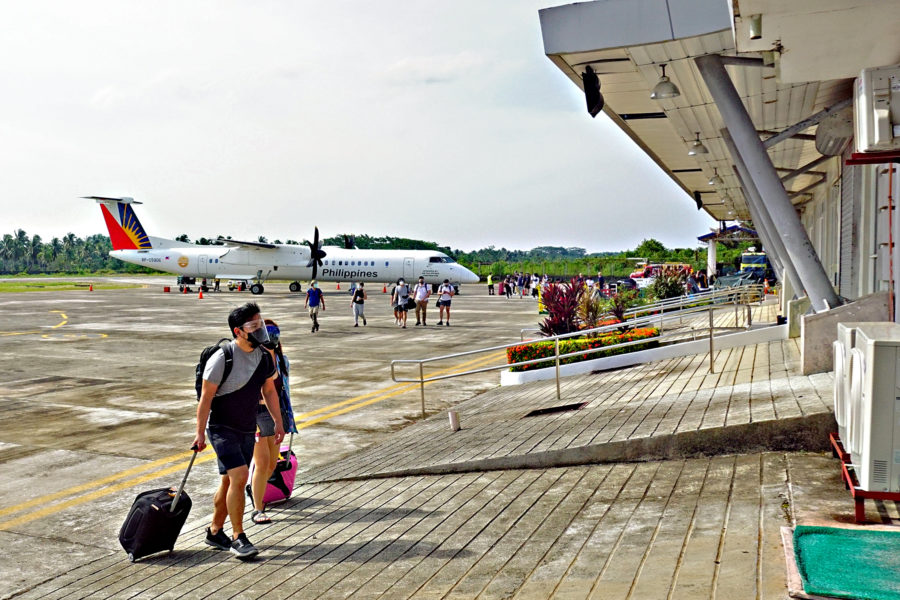
NORTHERN Mindanao is cementing its status as a vital economic gateway as Laguindingan International Airport (LIA) logs historic passenger volumes following its handover to private management—just as the national government greenlights billions of pesos in capital outlays for regional airport upgrades.
Data released Sunday by Aboitiz InfraCapital, Inc. (AIC) shows that LIA, the region’s primary aviation hub, welcomed 2.35 million passengers in 2025. Strikingly, 1.6 million of these were recorded in the months after the airport’s April 2025 turnover to AIC, underscoring a surge in post-pandemic tourism, domestic commerce, and the strategic rollout of seamless inter-island connections.
Combined with data from Mactan-Cebu International Airport (MCIA) and Bohol-Panglao International Airport (BPIA), the AIC portfolio handled 16.17 million passengers in 2025—despite seismic events in Cebu and Davao Oriental and multiple typhoons. MCIA alone recorded 11.6 million passengers, up 3% from 2024, while BPIA logged 2.22 million.
“2025 has been a landmark year for our airports as we continued to expand connectivity for both domestic and international travelers,” said Rafael M. Aboitiz, AIC vice president and head of airports.
According to Aboitiz InfraCapital, passengers arriving at MCIA, LIA, and BPIA now enjoy easier access to key destinations across Cebu, Bohol, and Northern Mindanao, making domestic travel more seamless.
Aboitiz noted that LIA is now the country’s sixth-busiest airport. He added that 20 airlines currently serve 13 international routes via MCIA—an advantage for Mindanaoans flying abroad, who can easily transit through Cebu.
Complementing private-sector milestones, House Minority Leader Marcelino Libanan announced Sunday that 19 regional airports nationwide have been allocated a combined P7.8 billion under the 2026 General Appropriations Act.
In Mindanao, the allocations target strategic gateways to enhance night-rating capacity, expand runways, and improve passenger terminals:
- Mati Airport (Davao Oriental): P700 million
- Bukidnon Airport: P150 million
- Camiguin Airport: P150 million
- Central Mindanao (M’lang) Airport: P100 million
Siargao Airport: P100 million, plus an additional P23 million specifically for night-rating improvements
“We are counting on these upgrades to enhance the overall air travel experience for passengers, attract more tourists, support the growth of small and medium enterprises, and create additional jobs,” Libanan said, emphasizing the need for communities to monitor the progress of these publicly funded projects.
Other major beneficiaries nationwide include the New Dumaguete Airport, which received P2.5 billion, and Tacloban Airport, with P741.7 million.
The convergence of private operational efficiency and public capital investment aligns closely with the Philippines’ recent decision to allow visa-free entry for Chinese tourists. As China was previously the country’s largest source of inbound visitors, the policy is widely expected to trigger a significant uptick in passenger traffic.
For Cagayan de Oro and surrounding provinces, these twin developments—enhanced Laguindingan operations and a robust budget for neighboring Bukidnon and Camiguin airports—mean Northern Mindanao is better positioned than ever to capture a larger share of incoming tourism and business investment.