By BEN BALCE,
Associate Editor,
and SHIELA MAE BUTLIG
Correspondent
A Mindanao-based consumer group is urging a rapid transition to cleaner energy to help communities become stronger and better prepared for increasingly severe climate disasters.
The Consumers for Renewable Energy Action in Mindanao (Cream) emphasizes that resilience hinges not only on preparedness but also on strengthening local economies against extreme weather impacts. This appeal follows recent severe floods in Metro Manila, caused by heavy rainfall from the southwest monsoon and Tropical Depression Dante.
Cream project head BenCyrus Ellorin highlighted that high electricity costs, driven by reliance on imported fossil fuels like coal, hinder investments in industry and manufacturing.
This is particularly true in resource-rich Mindanao, where energy expenses can account for 20% to 50% of operational costs.
Ellorin stated that an energy transition offers dual benefits: achieving carbon emission reduction targets and bolstering economic growth by lowering power prices to attract investors. He noted that Mindanao’s energy mix has shifted away from clean and affordable hydropower towards coal and diesel over the past nine years.
A key solution
A promising solution, according to Cream, lies in rehabilitating the Agus-Pulangi Hydropower Complex (APHC). Currently operating at around 500 megawatts, below its 800 MW capacity, the complex boasts a generation cost of less than P2 per kilowatt-hour.
As Mindanao and the southern Philippines brace for potentially more extreme weather events, with recent patterns indicating a southward movement of storms during the ‘Ber’ months, a new and feasible plan for the APHC has emerged.
This comes after local efforts successfully opposed the complex’s privatization over the past two decades.
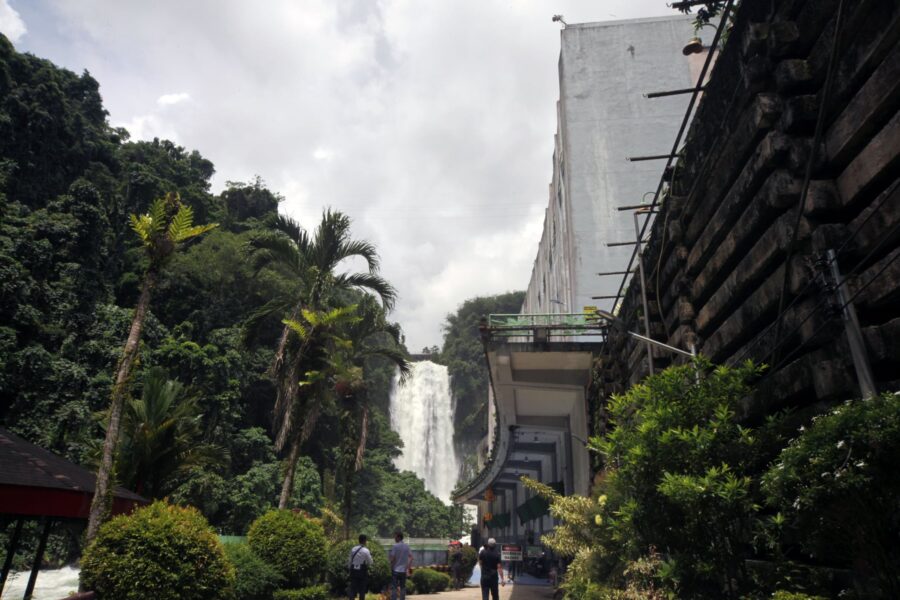
Greenergy Development Corporation, in partnership with the University of Science and Technology of Southern Philippines (USTP), proposes the Energy Storage Project.
This initiative utilizes solar and hydropower to conserve water in Lake Lanao, which fuels the Agus hydro plants in Lanao del Sur, Lanao del Norte and Iligan City.
Engineer Cerael Donggay, author of the Hybrid Economic Dispatch Technology and associated with Greenergy, explained the project's mechanics.
“Solar power generated during daytime can be used to naturally store water in Lake Lanao, which would provide cheap electricity at nighttime and during the dry season,” Donggay said.
He added that his company’s technology aims to optimize the Agus plants. While the Agus hydro plants have a peak capacity of 800 megawatts, they currently generate only about 500 megawatts due to age and depreciation.
Donggay believes that coupling solar power with pumped hydro – a system where water is pumped back into the lake instead of being released – could increase the plants’ capacity by an additional 200 to 400 megawatts. The APHC’s current generation rate remains below P2 per kilowatt-hour.
Support for rehabilitation
The Oro Chamber of Commerce has voiced its support for the immediate rehabilitation and uprating of the APHC.
“High electricity prices are driving away investors, depriving Mindanaoans of opportunities to earn decent jobs,” said Al Brito, president of the Oro Chamber.
Cream continues to advocate for increased consumer awareness and demand for clean, affordable, and reliable hydroelectric and solar energy, emphasizing the importance of a resilient and sustainable power system for Mindanao.