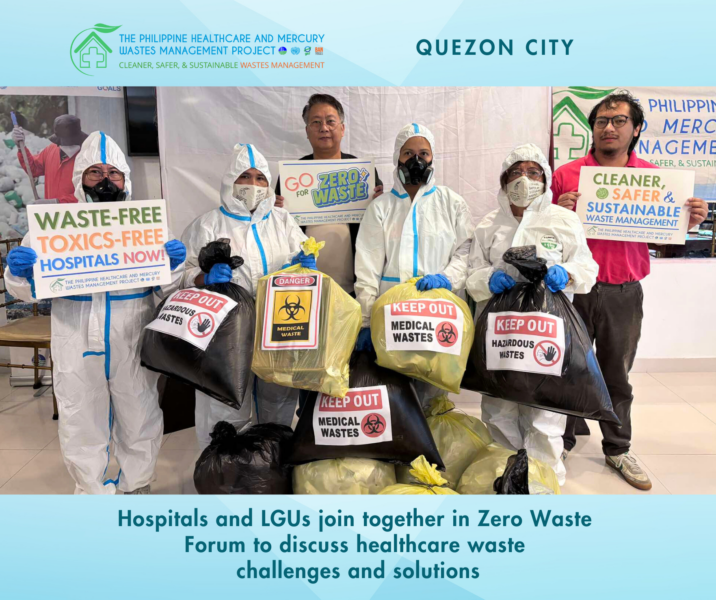
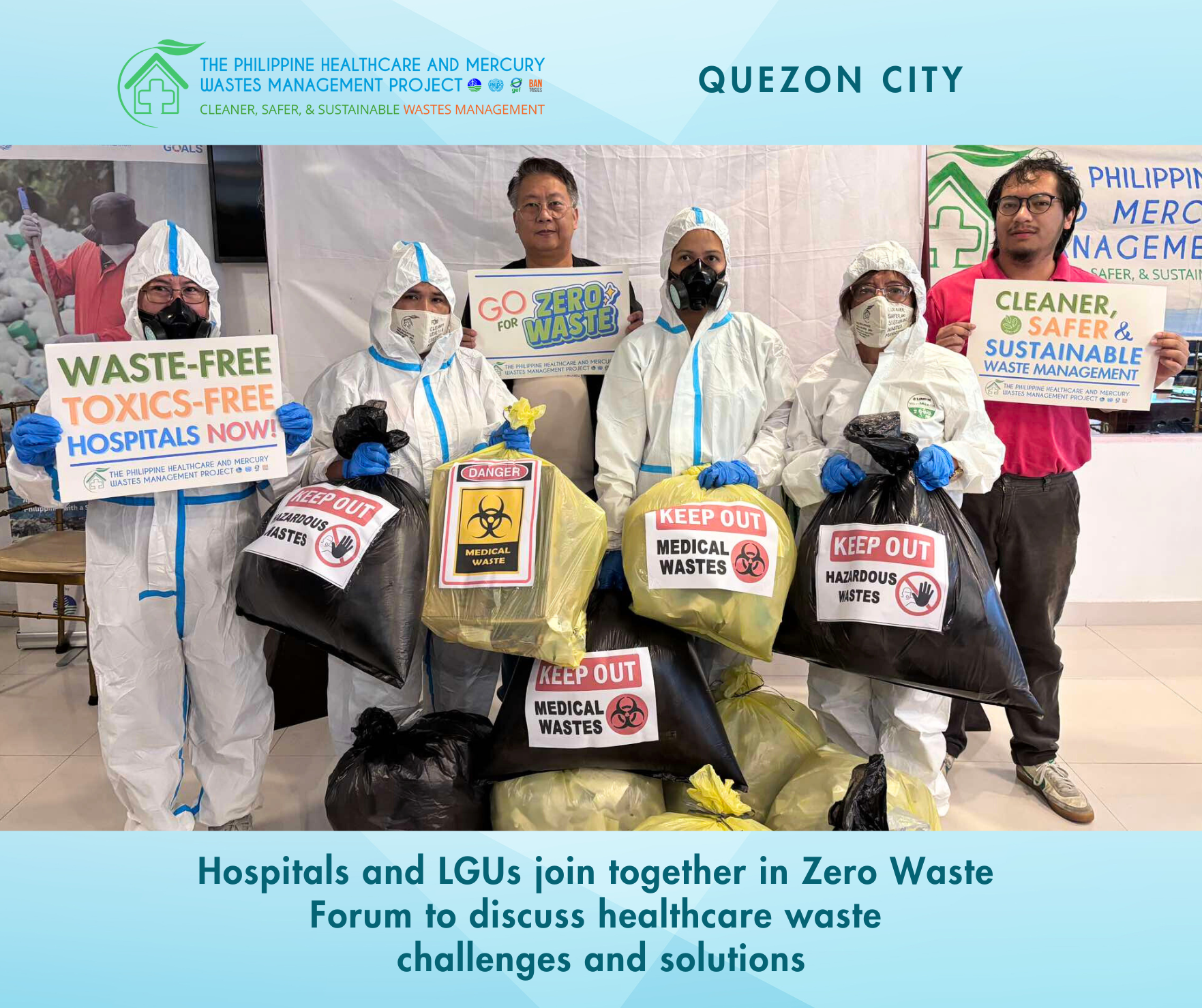
THE Philippine Healthcare and Mercury Wastes Management Project (HCW Project) hosted a forum today to mark International Zero Waste Month, emphasizing the adoption of Zero Waste principles in healthcare facilities and addressing waste management challenges.
The event, titled “Zero Waste for Health: Advancing Sustainability in Healthcare Facilities,” was held simultaneously in Region 2, Region 8, and the National Capital Region, with a central online program. Attendees included healthcare professionals, waste management staff from partner hospitals, and local government representatives.
Participating hospitals included Quezon Memorial Medical Center (QMMC) in Quezon City, Cagayan Valley Medical Center (CVMC) in Tuguegarao City, and Eastern Visayas Medical Center (EVMC) in Tacloban City.
Jam Lorenzo, Deputy Executive Director of BAN Toxics and HCW Project Manager, underscored the urgency of integrating Zero Waste practices in healthcare waste management. “Traditional recycling-focused approaches are no longer sufficient to address the increasing volume and complexity of healthcare waste,” Lorenzo said.
The HCW Project, a five-year initiative funded by the Global Environment Facility (GEF), is implemented by the United Nations Industrial Development Organization (UNIDO) in partnership with the Department of Environment and Natural Resources-Environmental Management Bureau (DENR-EMB) and BAN Toxics.
Dr. Michelle Reyes of Healthcare Without Harm (Asia) presented actionable strategies for healthcare facilities, including reducing plastic use, adopting sustainable procurement, and enhancing waste segregation.
Representatives from QMMC, CVMC, and EVMC shared their experiences. Best practices included QMMC's mandatory waste management training, use of reusable personal protective equipment (PPE), digitalized waste data collection, and urban gardening for composting.
However, all hospitals face common challenges, such as insufficient storage facilities, delayed waste collection, and limited awareness of waste segregation among patients and visitors. At CVMC, improper disposal of waste in surrounding areas and funding constraints aggravate the situation. EVMC reported uncollected hospital waste as a pressing concern.
BAN Toxics also presented findings from a Knowledge, Attitude, and Perception (KAP) survey conducted in November, revealing gaps in awareness and infrastructure for waste management across the partner hospitals.
The event concluded with an open forum and a collaborative discussion between hospitals and local government units. Attendees reaffirmed their commitment to Zero Waste practices by signing a partnership pledge, symbolizing a unified effort to promote sustainable healthcare waste management.
International Zero Waste Month, first recognized in the Philippines in 2014 through Presidential Proclamation 760, now serves as a global platform to advance environmental sustainability.