A renewable energy firm is moving forward with a major redesign of its proposed 40-megawatt hydroelectric power project in San Isidro, following reservations expressed by the City Council's Committee on Public Utilities, Tourism, and Environment on October 17.
In an emailed statement on November 12, First Gen announced it is redesigning the project’s headworks/weir structure to include a dedicated boat ramp.
The modification is intended to ensure safe passage for rafters and provide access to key upstream and downstream routes, while also establishing accessible entry and exit points for emergency use.
The redesign addresses safety concerns raised during the October 17 committee session, where councilors Roger Abaday and Agapito Suan expressed their reservations.
Suan argued that even a safe-looking design was not a guarantee of actual safety and proposed commissioning a third-party evaluator to assess seismic and climate risk factors before granting final approval.
For his part, Abaday raised ecological concerns, cautioning that the run-of-river project could alter the Cagayan River’s aquatic habitats.
This ecological concern is supported by a 2023 study from the University of the Philippines-Los Baños and Mindanao State University-Iligan Institute of Technology.
Researchers noted that even smaller hydro projects can negatively affect sediment flow and biodiversity if they fail to implement adaptive water release systems.
The environmental scrutiny is intensified by the memory of Tropical Storm Sendong (international name: Washi), which killed more than 1,200 people in Cagayan de Oro and Iligan City, 14 years ago this coming December.
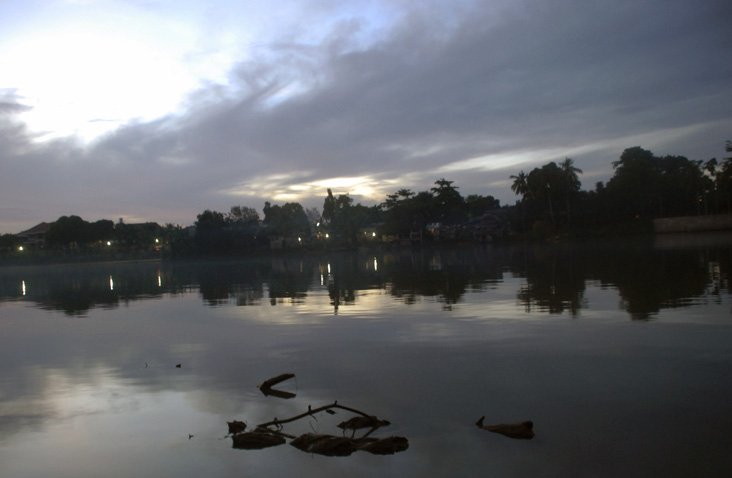
The devastation was linked by environmental experts to widespread deforestation and severe river siltation — critical issues that any new river development must address.
However, First Gen said the new structure is specifically designed to facilitate movement for rafters, providing both take-off and put-in points to reach destinations like Uguiaban Bridge, Mambuaya, and Cabula downstream, and Sinulom Falls and Bolao Cold Spring upstream.
“We have redesigned the hydro project to make sure it will have a benign, if not enhancing, impact on the river’s ecosystem and on the city’s popular whitewater river rafting adventure sport, which we support as the city’s pride and entry to the One-Town-One-Product program of the government,” said Dennis P. Gonzales, the president and chief operating officers of First Gen’s hydro companies.
Gonzales pointed out that the project has passed the rigorous environmental impact assessment (EIA) process conducted by the Department of Environment and Natural Resources (DENR) and has a completed ecological study and sustainability plan (ESSP), both prepared by GHD Philippines (GHD), a global professional services company specializing in engineering, architecture, environmental, and construction services.
The EIA and ESSP identify both the project’s potential impact and the steps to be taken to minimize the impact.
The San Isidro project subsequently received its environmental compliance certificate (ECC) from the DENR’s Environment Management Bureau in Northern Mindanao after undergoing the EIA process and review meetings conducted by the EIA review committee.
The project supports the government’s goal to boost the share of renewable energy sources — such as hydro, solar, and wind — in the country’s energy mix from the current 22 percent to 35 percent by 2040 and to 50 percent by 2050.
“This government goal further aims to address climate change and provide the country with additional sustainable, clean and renewable energy,” First Gen’s statement reads in part.
First Gen is the Philippines’ leading clean energy company, with a combined capacity of more than 1,600 megawatts (MW) across its portfolio of geothermal, hydro, wind, and solar facilities nationwide.
A subsidiary of First Philippine Holdings Corporation, the firm also holds investments in four natural gas power plants, totaling more than 2,000 MW.