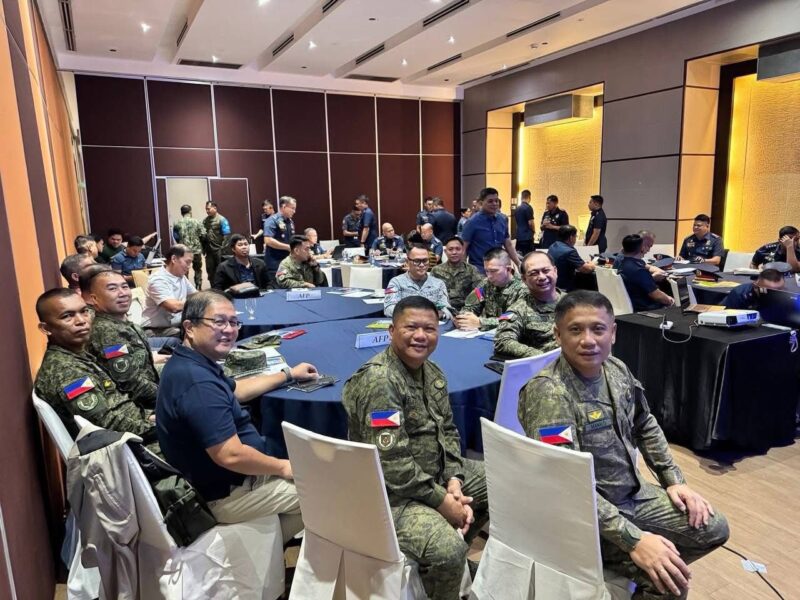
TO curb armed violence and foster stability in conflict-affected regions, government agencies reinforced the policy framework for the Small Arms and Light Weapons (SALW) Management Program during a workshop held here on November 11.
Organized by the Office of the Presidential Adviser on Peace, Reconciliation and Unity (OPAPRU) through the Government of the Philippines–Joint Normalization Committee (GPH–JNC), the event drew key stakeholders, including the Army’s 103rd Infantry Brigade, the Philippine National Police (PNP), local government representatives, and peace advocates from the Bangsamoro Autonomous Region in Muslim Mindanao (Barmm).
A collective effort for lasting peace
The workshop aimed to institutionalize guidelines for the National SALW Management Program, draft position papers, and strengthen inter-agency coordination.
“The SALW Program isn’t just about disarmament — it’s about ensuring communities remain safe, resilient, and free from armed violence,” said Brig. Gen. Billy O. Dela Rosa, commander of the 103rd Brigade, underscored the initiative’s urgency, adding that the Philippine Army, particularly the 103rd Brigade, stands committed to supporting this vital component of the normalization process in Lanao del Sur and across the Barmm.
Stressing collaboration, GPH–JNC Chair Ariel Hernandez echoed this sentiment, saying institutionalizing the SALW Management Program is “not just a government push — it’s a shared responsibility.”
“Through sustained cooperation between security forces, local leaders, and communities, we can protect the peace we’ve built,” he added.
The legacy of the Bangsamoro Agreement
The program aligns with the Normalization Track of the Comprehensive Agreement on the Bangsamoro, a peace pact to regulate the possession and proliferation of small arms in the region. “Unchecked weapons fuel conflict, hinder development, and threaten lives,” Hernandez said. “This effort cuts the roots of violence.”
Key participants and outcomes
Attendees included GPH–JNC members, commanders from the 6th, 11th, and 1st Infantry Divisions, PNP personnel, and BARMM local officials. They drafted policy frameworks, mapped roles, and pledged to finalize the SALW roadmap.
Next steps include enhanced coordination, community outreach, and confidence-building measures.
The workshop concluded with a unified vow: “Peace is a shared responsibility.”
As the government tightens controls on small arms, residents of Lanao del Sur and the Barmm hope for a future where conflict gives way to progress. “No guns, no chaos,” the agencies declared.