Cagayan de Oro
Lamerez retires after distinguished military career
BRIGADIER General Febie N. Lamerez has officially concluded his 38-year tour of duty in the Armed Forces of the Philippines (AFP).
2600

4853 stories
BRIGADIER General Febie N. Lamerez has officially concluded his 38-year tour of duty in the Armed Forces of the Philippines (AFP).

A day after New Year's Day, heavy rains damaged the water supply source of Cagayan de Oro Bulk Water, Inc. (COBI), the primary bulk water supplier of Cagayan de Oro Water District (COWD).
A grinding two-kilometer gridlock in Quezon, Bukidnon, has sparked a standoff over construction speed, with local officials pushing for round-the-clock work while contractors cite manpower shortages.
LABOR groups are entering 2026 with a dual mission: demanding economic justice for workers in Northern Mindanao while sounding the alarm on global conflicts that threaten the working class worldwide.
TOMORROW marks the final opportunity for property owners in Cagayan de Oro to secure a 20% discount on their Real Property Tax (RPT) for 2026
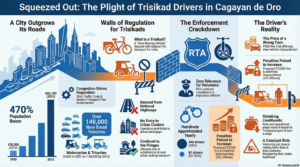
CAGAYAN DE ORO CITY — In the narrow arteries of a rapidly modernizing city, the trisikad driver trades sweat for coins. For drivers like Lourderico “Rico” Pedimonte and Ferdielito “Nong Lito” Sinag, the three-wheeled cycle is not just a livelihood—it is a "debt machine." While the city implements "urban order" through strict RTA enforcement and digital payment programs like Paleng-QR Ph, the men pedaling the interior alleyways of Barangay Lapasan and Cogon find themselves squeezed into a shrinking cage of prohibited routes and insurmountable impound fees. A single P1,500 citation for plying the national highway often becomes an economic death sentence for families living on ten-peso fares. This deep-dive explores the human cost of Cagayan de Oro’s race toward the future and asks: how does a city move forward without running over those pedaling hardest to keep up?
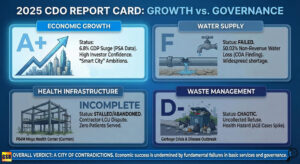
THE year 2025 has been one of sharp contrasts for Cagayan de Oro City: a 6.8% economic surge and a skyline reaching for “metropolitan” status, even as basic services struggled to keep water flowing and traffic moving.