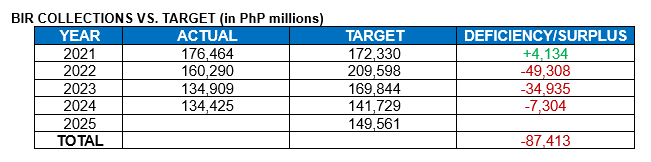
THE Universal Health Care (UHC) program for 103 million Filipinos remains a fantasy due to shortfalls in cigarette excise tax collections, which have reached P87 billion in the past three years.
Fifty percent, or P43.5 billion, of this amount is mandated to go to PhilHealth and the Department of Health (DOH).
Smuggled tobacco is even causing collection shortfalls, undermining the country’s flagship health and social programs that heavily rely on ‘Sin Tax’ revenues.
“Instead of legislating more taxes to increase revenues, the government should crack down hard on the flood of illegal cigarettes by enforcing laws through police, customs, and other authorities,” BenCyrus Ellorin, chairperson of Pinoy Aksyon for Governance and the Environment, said.
Ellorin urges the government to demonstrate authority and political will to combat the illegal tobacco trade.
He said that unpaid taxes on cigarettes are taking away from Filipinos' health.
“This lost money, about forty billion pesos, could be used to buy a lot of hospital beds and help public hospitals that really need them,” said Ellorin.
For 2025, the Bureau of Internal Revenue (BIR) targets excise tax collections of P329 billion, with P150 billion or 45% expected from tobacco excise taxes. Of this, P75 billion is earmarked for the public health sector.
Tobacco remains the single largest contributor to excise taxes, but it’s estimated that one in every five cigarettes sold in the country now comes from illegal sources.
Ellorin pointed out that despite increased enforcement activities, no ‘big fish’ has been prosecuted.
Money lost from illegal cigarettes means we miss chances to save lives, according to Ellorin.
“That money could buy health equipment, help pay for medicine, and improve health care in the poorest areas where it’s most needed,” he added.
According to Pinoy Aksyon, cigarette smuggling thrives due to corrupt officials and law enforcers allowing syndicates to operate unchecked.
These criminals pocket billions that should have gone to the public purse, directly stealing from the nation's health programs.
“This is theft in its worst form. When officials turn a blind eye to illicit cigarettes, they're not only enabling organized crime but also depriving Filipinos of their right to health care,” Ellorin said.
The P87 billion revenue gap is more than a fiscal issue – it’s a crisis in governance and accountability.
Unless decisive action is taken against cigarette smuggling and tax evasion, the country risks backsliding on its hard-won gains in universal health coverage.
Ellorin emphasized that sin taxes were designed not only to curb smoking but also to provide sustainable funding for health programs.
“The government must act with urgency to plug these leaks by jailing these criminals; otherwise, the people’s health will continue to suffer,” he said.