THE Philippines has once again been spotlighted as the world’s most disaster-prone country, topping the World Risk Index for its high vulnerability to natural and climate-related hazards.
The archipelagic nation, which endures an average of 20 typhoons each year, has held the top spot on the index since 2009.
Despite a government declaration of a climate emergency and sustained advocacy for climate justice by groups like the Philippine Movement for Climate Justice (PMCJ), the response remains alarmingly slow.
To date, only Albay province, the cities of Bacolod, Makati, Quezon, the municipalities of Tolosa, Leyte, and Bauang, Quezon, Barangay Bolong in Zamboanga City, and SK Councils of Barangays Igpit and Barra, Opol in Misamis Oriental have declared a climate emergency.
Adding to the nation’s vulnerability are deeply rooted governance issues.
Massive corruption has been exposed in government flood mitigation projects, with existing infrastructure, already severely limited in scope, being further undermined by substandard construction and ‘ghost’ projects.
The recent Tropical Storm Tino further damaged infrastructure, exposing more inadequate works by the Department of Public Works and Highways.
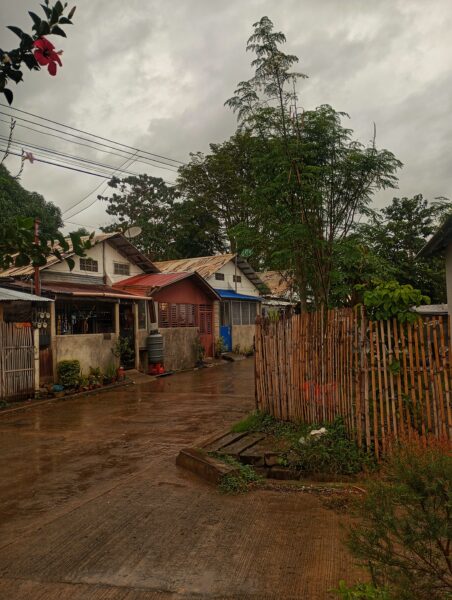
The compounding factors of extreme weather and poor infrastructure disproportionately harm the nation’s poorest.
This reflects the global trend highlighted in Oxfam’s latest reports on climate inequality.
The organization’s 2023 report, Climate Equality: A planet for the 99%, noted that the richest 1% of the world’s population is responsible for as much carbon pollution as the poorest two-thirds of humanity, while those in vulnerable situations lack the means to protect themselves and recover from climate shocks.
PMCJ Mindanao Policy and Communications Officer Pat Jared V. Pangantihon underscored the injustice of the situation.
“We in PMCJ have always been steadfast in our stand that those who are least responsible for the climate emergency our planet is faced with, are the most vulnerable to natural disasters,” Pangantihon said.
He pointed out that the poor and the marginalized are hit hard whenever typhoons strike.
Pangantihon added that with Tropical Storm Tino just having passed, another super typhoon is expected to enter the Philippines over the weekend, subjecting the Filipino people to a fresh onslaught and thus perpetuating the cycle of calamitous natural events.