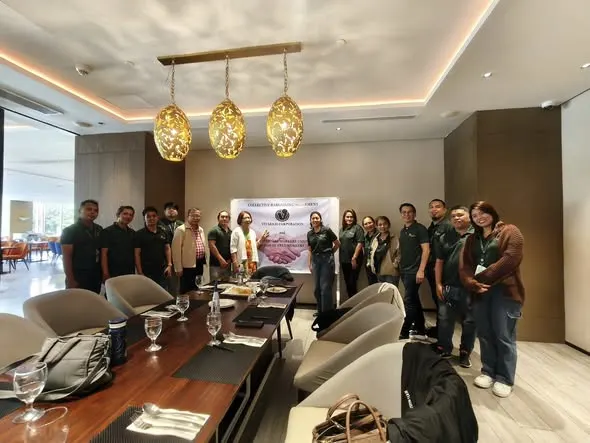
Collective Bargaining Agreements (CBAs) in Northern Mindanao, particularly in the region’s economic hub of Cagayan de Oro City (CDO), remain a key mechanism for balancing workers’ welfare with business sustainability.
The industrial landscape of CDO and neighboring economic zones such as Tagoloan and Villanueva is dominated by food processing, agribusiness, logistics, and manufacturing firms. These industries rely heavily on CBAs to regulate labor-management relations and address workplace concerns.
Recent labor reviews, regional consultations, and concerns raised by labor groups have identified four major issues affecting CBA negotiations and implementation in the region.
The implementation of Wage Order No. RX-24, which raised the daily minimum wage in Category I areas, including Cagayan de Oro, to ₱500 through a two-tranche ₱39 increase, has led to wage distortion concerns.
Wage distortion occurs when mandated wage hikes narrow or erase salary differentials between entry-level employees and longer-serving workers whose higher pay rates were secured through previous CBAs. Addressing these disparities has become a major point of contention during midterm CBA reviews.
You may also like: 300 fired steel workers: Lawyers step in after Misor raid
Labor unions in CDO continue to raise concerns over alleged labor-only contracting practices.
While companies often engage third-party contractors for non-core operations to remain competitive, unions argue that the arrangement reduces the number of regular employees eligible to join bargaining units.
As a result, unions face challenges in maintaining membership strength and meeting the majority thresholds required for CBA ratification.
Declining Collective Bargaining Coverage
Labor leaders also warn that despite the presence of organized labor groups in Northern Mindanao’s industrial centers, securing bargaining rights remains a challenge.
The Federation of Free Workers (FFW) and the Nagkaisa Labor Coalition noted that while thousands of labor unions are registered nationwide, only a small fraction of workers are covered by CBAs.
FFW President and Nagkaisa Chair Atty. Sonny Matula said the process of becoming a certified bargaining agent has become increasingly difficult, with some unions spending years navigating legal and administrative hurdles before collective bargaining can even begin.
For unions in Cagayan de Oro, Tagoloan, and Villanueva, the challenge is compounded by the widespread use of contractual, fixed-term, and outsourced work arrangements, which reduce the number of workers eligible to join bargaining units.
Labor groups argue that while the region continues to attract investments and expand its industrial base, many workers remain outside the protection of CBAs, limiting their ability to negotiate wages, benefits, and job security.
Cost-of-Living Pressures
Although wage-setting authorities maintain that the ₱500 daily minimum wage meets basic economic indicators, labor groups contend that it remains insufficient to cover the actual cost of living amid rising expenses for transportation, utilities, and food in the highly urbanized city.
This gap frequently shifts negotiations toward non-wage benefits, with unions seeking stronger provisions on healthcare, educational assistance, and retirement benefits to help offset increasing living costs.
The Department of Labor and Employment (DOLE) Region X, together with its attached agencies, addresses these concerns through a combination of regulatory enforcement and dispute-resolution mechanisms.
Addressing Wage Distortion
To prevent lengthy labor disputes, the Regional Tripartite Wages and Productivity Board (RTWPB)-X provides technical assistance to employers and unions based on the framework of NWPC Advisory No. 01.
The board helps companies restructure salary scales and preserve pay hierarchies, reducing the likelihood of wage distortion cases escalating into labor conflicts.
Single Entry Approach (SEnA)
DOLE Region X also utilizes the Single Entry Approach (SEnA), a mandatory 30-day conciliation and mediation process designed to resolve labor disputes before they reach formal litigation.
Under this mechanism, the National Conciliation and Mediation Board (NCMB)-X serves as a neutral facilitator, encouraging both labor and management to continue negotiations and avoid strikes or lockouts.
Enforcing joint liability
To protect workers and uphold labor standards, DOLE enforces joint liability provisions during labor inspections. Under this policy, principal companies may be held accountable if contractors fail to comply with wage regulations or labor laws.
The measure is intended to discourage the misuse of subcontracting arrangements and ensure that labor standards are consistently observed.
Northern Mindanao’s economic development agenda identifies industrial peace as essential to maintaining Cagayan de Oro’s competitiveness as a logistics and investment hub.
While government agencies continue to promote voluntary arbitration and mediation over litigation, labor groups are also pushing for reforms that would expand collective bargaining coverage, strengthen security of tenure, and ensure that more workers—including those in non-regular employment arrangements—can participate in collective bargaining.
Both labor and management stakeholders agree that sustaining economic growth in the region will require balancing business competitiveness with workers’ rights to organize and negotiate fair terms of employment.