A NEW alliance has been formed to combat a growing problem that has plagued the Philippine economy for years.
The Bureau of Internal Revenue (BIR) has partnered with the Math Department of Ateneo de Manila University to tackle the issue of ghost receipts.
This partnership has led to the creation of an advanced algorithm designed to detect these fraudulent receipts with impressive accuracy.
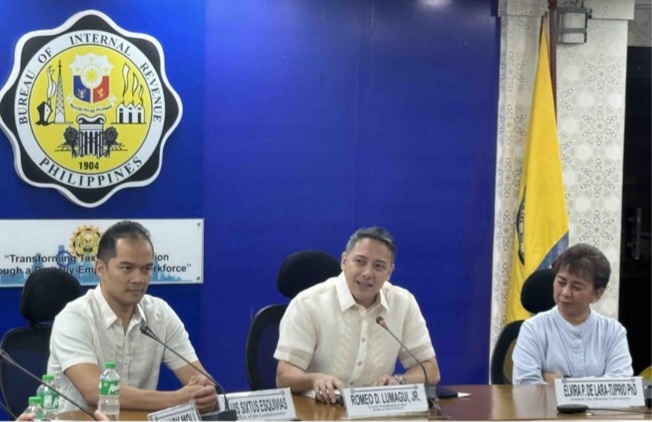
Commissioner Romeo D. Lumagui Jr. of the BIR recently announced this groundbreaking development.
According to him, the new algorithm is a significant step forward in their ongoing battle against tax fraud.
"The BIR is grateful for the algorithm developed by the talented students of Ateneo," said Lumagui, adding that this tool empowers them to identify ghost receipts through mathematics and data analytics.
He emphasized that the widespread use of fake or ghost receipts has been a serious issue for the Philippine economy, largely due to inadequate detection and enforcement in the past.
The journey to this breakthrough began with a raid on a condominium unit, where a ghost receipts syndicate had been operating.
This initial success demonstrated the potential of targeted efforts against such fraud. However, the BIR recognized that continuous raids were not a sustainable or efficient solution.
This realization led to their innovative collaboration with Ateneo de Manila University.
The math students at Ateneo rose to the challenge, developing an algorithm that could predict and identify ghost receipts.
This technological advancement means that the BIR can now detect fraudulent activities without the need for constant physical raids.
The algorithm analyzes patterns and anomalies in receipt data, flagging suspicious transactions for further investigation.
Commissioner Lumagui expressed his optimism about the future impact of this tool. He believes that with the algorithm in place, the BIR will be able to significantly reduce the incidence of ghost receipts.
This reduction will not only enhance tax collection but also promote fairness and transparency in the business community.
He stressed the partnership with Ateneo highlights the importance of collaboration between government agencies and educational institutions.
By leveraging the expertise and innovative thinking of students, the BIR has gained a powerful ally in its fight against tax fraud, he said.
This cooperation serves as a model for future initiatives aimed at addressing other societal challenges through academic-government partnerships.
A local bureau official here in the city said that the alliance between the BIR and Ateneo de Manila University marks a significant milestone in the fight against ghost receipts.
As the BIR continues to refine and implement the algorithm, it remains committed to its mission of eliminating ghost receipts.
The RAFT (Run After Fake Transactions) Taskforce, strengthened by this technological tool, will intensify its efforts to ensure compliance and uphold the integrity of the tax system.