By HERBIE GOMEZEditor in chief
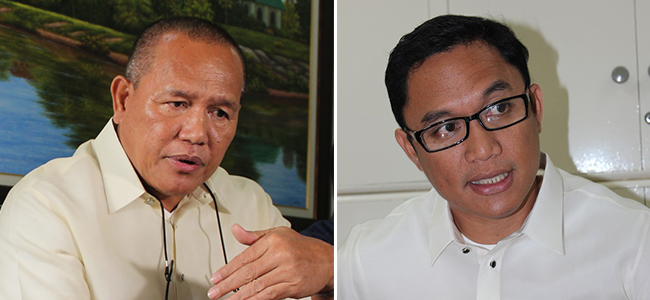
THE tax settlement between city hall and Ajinomoto Philippines in 2014 was a negotiations ploy by city treasurer Glen Bañez aimed at collecting more taxes for the local government, Mayor Oscar Moreno said over the weekend.
Moreno claimed this after the Office of the Ombudsman decided to bring him and Bañez to the Sandiganbayan for violation of two provisions in the Anti-Graft and Corrupt Practices Act because of the tax settlement.
The June 28 decision, approved by Ombudsman Conchita Carpio Morales, held the two officials liable for giving Ajinomoto unwarranted benefits and advantage, and for entering into an agreement, seen as grossly disadvantageous to the local government, without the city council’s approval.
Moreno said the ombudsman’s ruling did not come as a surprise to him. “I am not surprised, they already dismissed me without reading my counter-affidavit.”
Moreno said he welcomed the move of the ombudsman to bring him and Bañez before the anti-graft court “so that I can prove my innocence and make them (Office of the Ombudsman) realize their mistake.”
It was a “mistake,” he said, for the ombudsman to hold him liable for graft, and for ordering him dismissed and barred from public office without going over his counter-affidavit. Moreno has assailed the ombudsman’s ruling before the Court of Appeals (CA), and asked the court to trash it.
He opined that the case at the Sandiganbayan “will not hold water.”
“I will be worried if the ombudsman stated that it did not agree with me after it read my counter-affidavit. But they have acknowledged that they did not read my counter-affidavit,” he said.
On court orders in 2014, Bañez and Ajinomoto went through arbitration after the firm questioned city hall’s P2.9-million assessment of its taxes. The arbitration resulted in the lowering of the tax assessment for Ajinomoto to P300 thousand.
Moreno said what the ombudsman failed to see is that the issue is about the reclassification of Ajinomoto’s food additive product from an “essential” commodity to “non-essential.”
The local government collects more taxes out of non-essential commodities.
For years, he explained, Ajinomoto paid city hall less because its monosodium glutamate (MSG) was classified as an essential product.
What Bañez did was to reclassify MSG as a non-essential product in order to make Ajinomoto pay more, he said.
By reclassifying the product and including the prior years in the tax assessment, Bañez succeeded in making Ajinomoto agree on paying taxes based on the formula city hall uses for non-essential products, he said.
“It was a negotiations ploy so that the city could collect more from Ajinomoto,” Moreno said.
He maintained that he was unaware of Bañez’s move to sign the agreement with Ajinomoto, and that he did not approve it “but he (Bañez) is right.”
Moreno said it was Bañez’s prerogative, and that he does not interfere with the city treasurer’s work.
As a result, he said, Ajinomoto paid city P300 thousand in 2014, and is now being taxed using city hall’s formula for non-essential products resulting in higher taxes.
“It was not disadvantageous. On the contrary, it was advantageous and beneficial to the city. The city is now benefitting,” Moreno said.
Moreno said he was dismayed that the Office of the Ombudsman did not see this.
“I hope this is not a price I am paying for my role in the Desierto impeachment,” he said.
In 2001, Moreno, then the representative to the Lower House of the 1st District of Misamis Oriental, endorsed the impeachment complaint filed by lawyer Ernesto Francisco Jr. against the then Ombudsman Aniano Desierto. Moreno was the principal sponsor of the complaint that was subsequently turned down by the House for “lack of susbstance.”