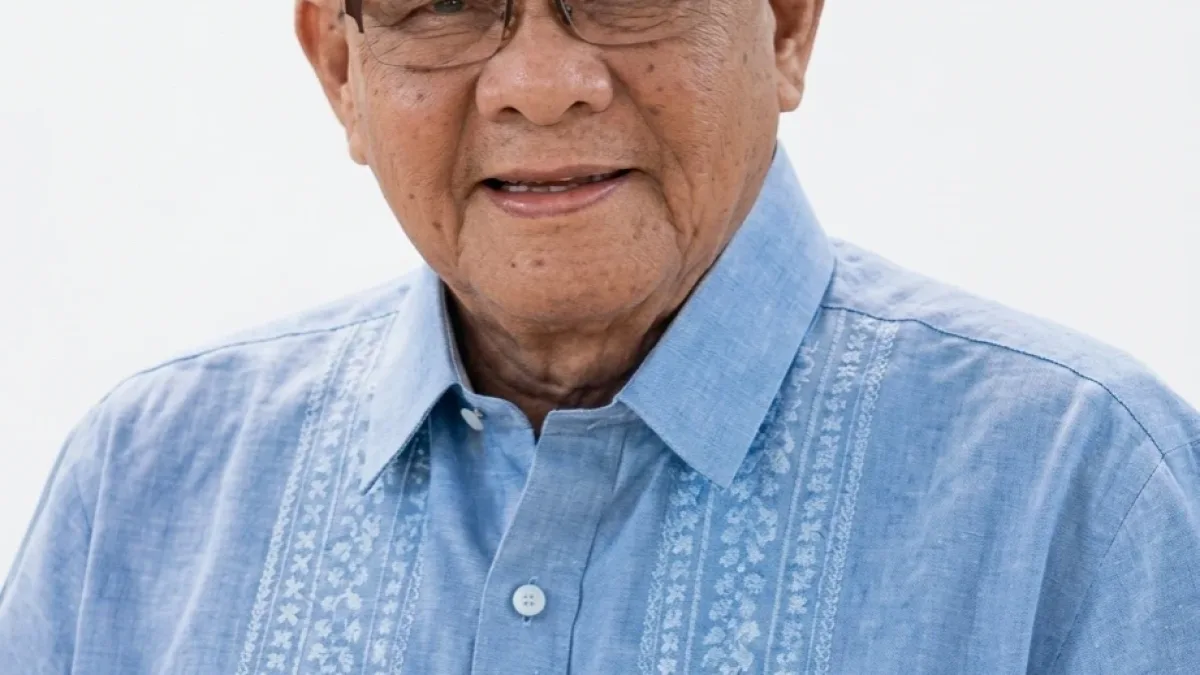
CAGAYAN de Oro City — For nearly six decades, Atty. Gregorio A. Pizarro moved between the courtroom, classroom and labor movement, building a career that linked legal practice with the struggles of workers and their unions in Southern Philippines.
Pizarro, who died recently, was remembered by the Federation of Free Workers (FFW) and the Federation of Democratic Labor Organization (FDLO) as a labor lawyer, educator and trade union leader who spent much of his life defending workers’ rights.
Born on Oct. 8, 1933, in Sta. Catalina, Ilocos Norte, and raised in Davao City, Pizarro first pursued history before turning to law.
He earned a Bachelor of Arts in History from Rizal Memorial Colleges in Davao City, where he also served as editor-in-chief of the school publication. He later earned his Bachelor of Laws from Harvardian University in Davao City and passed the Philippine Bar Examination in 1967.
That year marked the beginning of a legal career that would become closely tied to the labor movement.
Lawyer, union leader, teacher
After becoming a lawyer, Pizarro served as legal counsel and later general secretary of the Southern Philippines Federation of Labor (SPFL), representing the federation and its affiliated workers.
He eventually founded the Federation of Democratic Labor Organization and served as its national president beginning in 2002, according to his biography.
His work was not limited to labor litigation. He also served as a professorial lecturer at the Mindanao State University-Iligan Institute of Technology (MSU-IIT) College of Law and as legal counsel to the Office of the Chancellor.
Earlier in his career, he taught at the Lyceum of Mawab in Davao de Oro.
He also represented the labor sector in the Regional Tripartite Industrial Peace Council in Region X. His participation was documented in a January 2018 report.
For former students and labor leaders, teaching was another way Pizarro extended his advocacy.
Atty. Nilo Ratilla, now FDLO vice president and chief legal counsel, remembered Pizarro as the best labor law professor he had at MSU-IIT and credited him with introducing him to the labor movement.
“May magandang pagkakatulad ang guro at lider-unyon: kapwa sila nagtatagumpay kapag ang kanilang tinuruan ay marunong nang tumayo at manindigan para sa iba,” Ratilla said.
His work in the courts
Pizarro's labor advocacy is also reflected in Supreme Court records.
In Trendline Employees Association-SPFL v. NLRC, G.R. No. 112923, May 5, 1997, Pizarro served as counsel for workers in an illegal-dismissal dispute. The Supreme Court reversed the earlier adverse labor rulings and ordered the workers' reinstatement with backwages.
The case also illustrated the long process workers can face in pursuing a labor claim—from the Labor Arbiter and the National Labor Relations Commission to the Supreme Court.
Pizarro also represented workers in proceedings involving the National Steel Corporation, including the dispute discussed in Villa v. NLRC, G.R. No. 117043, Jan. 14, 1998, according to the supplied biography.
His legal work did not always result in a ruling for workers.
In Mindanao International Container Terminal Services Inc. v. MICTSILU-FDLO, G.R. No. 245918, Nov. 29, 2022, the Supreme Court identified Pizarro as the workers' legal counsel and federation president in a dispute involving promotion-related salaries and collective bargaining agreement provisions on equal pay.
The Supreme Court ultimately ruled for the employer.
The different outcomes of these cases underscore the nature of Pizarro's role: his legacy was not simply a list of victories, but decades of representing workers and unions through the legal process.
A legacy beyond cases
For FFW and FDLO, Pizarro's contribution goes beyond the positions he held and cases he handled.
They remembered a lawyer who helped workers understand their rights, a union leader who helped build organizations, and an educator who encouraged students to serve beyond the practice of law.
FFW President Sonny Matula described Pizarro as a fellow labor advocate whose work forms part of Philippine labor history.
FDLO, which Pizarro founded and led, said his commitment to workers remains part of the organization's foundation.
His career also leaves a continuing question for the labor movement: how can workers with limited resources sustain long legal battles while protecting their jobs, wages, security of tenure and right to organize?
For the organizations that worked with him, remembering Pizarro means continuing that work—listening to workers, defending their rights, preparing cases carefully, mentoring young labor advocates and helping unions stand independently.
Pizarro's life brought together three roles—lawyer, teacher and trade union leader—and connected them to one cause: workers seeking to understand and exercise their rights.
His name now lives not only in the organizations he helped build and the students he taught, but also in the legal records of cases that became part of Philippine labor jurisprudence.
A life in law, education and union work had come full circle: from the classroom to the courtroom, and from the courtroom back to the workers he chose to serve.
![Graphic showing a gold 2026 Gawad Kalasag award shield next to text announcing Cagayan de Oro City as a Gold Recognition winner in the Highly Urbanized City Category for Northern Mindanao. The graphic includes official city seals and information on DRRM compliance under RA 10121[cite: 13].](https://uploads.mindanaogoldstardaily.com/2026/09/cagayan-de-oro-gawad-kalasag-2026-gold-award-highly-urbanized-city-medium-696x392.webp)