CAGAYAN de Oro City — Mindanao needs to build a stronger pipeline of scientists and engineers and ensure research leads to solutions for communities and industries, research leaders said during the region’s first Engineering Research and Development for Technology (ERDT) Congress.
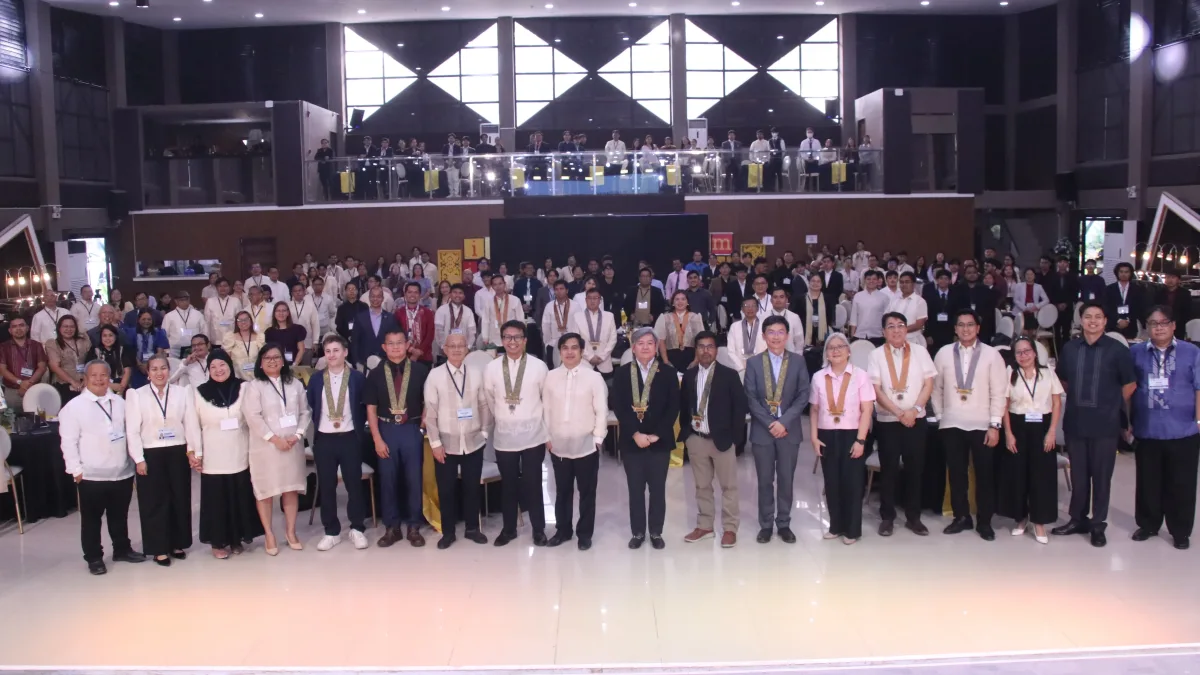
About 250 graduate students, researchers, faculty members, academic leaders, project heads, international visiting professors, and university representatives from across Mindanao joined the Aug. 26 congress hosted by the Mindanao State University-Iligan Institute of Technology (MSU-IIT) College of Engineering and the Department of Science and Technology-Science Education Institute (DOST-SEI).
The gathering focused on a key challenge for the region: how government, universities and industry can work together to produce more researchers and turn academic work into practical solutions.
The congress, themed “Synergy South: Advancing Mindanao’s Industrial 5.0 through Multidisciplinary Research,” featured research presentations, poster exhibits, and discussions on emerging technologies, including artificial intelligence.
MSU-IIT Chancellor Alizedney M. Ditucalan said collaboration among researchers and institutions is needed to identify where research can make a direct contribution to Mindanao’s development.
“Our region is rich in talent, resources, cultures, and possibilities. We have communities with unique needs, industries with enormous potential, and young researchers who are ready to contribute new ideas and solutions,” he said.
Ditucalan said discussions on Industry 5.0 should look beyond automation and advanced technology and consider how communities will use and benefit from these innovations.
More scholars needed
Prof. Jefferson A. Hora, dean of the MSU-IIT College of Engineering and ERDT project leader, said the congress highlighted the contribution of ERDT scholars and graduates from Mindanao while providing a venue to discuss emerging technologies and research challenges.
He said sustaining research and development in Mindanao requires stronger support from government, industry, and academe.
Hora also called for more Master of Science and Doctor of Philosophy scholars who can strengthen the region’s research workforce.
The ERDT program, established in 2007, aims to increase the country's pool of researchers, scientists, and engineers.
ERDT Program Leader Dr. Maria Antonia N. Tanchuling said the program had produced 2,237 Master of Science and 282 Doctor of Philosophy graduates nationwide as of the second semester of academic year 2025-2026.
MSU-IIT accounted for 227 of the MS graduates and 27 of the PhD graduates.
Tanchuling challenged researchers to stay connected to problems in their communities and pursue studies that can produce meaningful change.
“I challenge you, our researchers, to remain curious, stay passionate about your work, and pursue research that creates meaningful change,” she said.
Government support remains key
Commission on Higher Education Commissioner Desiderio R. Apag III, a former ERDT scholar, said researchers from different fields may work on different problems but share the responsibility of using knowledge to improve lives.
He urged researchers to share what they learn and use opportunities to help others.
DOST-SEI Institute Director Dr. Jayeel S. Cornelio said the agency has supported more than 27,000 scholars in Mindanao since the program began.
He said expanding scholarship opportunities will remain important, including a planned expansion of DOST-SEI scholarships at the undergraduate level in 2027.
“Now, the thing, though, is that we need to continue expanding these programs. And it all boils down to how the government supports us,” Cornelio said.
The congress also brought together researchers to present their work and discuss emerging technologies, including AI, as Mindanao’s academic institutions seek stronger links with government and industry.
For the region, the challenge now extends beyond producing research: building enough scientists and engineers, supporting their training, and connecting their work to the needs of communities and industries. (With reports from Lou Ellen L. Antonio and Rachel D. Ala)