CAGAYAN de Oro City — About 1.07 million people in Northern Mindanao were still living below the poverty threshold in 2025, even as the region recorded fewer poor families and individuals than in previous years, according to the Philippine Statistics Authority (PSA).
The region’s poverty incidence among families fell to 14.4 percent in 2025, from 18.4 percent in 2023 and 19.2 percent in 2021.
This means about 144 out of every 1,000 families did not earn enough to meet their basic food and non-food needs.
But Northern Mindanao’s poverty rate remained more than twice the national average of 6.4 percent.
The PSA estimated that around 194,000 families in the region were poor in 2025, down from 227,000 in 2023 and 228,000 in 2021.
Among individuals, poverty incidence dropped to 20.3 percent in 2025 from 25.3 percent in 2023 and 26.1 percent in 2021.
Despite the improvement, about 1.07 million people in the region remained below the poverty threshold. This accounted for nearly one in every 10 poor individuals in the country.
A family needs nearly P15,000 a month
A family of five in Northern Mindanao needed at least P14,938 a month in 2025 to meet its basic food and non-food requirements, the PSA said.
This was 7 percent higher than the region’s poverty threshold in 2023 and 24.3 percent higher than in 2021.
The regional threshold was also above the national average of P14,634.
Families earning below the threshold were classified as poor under the PSA’s measurement.
Poverty levels vary across provinces
The PSA’s provincial classification showed differences in poverty levels across Northern Mindanao.
Misamis Occidental and Camiguin were in the group with poverty incidence among families ranging from zero to less than 10 percent.
Misamis Oriental was in the 10-percent to below-20-percent group, while Bukidnon and Lanao del Norte were in the 20-percent to below-30-percent group.
The classifications were based on the 2025 Family Income and Expenditure Survey.
Questions remain on how to reduce poverty
While the latest figures show improvement, they do not explain why more than a million people in the region still live below the poverty threshold or which sectors and communities need the most support.
The figures also raise questions about whether existing livelihood, employment, agriculture and social protection programs are reaching families most in need.
The PSA release did not provide details on the specific programs or interventions that contributed to the decline in poverty.
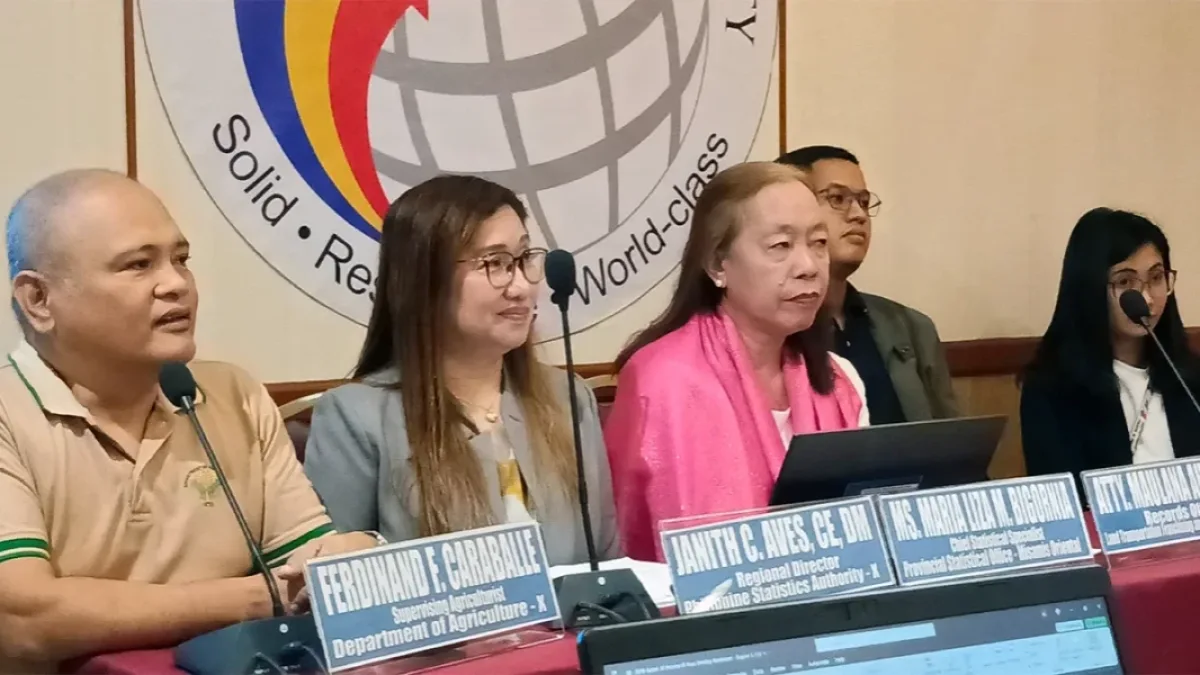
Regional Director Janith C. Avis, CE, DM, of PSA Regional Statistical Services Office 10, signed the official release dated Oct. 19, 2026.