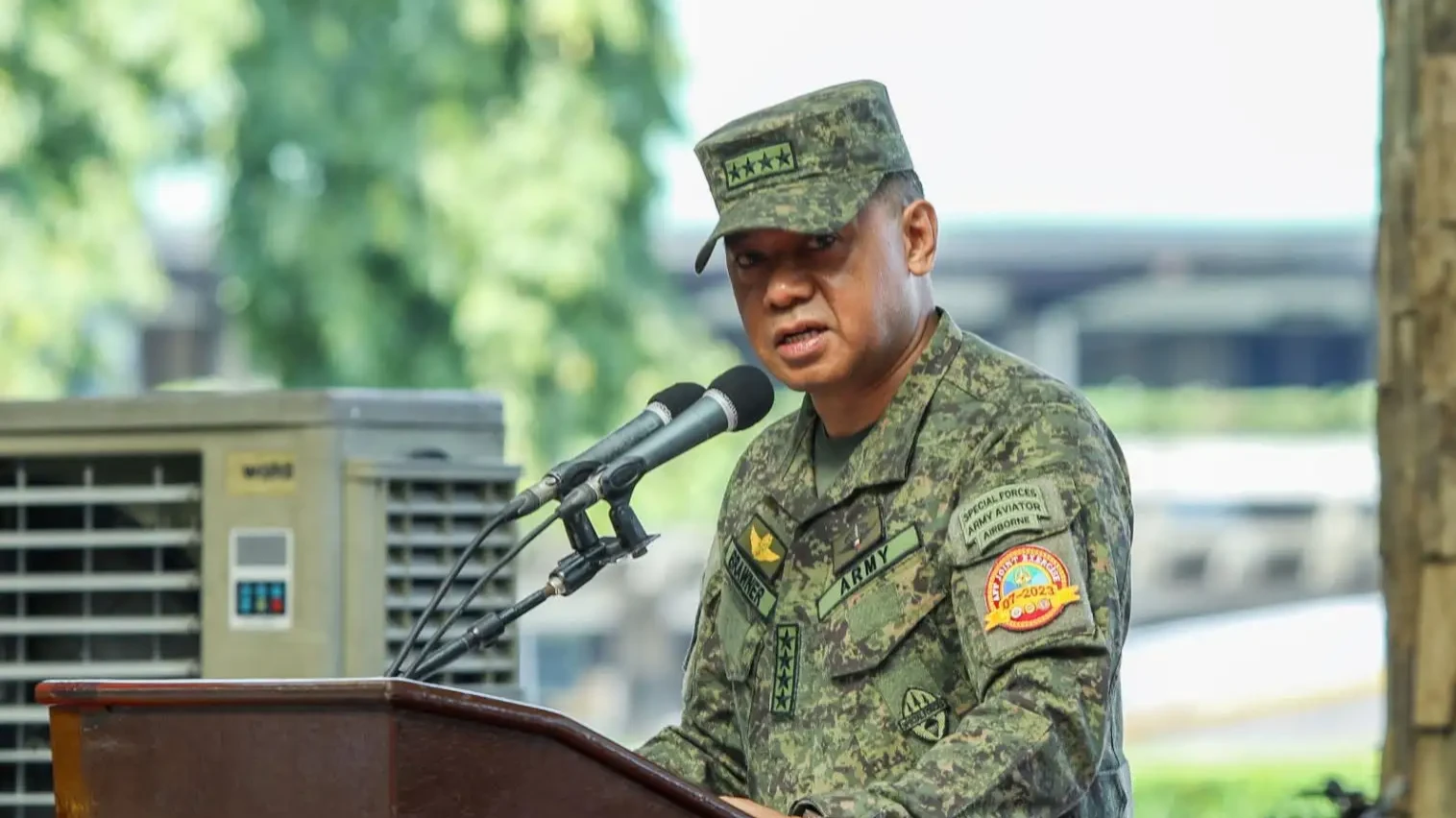
CAGAYAN DE ORO CITY — Armed Forces of the Philippines (AFP) Chief of Staff Gen. Romeo Brawner Jr. will retire on July 21, marking the end of his fixed three-year term under Republic Act No. 11939.
The law grants the AFP chief a fixed term to ensure leadership stability and end the frequent leadership changes that once affected the military.
Before stepping down, Brawner has begun a series of farewell visits to military units he once commanded.
He is scheduled to visit the 4th Infantry Division in Cagayan de Oro and the 103rd Infantry Brigade in Marawi City on July 19.
Brawner has strong ties to Northern Mindanao.
As commander of the 4th Infantry Division, he led operations that resulted in the death of Jorge "Ka Oris" Madlos, the longtime spokesperson of the National Democratic Front in Mindanao, during a military operation in Bukidnon on Oct. 30, 2021.
He also became widely known during the 2017 Marawi siege as the military spokesperson who provided regular updates on the battle to retake the city from Dawlah Islamiyah militants.
Later, while commanding the Army's 103rd Infantry Brigade, Brawner led operations that ended with the death of Owayda Benito Marohombsar, the suspected emir of the Islamic State in Southeast Asia, in Lanao del Sur on March 14, 2019.
Who could replace Brawner?
The AFP has identified 15 senior generals from the Philippine Army, Navy, and Air Force as possible successors.
Among them are three officers well known in Northern Mindanao, including Lt. Gen. Ferdinand Barandon, now head of the AFP Intelligence Command and a former commander of the Malaybalay City-based 403rd Infantry Brigade.
The next AFP chief will be appointed by President Ferdinand Marcos Jr., who is expected to select a leader capable of advancing the military's Comprehensive Archipelagic Defense Concept while strengthening the country's defense partnerships with the United States, Japan, and Australia.
For residents of Northern Mindanao, the transition is significant because several of the leading contenders have served in the region and helped shape military operations that affected local peace and security.