AN unsettling wave of illness is sweeping through this city, leaving hundreds sick as city officials are forced to confront a brewing public health crisis fueled by mounting piles of week-long uncollected garbage.
Health officials of the city have activated an incident command system after a recent surge in cases of acute gastroenteritis, while residents are appealing to city officials to address a growing garbage problem that has become a public health risk.
The City Health Office (CHO) reported that at least 270 people have been treated for stomach-related illnesses, including loose bowel syndrome and diarrhea, since last week.
Dr. Rachel Dilla, the city's health office chief, said the CHO is investigating the cause of the illnesses.
She said the CHO's epidemiology division started interviewing admitted patients while Barangay Health Workers were also instructed to conduct active case findings for onset of diarrhea in the community
“For the meantime, everyone is encouraged to refrain from drinking water from unknown sources,” Dilla said.
She advised residents to bring their own drinking water when outside of their residences.
Getting sick from drinking water
A resident of an urban barangay, Dondale Dumagat said he had to strain the tap water with a cloth just to make sure it was clear enough to wash with.
He added that the cloth got dirty so quickly. He suspected that some people might even be using this water for cooking. “The message was clear: the water could not be trusted,” he told the Inquirer, and urged others to observe it for themselves.
“Ipa inom pud unta ning hari sa kasalan. City of golden friendship pero puno sa basura busa hugaw gyud ang tubig,” Dumagat lamented.
Fred Paica of Barangay Consolacion complained of stomach aches after eating at a street kitchenette (karenderia). He suspects that it may have been from the water used in cooking the food because he said he drank bottled mineral water when ate.
“Wala na hinuon ko nakapamasada hantod karon kay nagkalibanga na man ko,” Paica, who plies a trisikad for a living, said.
Earlier, Dilla said their office had submitted water samples to the Department of Health-10. However, the results of the test have yet to be released.
Mounting trash
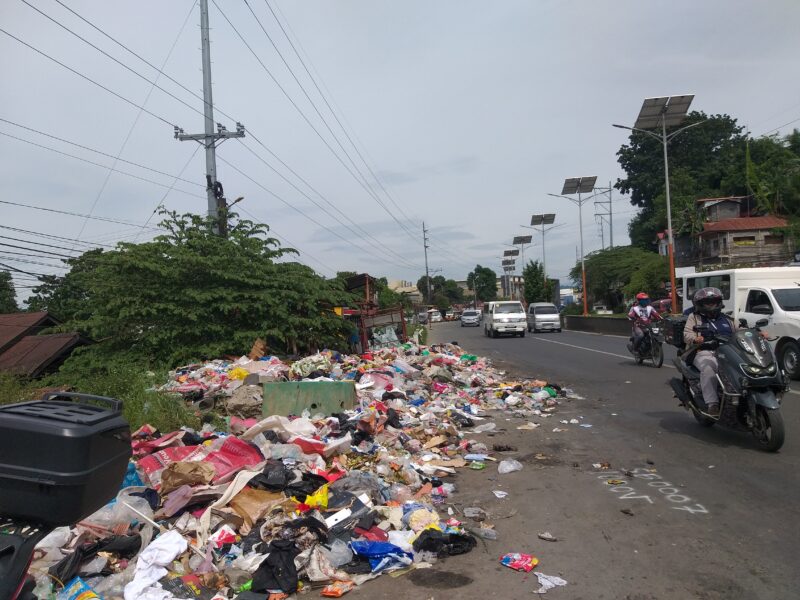
The health concerns come as residents complained of uncollected trash piling up in their communities for weeks on end.
For people living near Bigaan Bridge, residents have reported a long-standing issue with trash piling up.
A woman who identified herself only as Gina said the garbage has been there for some time and now emits a "foul odor" and attracts flies. She said the situation poses a health risk, especially to children.
“Kuhaon na unta niang mga basura kay delikado kaayo magkasakit ang mga bata,” she said.
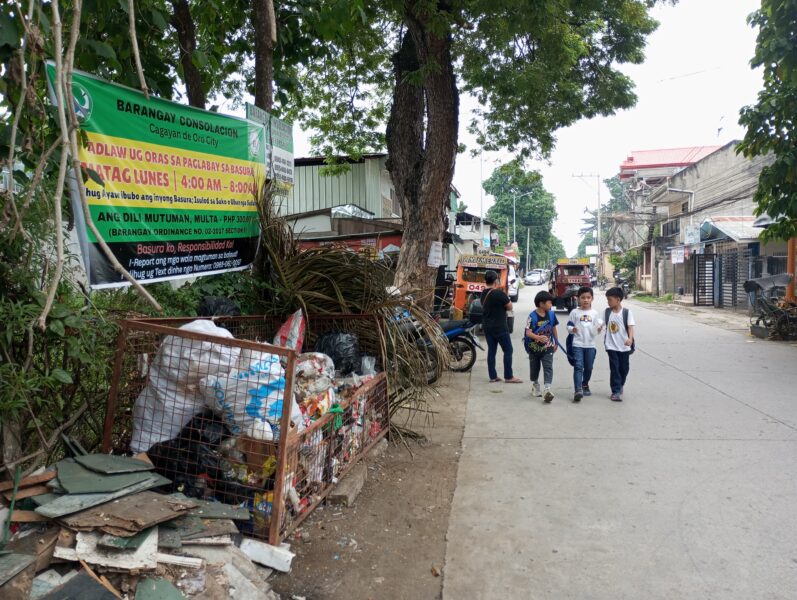
Former Cagayan de Oro Mayor Oscar Moreno weighed in on the issue, saying that waste management is a sign of good governance.
“When garbage is left uncollected, it does more than clutter our surroundings,” Moreno said. “It threatens health, breeds disease, clogs our drainage, and weakens the quality of life in our communities.”
He said having good governance is not just about policies but about protecting its residents “starting with the air we breathe, the water we drink, and the streets we walk every day.”
“Kung limpyo ang siyudad, himsog ang katawhan,” Moreno said.
City hospital assesses own garbage
In a related development, officials at the city-owned JR Borja General Hospital (JRBGH) met yesterday, September 24, to assess their own waste management efforts.
The hospital, which was recognized with a three-star Green and Safe Health Facility Award by the Department of Health last year, is working to improve its protocols.
The hospital’s Green and Viable Assessment Committee and Health Care Waste Management Committee are working together “to identify any deficiencies and reinforce initiatives that will improve the hospital's waste management protocols and operations.”