THE Department of Public Works and Highways (DPWH) wants the public to act as infrastructure watch dogs.
Warning that delays lead to massive economic bleeding, DPWH Secretary Vince Dizon urged citizens to actively report unfinished, anomalous, or stalled projects using social media.
“Open to the public, please tell us if there are unfinished roads, unfinished classrooms, bridges, healthcare centers, hospitals,” Dizon said.
He emphasized that crowdsourcing reports helps government agencies identify bottlenecks and force immediate accountability.
Dizon issued the appeal on Jan. 15 during the reopening of the Davao-Bukidnon Road in Sitio Kipolot, Barangay Palacapao. The event marked the restoration of a critical artery linking Northern and Southern Mindanao, which had been severed by a landslide on Oct. 18 last year.
The disaster killed two senior citizens and forced a closure that lasted weeks, choking off trade between major economic centers.
According to Dizon, President Ferdinand Marcos Jr. personally ordered the immediate rehabilitation of the route, issuing a directive that applies nationwide: finish the backlog.
“The instruction of the President is to finish all the unfinished projects and prioritize them,” Dizon said, noting this covers everything from flood control to schools.
The cost of delay: P40 million a day
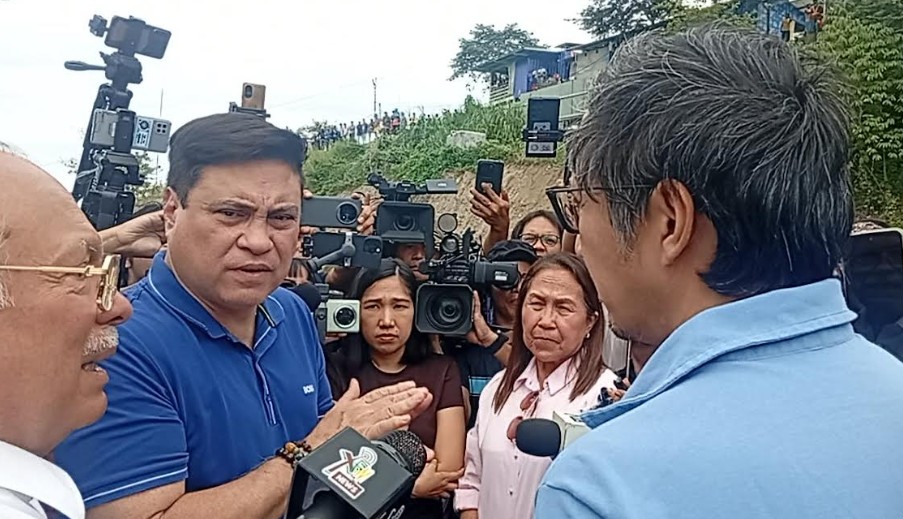
Senator Juan Miguel Zubiri, who attended the reopening, quantified the massive cost of infrastructure failure. He estimated that the road’s prolonged closure resulted in P40 million in daily economic losses due to disrupted trade.
“In record time, we were able to save P40 million in losses every day,” Zubiri said, thanking the national government for the swift repair.
Zubiri highlighted the logistics nightmare faced by the agriculture sector. Bukidnon is the country’s top contributor to agricultural gross domestic product, accounting for about 7.5 percent of the total.
“Lahat ng pinya galing Bukidnon, saging, hindi madala sa Japan dahil nga ‘yong shipping point ay nasa Davao, ang mga processing plants nasa Davao,” Zubiri explained.
He noted that the shutdown caused supply shortages in Davao and panic among producers in the north.
“Kaya nung nasira ang kalsadang ito, we were so worried. We could not ship out and ship in food from Northern Mindanao to Southern Mindanao,” Zubiri said.
With the road now open and Dizon’s call for public vigilance, the government hopes to prevent future bottlenecks that cripple local economies.
Dizon stressed that public participation is crucial: when citizens watch, corrective action speeds up.