GLOBE Telecom is accelerating its broadband and mobile expansion in Isabela City, committing to 12 new cell sites and a submarine cable landing station to support the city's growing digital demands.
The expansion plan was solidified during a meeting between Isabela City Mayor Sitti Djalia A. Turabin-Hataman and Globe Telecom President and CEO Carl Cruz, alongside senior company officials.
Mayor Hataman welcomed the infrastructure boost, citing its alignment with the city’s upward economic trajectory. Isabela City recorded a 31% increase in business activity over the previous year.
Hataman reaffirmed the local government’s commitment to fast-track permit applications and implementation processes to support these investments.
Infrastructure timeline
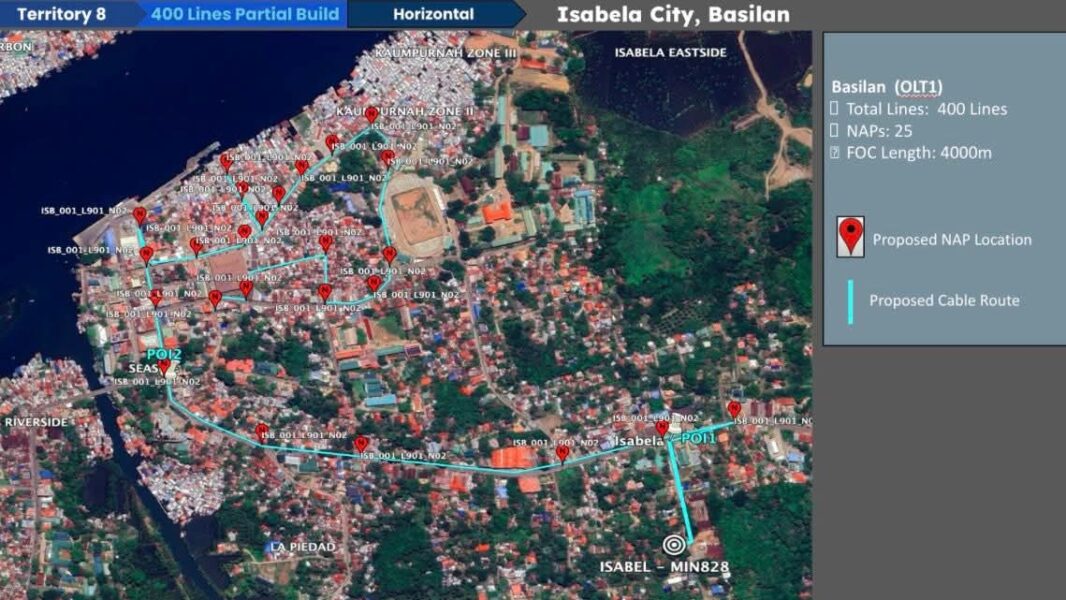
Globe reported significant progress in its network buildup. The telco began the year with nine active cell sites in the city and has since added eight more. Three additional sites are scheduled for completion before the end of 2024.
For 2026, the company outlined a roadmap for 12 new sites:
Three sites already possess permits.
Seven sites are awaiting LGU approval.
Two sites are currently undergoing land acquisition.
In addition to mobile data, Globe is expanding its fiber-to-the-home capacity.
Fiber lines have increased from 112 to an expected 432 by year-end. An additional 1,100 lines are scheduled for rollout in 2025 using Quick ODN technology to speed up deployment.

Submarine cable project
Globe executives also presented updates on their Submarine Cable Program, which will establish a landing station in Isabela City. This critical infrastructure is designed to accommodate rising data traffic across the Basilan, Sulu, and Tawi-Tawi (BASULTA) region.
Marine surveying for the cable project is set for the first quarter of 2026, with full construction targeted for completion by the second quarter of 2027.
“Fixed broadband remains a key growth driver for us. With user data consumption now exceeding 30GB per user each month, we’re refining our fiber strategy beyond just connectivity — it’s about powering homes, uplifting small enterprises, and fueling the broader digital economy,” Cruz said.
Closing the gap
The expansion aims to address the connectivity gap in Geographically Isolated and Disadvantaged Areas (GIDAs). Globe noted it has already migrated over 600 towns in 70 provinces to full fiber connectivity, replacing copper lines to boost stability.
“We’re not just building faster connections — we’re building a more inclusive, more connected Philippines,” Cruz added. “Much like our transition from 2G to 4G, fiber modernization brings transformative benefits. This is about more than speed — it’s about equity and long-term sustainability.”
Cruz was joined by Globe executives Evelyn Jimenez, Rebecca Eclipse, Joel Agustin, Khristine B. Ekong, and Helen Grace Marquez.