SUPER Typhoon Uwan (international name: Fung-wong) devastated farmlands across Talavera town, wiping out fields of assorted vegetables just a day after the storm crossed the region.
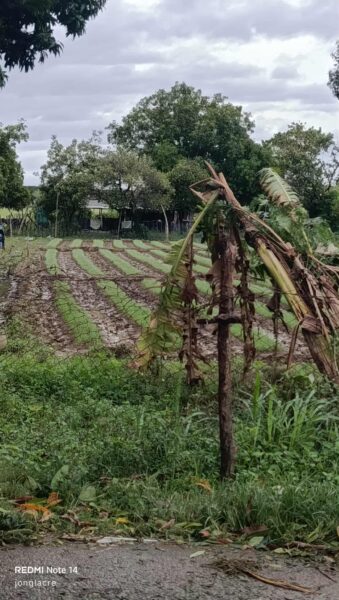
Del Jesus M. Lacre, a resident of Sitio Tumana in Barangay Bantug, documented the aftermath on Nov. 10, showing large swaths of crops submerged or destroyed by the super typhoon’s heavy rains and flooding.
Tomatoes, and other vegetables were lost, posing an immediate threat to the local agricultural economy.
Lacre, originally from Cagayan de Oro but now based in Nueva Ecija, noted the extent of the damage to the major crop area.
“Ang uban naka harvest pa, pero daghan ang wala na masapon. Katong sa ibabaw kay harbesunon,” Lacre told Gold Star Daily.
Lacre pointed out that some farmers who managed to harvest were selling eggplant at P50 per kilogram, which he considered a sign that the local market was still coping. The price indicated a slight increase, suggesting the retail price was likely already climbing to P70-80 per kilogram.
However, the general outlook for the commodity market remains grim.
“Pero lahi pod dire sa Talavera bisa’g daghan ga harvest, pag mahurot gani sa mga kumprador mga produce sa mga farmer, nah mo bug-at pod dayun (ang) presyo sa merkado,” Lacre said.
He drew a parallel to a past crisis involving onions, a key Nueva Ecija crop.
“Pareho atong nag P500/kg sa sibuyas pila na ka tuig na nilabay. Pati mga onion farmers dire namalit sa tag P500/kg sa ilang mga tinanom,” Lacre added, describing the extreme price hikes where even farmers had to buy back their own commodity at inflated prices, leading to desperation and raids on cold storage facilities.
The complete destruction of newly planted crops signals a forthcoming scarcity, threatening a sharp increase in food prices for consumers and creating a significant economic hurdle for farmers already grappling with the typhoon’s immediate physical damage.