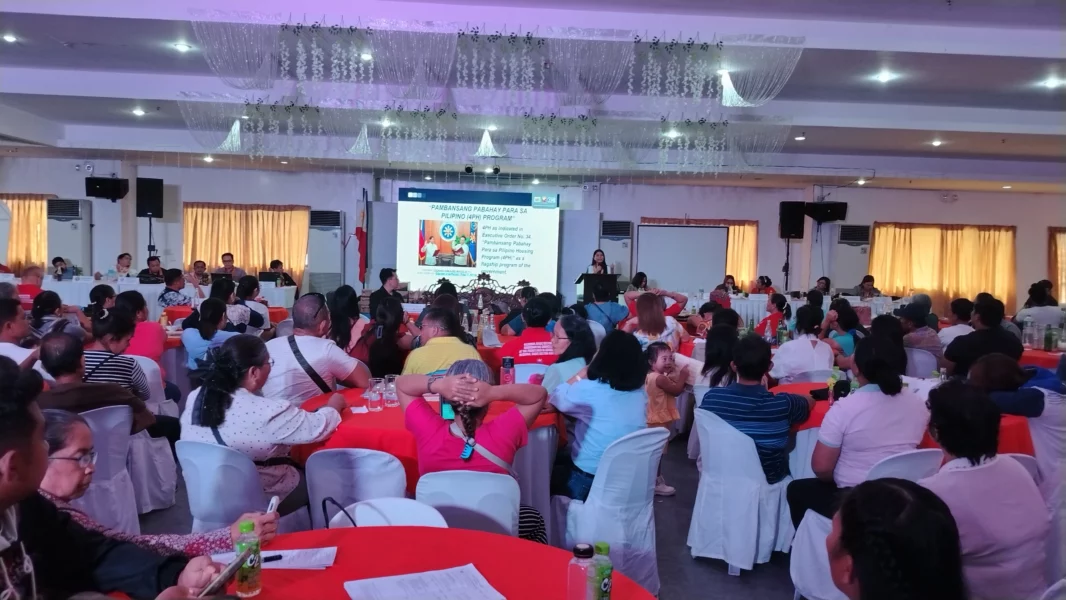
ILIGAN CITY— More than a decade after Tropical Storm Sendong displaced thousands of families in Northern Mindanao, around 200 survivors, housing beneficiaries, and homeowners' association leaders gathered at the Celadon Pension House for the region's first institutional Housing Summit.
Organized by the National Anti-Poverty Commission, the convergence provided residents of localized relocation communities an official platform to directly negotiate housing rights, structural resettlement gaps, and access to foundational public services.
Technical panels featuring key national agencies addressed state housing policies, socialized housing financing programs, community mortgage options, and the delivery of critical basic services to far-flung relocation villages.
Legal Mandates Under the Magna Carta
You may also like: Fix service first: 40% COWD hike draws backlash
Ana C. Cañeda, Director III of NAPC's Basic Sector Coordination and Advocacy Service, stated the summit focused on empowering long-term displaced families to ensure their local grievances reach cabinet-level agencies.
"Finally, naay closure sa importante kaayo nga katungod. This is the right to adequate housing, one of the five fundamental rights under the Magna Carta of the Poor," Cañeda said, referring to the distribution of validation documents to verified housing beneficiaries.
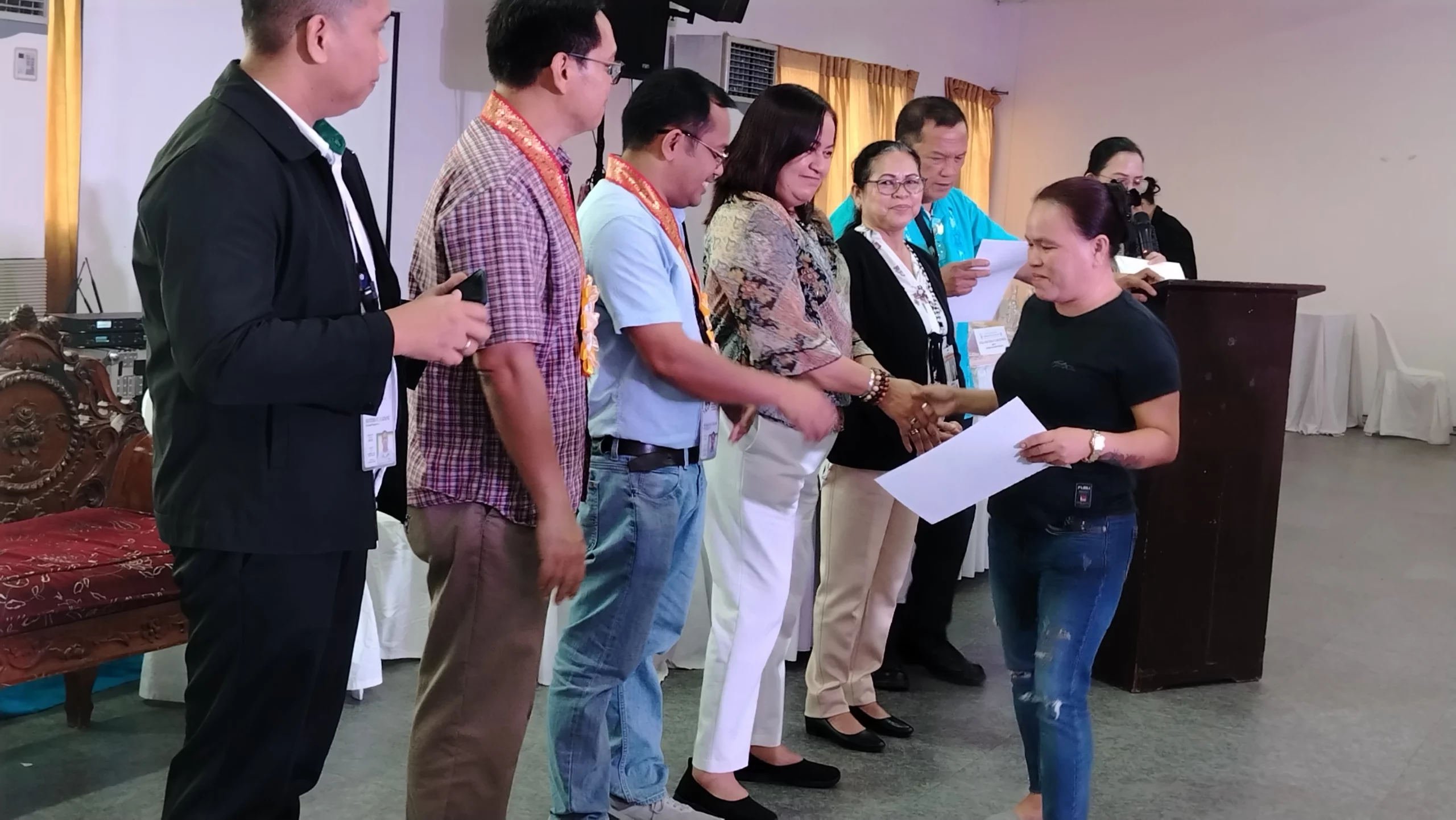
During the sessions, the local Housing and Resettlement Office (HRO) distributed validation certificates and certificates of award to qualified disaster survivors, completing an essential administrative step toward formal land registration and the eventual issuance of land titles.
Stakeholder Perspectives
For multiple attending beneficiaries, the state recognition represented the culmination of an ongoing, decade-long legal struggle.
"Gikan sa pagka-Sendong mao gyud nay among giambisyon nga mahatagan mi'g titulo. Dako kaayo kog pasalamat," said Ranillo Cardoza of Dalipuga Vista Village, who has resided within the assigned relocation development since the initial aftermath of the disaster.
Other local leaders emphasized that direct, face-to-face dialogues with state personnel remain crucial for resolving persistent urban planning issues.
"Mas maayo gyud nga naay housing summit kay aron makabalo ang mga tawo nga naa diay tay katungod ug madungog ang atong mga tingog," noted Vista Village resident Rosalie Panuncialman.
Panuncialman also stressed the need to protect open spaces within housing communities, citing concerns over common areas gradually being occupied by structures.
Inter-Agency Commitments
The event concluded with a regional convergence dialogue among national line departments and local government units to formalize structural development budgets for resettlement sites across Northern Mindanao.
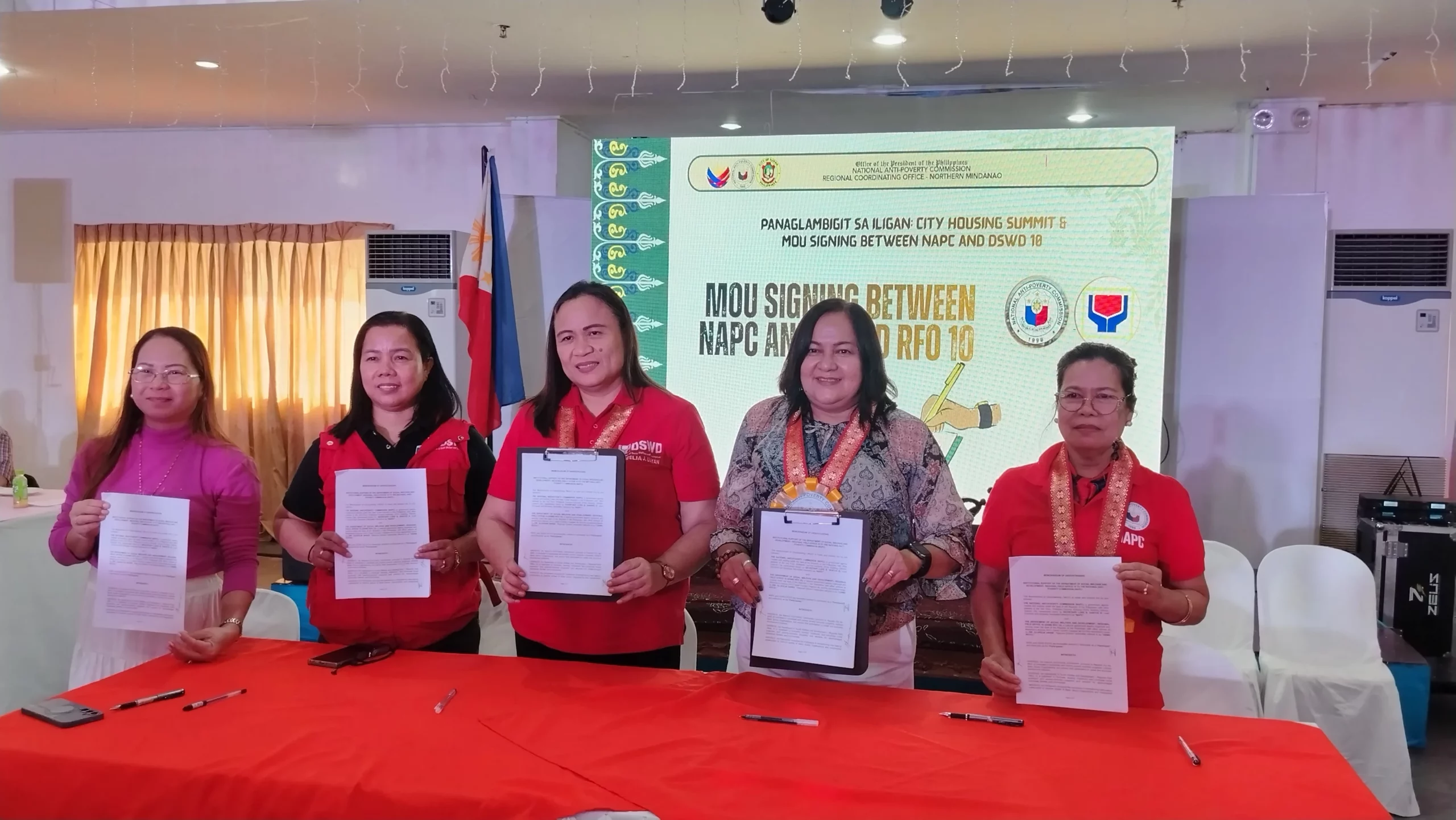
Concurrently, NAPC and the Department of Social Welfare and Development Field Office 10 signed a memorandum of understanding to systematically align anti-poverty outreach operations for vulnerable sectors and relocation colonies.
Cañeda noted that the structural partnership will ensure direct delivery of state resources to marginalized communities, reinforcing broader initiatives to upgrade regional living standards.
As part of the simultaneous serbisyo caravan operations, attending housing beneficiaries received emergency family food packs managed by the DSWD.
"To our housing beneficiaries, this activity is a living testament to our government's commitment to ensure that every family has access to adequate shelter and opportunities for a better future. Your participation and cooperation remain vital to the success of our housing program," said former City Councilor Atty. Betsy Zalsos, representing the Iligan City government.