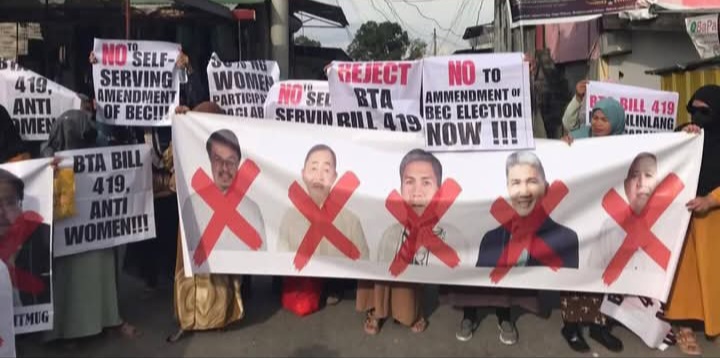
ILIGAN CITY—Sectoral organizations are raising alarm over recent changes to the Bangsamoro Electoral Code (BEC), questioning whether the Bangsamoro Parliament is advancing democratic reform or rolling it back.
The groups issued a position paper following the passage of BTA Bill No. 419, which amends key provisions of the landmark electoral law. While the Bangsamoro Transition Authority (BTA) says the measure aims to make elections more inclusive, critics argue the amendments weaken protections for marginalized sectors, particularly women.
Women’s representation reduced
One of the most contested provisions involves women’s representation. Under the original BEC, political parties were required to ensure that at least 30% of their nominees were women. Bill 419 lowers that threshold to 20%.
Sectoral groups described the move as a “clear retreat” from the original goals of electoral reform, warning that it could significantly weaken women’s influence in the Bangsamoro Parliament.
Certifications revoked
The organizations also criticized Section 8 of the amended code, which revokes all previously issued certifications for sectoral groups. The provision requires them to reapply for accreditation, a process the groups described as burdensome and potentially exclusionary.
In their petition, the groups said they are not opposed to reform but are calling for a “meaningful, just, and democratic” process that safeguards sectoral participation.
BTA defends amendments
Despite the backlash, supporters of Bill 419—which has passed its third and final reading—argue the changes lower barriers to political participation, especially for smaller parties.
Among the amendments are: Reduced membership requirements for regional political parties, from 10,000 members to 5,000; Lower vote threshold of 2.5% of total valid votes to secure a parliamentary seat; and
Synchronized elections for sectoral representatives, excluding Ulama, Traditional Leaders, and non-Moro Indigenous Peoples, with the first regular parliamentary elections
Supporters say these measures make the electoral system more accessible, but critics counter that inclusivity should not come at the expense of women’s representation and sectoral voices.
As debate over the amended electoral rules continues, sectoral groups say their fight for what they call a just and democratic Bangsamoro election system is far from over. (With reports from Mar Sabate)