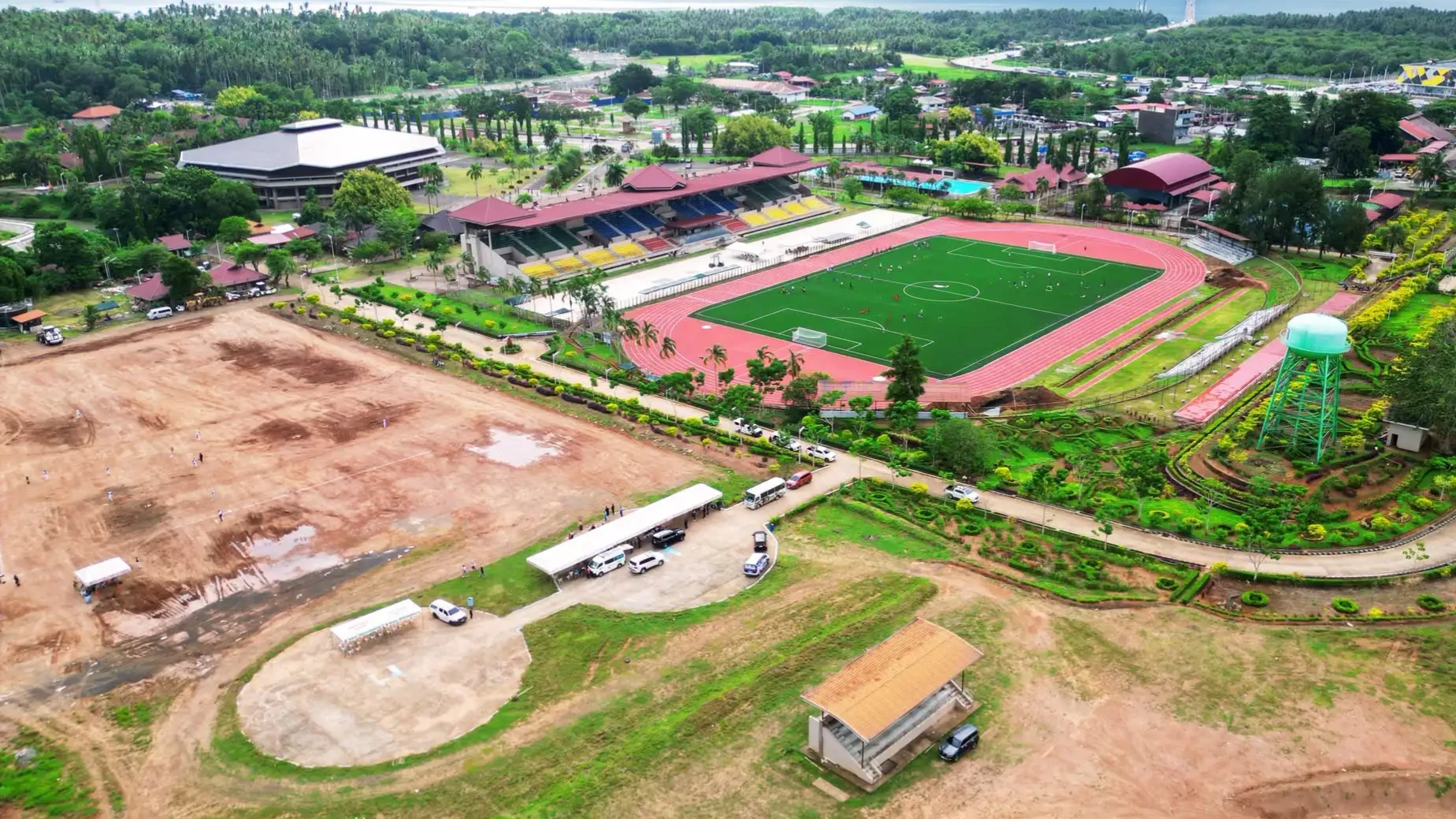
MY early romance with journalism began in high school. It was February 1989 when the regional meet of the Eastern Visayas Regional Athletic Association (EVRAA) was held at the sprawling campus of the Southern Leyte School of Arts and Trades (SLSAT), now Southern Leyte State University, in the town of Sogod.
At the time, I was a fourth-year high school student at St. James Academy in Padre Burgos. From our home in Barangay Lungsodaan, traveling to Sogod meant boarding a passenger jeepney and riding for nearly an hour along the coastal highway. For a teenager, the trip felt long, but it was also an adventure — especially when the destination was a bustling sports meet that had drawn athletes and spectators from across Eastern Visayas.
Around that time, announcer Sanjie Gan made an announcement over dySL Radyo ng Bayan Sogod. The station, then the only radio station operating in the entire province of Southern Leyte, was looking for student correspondents to help cover the EVRAA games and deliver live updates on air. The dySL studio stood just inside the SLSAT campus, close enough for young dreamers like me to imagine ourselves behind the microphone.
I responded to the call and was asked by Gan to come to the station for a briefing. If memory serves me right, only a handful answered the invitation for volunteer reporters. From that small group, I can now recall only Nick Cinco and a certain Miss Solana, both from the nearby town of Tomas Oppus.
The station at the time was managed by veteran broadcaster Mar Tendero. Its chief technician was Reymundo Felicilda, whom we fondly called Papa Rey. To us young volunteers, the studio itself seemed like a sacred place — filled with wires, microphones, and the quiet authority of voices that traveled invisibly through the air.
I thought it would be my first and last volunteer work for Radyo ng Bayan–Sogod. I was mistaken.
When the May 1989 barangay elections came, dySL once again called for volunteer reporters from different towns to help cover the polls. This time I was paired with the late Romeo Siao, who was much older than I was and then serving as the municipal planning officer of Padre Burgos. We were both issued white Radyo ng Bayan T-shirts printed with the words “Halalang Pambarangay ’89.” Wearing that shirt felt like wearing responsibility.
We interviewed Mayor Emeliana Borces and asked for her assessment of the elections, including whether any barangay had been identified as an election hotspot. She answered in the negative. I believed her. Padre Burgos was, and remains in my memory, a peaceful town.
Around this time, I came to know people working with the Philippine Information Agency – Maasin Information Center — Infocen Manager Alvin Arpon and staff writer Bong Pedalino. As Arpon, Pedalino, and Siao engaged in conversations on public issues, I listened intently, absorbing their words, perhaps already preparing myself — though I did not yet realize it — for a future in media work.
Beyond my volunteer work in radio, I began sending news articles to local publications. My first byline appeared in Bantay, a weekly tabloid published and edited by Rafael S. Gerong Jr. The story was about a stabbing incident in our barangay. A day or two after it was printed, I traveled to the Bantay office in Maasin. It was my first time meeting an editor face to face.
Mr. Gerong was soft-spoken and patient. It was from him that I first learned about the “inverted pyramid” structure of news writing. I listened carefully, as though the term itself were a secret code to a new world.
When I left, he handed me twenty-five pesos as payment for my short news story. In 1989 that amount already felt significant — not merely for its value, but for what it symbolized. Someone had paid me for words.
I later contributed articles to Country newsmagazine, published by Restituto Cayubit, and to The Tacloban Star, edited by Nestor Abrematea, both based in Tacloban City. The press card issued to me by Abrematea became my first official press ID — a small laminated proof that I belonged, however modestly, to the world of journalism.
For my literary pieces, I submitted them to the Maasin-based publication Ang Kahayag, published by Agripino 'Pinn' Baybay. Even then, I was already moving between reportage and creative writing, not yet aware that both would later shape the direction of my life.
By any measure, my volunteer radio work and brief stint as a local newspaper reporter were not extensive. Yet those experiences left a lasting imprint on me. They introduced me to deadlines and discipline, to responsibility and accuracy, and to the quiet thrill of seeing one’s byline in print.
Looking back now, after decades of writing — as a columnist, editor, teacher, and occasional poet — I realize that those early days at dySL and in the small newsrooms of Southern Leyte were more than youthful adventures. They were my training ground.
The jeepney rides from Barangay Lungsodaan to Sogod, the hum of the radio studio, the press card in my pocket, the twenty-five pesos folded carefully in my hand, the lesson on the inverted pyramid — each of these became part of my formation.
Journalism taught me discipline before it taught me style. It taught me to listen before I learned to argue. It taught me that words carry responsibility. And perhaps most importantly, it taught me that every story, no matter how small, deserves to be told with care.
What began as volunteer work in 1989 quietly became a lifelong vocation.
Email me at rgmoldez@gmail.com