A Mindanao consumer advocacy group is raising concerns that privatizing the Agus–Pulangi Hydroelectric Complex could lead to higher electricity rates and reduced public oversight of one of the region’s most critical energy assets.
Consumers for Renewable Energy Action in Mindanao (CREAM) described the hydro complex as a cornerstone of Mindanao’s energy security and economic stability, arguing that it should remain under public stewardship rather than be transferred to large private conglomerates.
“Mindanao’s most important power asset must remain under Mindanaoan stewardship,” said BenCyrus G. Ellorin, CREAM project director.
He cited an alternative rehabilitation proposal from Mindanao-based Greenergy Development Corporation, which seeks to modernize the aging facilities through an Energy Storage Project (ESP) while keeping government ownership intact.

Ellorin said the ESP proposal has gained support from consumer groups and regional stakeholders since it was presented at several Mindanao energy forums in 2024.
In January last year, Greenergy submitted the proposal — accompanied by a petition signed by more than 20,000 stakeholders — to the Department of Energy for evaluation.
News reports quoting officials of the Power Sector Assets and Liabilities Management Corporation confirmed that the agency has received three proposals to rehabilitate the more than 1,000-megawatt hydro complex it manages.
Concerns over rehabilitation costs
CREAM said its internal analysis found the ESP proposal to be more cost-effective than bids from major power conglomerates. According to Ellorin, higher-priced rehabilitation plans could translate into increased electricity rates for households, small businesses, and industries already burdened by high energy costs.
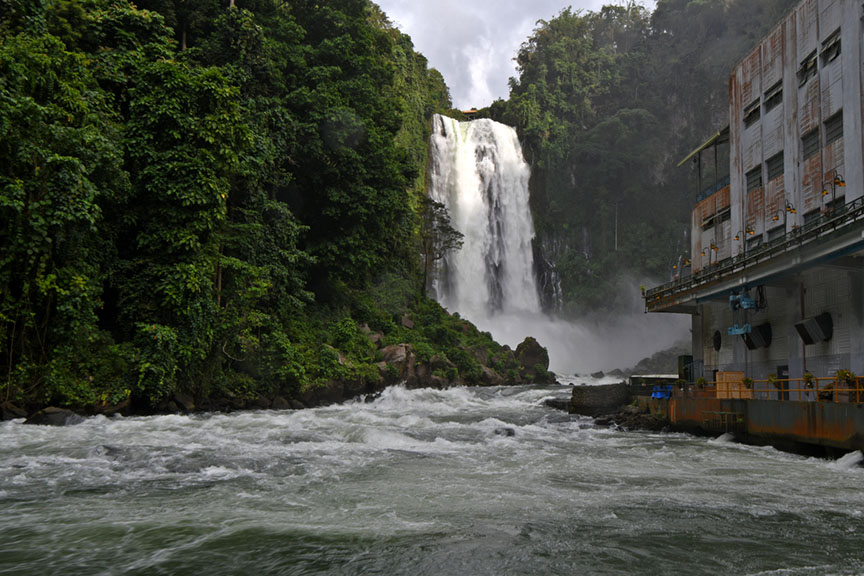
The hydro system, powered by Lake Lanao, consists of six cascading plants across Lanao del Sur and Lanao del Norte, as well as the Pulangi IV facility in Bukidnon. Some units date back to the early 1950s and are due for major upgrades.
As a government asset, the complex was designed to deliver affordable and reliable power to Mindanao, with generation costs estimated at about P3 per kilowatt-hour.
CREAM warned that privatization could weaken this mandate and potentially push prices upward.
Under the ESP proposal, the facilities would be rehabilitated and operated through a concession arrangement while ownership remains with the government.
The plan includes a mass-based ownership model reserving at least 30 percent of the implementing entity for Mindanao consumers.
Modernization plan
Greenergy president engineer Cerael Donggay said the company’s modernization strategy combines Hybrid Economic Dispatch, Circular Economy for Hydro Plants, and Solar Ocean Pumped Storage technologies to improve efficiency and expand renewable capacity.
According to the company, these upgrades would allow Lake Lanao to function as a large-scale energy storage system, recycle water through solar-powered pumping, and extend renewable power solutions to small island grids.
Greenergy estimates the improvements could increase the complex’s effective capacity by about 100 megawatts without constructing new dams.
Balancing modernization and public interest
From a public-interest standpoint, the debate over the Agus-Pulangi complex reflects a broader question facing Mindanao’s energy sector: how to modernize aging infrastructure without compromising affordability and accountability.
Energy observers note that while private investment could accelerate rehabilitation, consumer groups are pressing for safeguards to prevent sharp rate increases and ensure transparent management of a key public resource.
The government’s decision on the competing proposals is expected to influence electricity costs, investor confidence, and long-term energy security in Mindanao.