THREE high schools in Cagayan de Oro are piloting a revamped Senior High School (SHS) curriculum that dramatically slashes core subjects and boosts hands-on training, a shift education officials say is running smoothly as it enters its second semester.
The revised program introduces two major changes: reducing the previous 15 core subjects to five and increasing immersion hours for students.
January Gay Valenzona, the SHS coordinator for the Department of Education (DepEd) Cagayan de Oro Division, said there has been no negative feedback regarding the pilot run.
“There has been no report from the pilot schools that need to be addressed,” Valenzona said.
According to Valenzona, the changes align with DepEd Memorandum No. 48, series of 2025. This policy provides guidelines for the “Strengthened SHS” curriculum, which launched for Grade 11 in the 2025-2026 school year.
The memorandum outlines a restructured approach designed to reduce subject overlap and enhance quality through fewer, more focused core and elective offerings.
The curriculum is divided into two main tracks — Academic and Technical-Professional — offered year-round to foster an integrative learning approach.
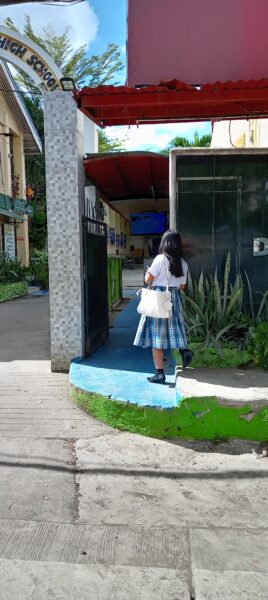
The three institutions piloting the program are Lumbia National High School, Cagayan de Oro City National High School-SHS, and Oro Grace Christian High School.
Understanding the changes
Implemented less than a decade after the original SHS launch in 2016, these revisions are a direct response to stakeholder feedback.
According to a research by Gold Star Daily, the updated curriculum is designed to help students better match their education to their interests through clustered electives. By reducing the course load to five core subjects, the program aims to build stronger foundational skills in communication, mathematics, science, and life skills.
The reform emphasizes real-world readiness. The extended immersion hours are intended to help students acquire practical, job-relevant competencies that align with current labor market needs.
Educators weigh in
Jerson B. Herrero, principal of Cagayan de Oro National High School-SHS, said his school currently has 1,538 senior high students across 37 sections. He noted that enrollment has increased over the last three years and that the full results of the pilot will be seen when the current cohort finishes Grade 12.
Herrero believes the changes benefit both faculty and students.
“The teachers get more focus on every subject, as they are not so complicated. They can apply strategies according to their needs and the needs of their students,” Herrero said, adding that the streamlined approach allows teachers to be more creative in skills application.
While the majority of public schools continue to use the old curriculum, educators outside the pilot program see the potential value.
Genefer A. Perinio, SHS coordinator at Tagpangi National High School, said the revised model emphasizes skills development over heavy academic offerings.
Perinio said she hopes to implement the curriculum after the two-year pilot period, particularly for the benefit of families in the hinterlands.
“In the hinterlands, it is more appreciated by parents that their children are in the employability market after earning their SHS diploma, kay lisud jud ang kinabuhi,” Perinio said.
She noted that less than half of their graduates are likely to pursue a bachelor’s degree, making immediate employability a priority.
Remaining challenges
Despite the curriculum improvements, logistical challenges remain.
Herrero noted that as an inclusive education school, they face facility shortages.
“We need armchairs,” Herrero said, pointing out that their current monobloc chairs do not provide adequate comfort for student learning.
He said the school accepts donations and hopes to equip at least one section with proper armchairs soon.