A renewable energy firm has sought the endorsement of the 21st City Council, again, for a proposed 40-megawatt hydroelectric power project that would supply parts of Cagayan de Oro and Bukidnon with renewable energy.
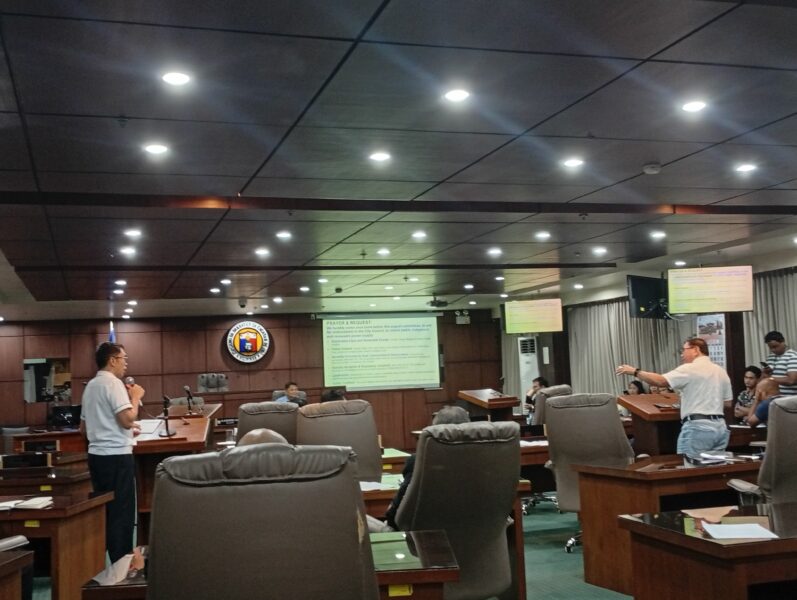
On Friday, October 17, First Gen Corp. presented its San Isidro Hydropower Project before the Council Committee on Public Utilities, Tourism, and Environment, chaired by Councilor Enrico Salcedo. The company said the project would use a run-of-river hydro scheme, which channels part of the river’s natural flow through turbines to generate electricity before returning it downstream.
It can be recalled that in August, last year, Cagayan de Oro’s City Council refused to greenlight the project. The Energy Committee, then, asked for an updated flood model and a comprehensive energy plan before granting an endorsement.
“We only borrow the water to generate power,” said Leo Joseph Conde, First Gen’s marketing officer. Conde added that the project would be “clean, renewable,” and would have minimal environmental impact because they wouldn’t build a large dam.
The project site is proposed along the Cagayan River, spanning the villages of San Isidro, Talakag, and Tignapoloan in Cagayan de Oro.
Officials from the Department of Environment and Natural Resources-10 (DENR-10) and the City Tourism Office expressed support, saying the project could help stabilize the region’s power supply. Northern Mindanao’s peak demand reached 1,253 megawatts in 2024, up 7% from 2022, according to data from the National Grid Corporation of the Philippines (NGCP) — a trend driven by expanding manufacturing and urban growth in the city.
However, not all council members were convinced.
Councilor Roger Abaday raised ecological concerns, warning that even run-of-river setups can alter aquatic habitats.
“Hydro systems can disrupt river ecology by blocking fish migration routes or changing water temperature,” Abaday said. He added that the Cagayan River is also vulnerable to climate shifts that could reduce river flow.
Studies by the University of the Philippines-Los Baños and Mindanao State University-Iligan Institute of Technology (2023) support Abaday’s caution, noting that smaller hydro projects can still affect sediment flow and biodiversity if not managed with adaptive release systems.
The discussion also recalled the lessons of Tropical Storm Sendong (international name: Washi) in 2011, which claimed over 1,200 lives in Cagayan de Oro and Iligan City. Environmental experts have long linked Sendong’s devastation to deforestation and river siltation — issues that any new project on the Cagayan River must address.
For his part, Councilor George Suan expressed reservations, urging the council to commission an independent environmental audit.
“Even if the design looks safe, there’s never a hundred percent guarantee,” Suan said, adding that the city council should bring in a third-party evaluator to assess seismic and climate risks before approval.
He also pointed to the possible effects of El Niño and drought on water availability.
“While this project promises benefits, we can’t ignore the uncertainties. At this stage, I lean toward caution and conservation,” Suan added.
The committee scheduled another hearing for November 5, when additional environmental impact assessments and technical validations are expected to be presented.