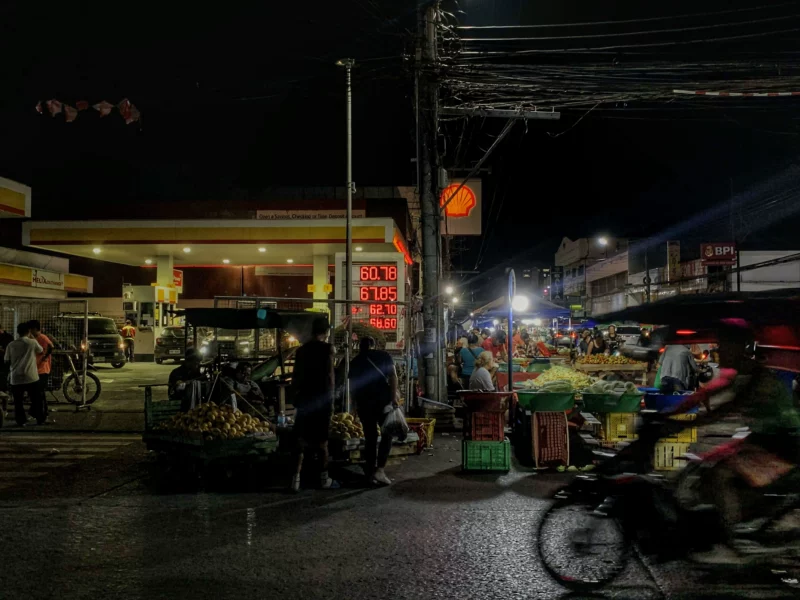
CAGAYAN DE ORO CITY — From street vendors and public transport drivers to real estate bankers, the city’s shift to a four-day government workweek is raising concerns over delayed transactions and possible losses in daily income.
For 64-year-old Diosporo Caballa, who has driven a motorcycle taxi — locally known as a habal-habal — for two decades, losing a day of transporting City Hall employees from Sitio Macapaya in Barangay Camaman-an could significantly reduce his weekly earnings.
“Gasaka ang presyo sa gasolina. Adtong una kay P250 lang full tank na ang motor. Karon bisan tubilan nako’g P300 dili na mapuno. Mabawi unta kana nga gastos kung magpadayon lang gihapon nga Lunes hangtod Biyernes ilang trabaho,” Caballa told Gold Star Daily on Tuesday, March 10.
City Mayor Rolando “Klarex” Uy recently signed Executive Order No. 103-26, mandating that City Hall operations run from 8:00 a.m. to 7:00 p.m., Monday through Thursday, with offices closed on Fridays except for essential departments providing health, emergency response, and public safety services.

The local directive follows Memorandum Circular No. 114 issued by President Ferdinand Marcos Jr., which temporarily instructs selected executive agencies to adopt a four-day workweek to help reduce fuel and electricity consumption amid rising energy prices linked to escalating tensions in the Middle East.
James Judith, a practicing lawyer and former city councilor, criticized the move, warning that it could worsen existing backlogs in government transactions.
“There is already a great backlog of cases under the present setup. With a compressed government workweek, I can only imagine how this will cause further delays,” Judith said, suggesting that the national government instead consider suspending excise taxes on fuel.
Judith added that businesses located near City Hall and other government offices may experience reduced foot traffic.
“Their revenues would likely be affected unless there is also a corresponding temporary reduction or suspension of their leases and overhead costs,” he said.
Ambulant vendor Robert Bonhan, who has been selling along Capistrano Street near City Hall for nearly 10 years, shared the same concern.
“Maapektuhan gyud ang akong inadlaw nga kita kung upat na lang ka adlaw magtrabaho ang mga empleyado sa City Hall. Kinsa man mupalit sa akong paninda alas-6 sa gabii? Ang mga tao tua na sa ilang mga panimalay ana nga orasa,” Bonhan said.
For public transport drivers, the reduced government workweek could mean fewer guaranteed passengers.
Lourderico Pedimonte, a motorela driver in Barangay Consolacion, said losing a day of regular commuters may cut into his weekly income.
“Naa pa man mga estudyante, pero dako gyud ang makuhaan sa akong senemanang kita kung wala’y trabaho ang mga taga City Hall og usa ka adlaw,” Pedimonte said.
In the banking and real estate sectors, fewer operating days for key government offices could slow down financing and property transactions.
Ethel Mae Gabutina, a local banker with more than 30 years of experience, said that while the extended daily working hours are manageable, the Friday closure of offices such as the Registry of Deeds and the City Assessor’s Office could delay property documentation and collateral verification.
“Fewer operating days could slow down document processing, which in turn may delay loan approvals, releases, and project timelines,” Gabutina explained.
She also noted that meaningful fuel savings would require broader participation from the private sector since government offices represent only a portion of overall economic activity.
Gabutina said their bank has not issued any directives to change operating hours but is encouraging internal efficiency measures.
“We are limiting unnecessary overtime and managing energy consumption more carefully, including the prudent use of air-conditioning,” she said, adding that business travel has also been reduced and restricted to trips with clear operational impact.
Small businesses located near government offices are likewise preparing for a possible dip in revenue.
Gabutina said eateries and convenience stores that rely heavily on daily government office traffic could experience tighter cash flows.
Arcadio Ubalde, another ambulant food vendor, questioned the efficiency of extending office hours late into the evening.
“Nagdigamo na sila sa ilang mga panimalay ana nga orasa,” Ubalde said, referring to City Hall employees who may already be at home by then.
However, businesses located in commercial centers may feel little to no impact.
Hanne Pisos, a small business owner and president of the Cagayan de Oro Press Club, said her mall-based operations are unlikely to see a significant drop in sales or require adjustments in business hours.