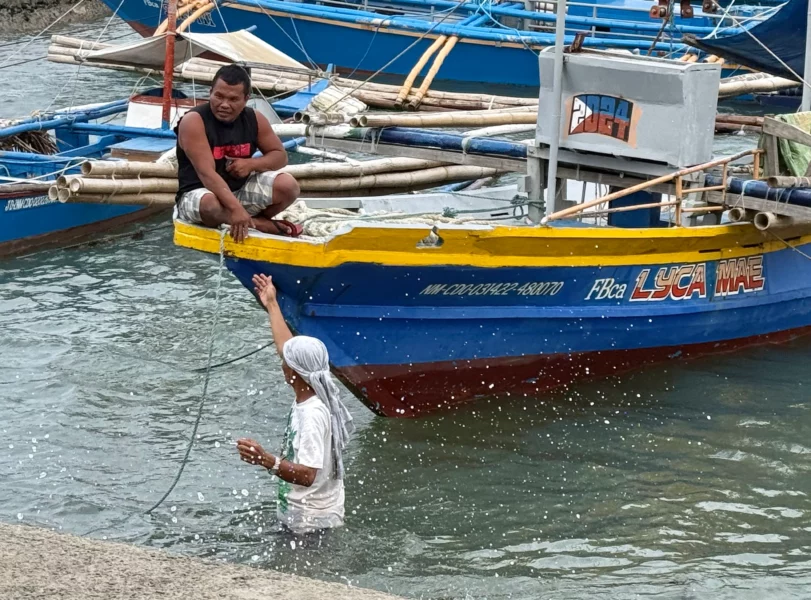
OPOL, Misamis Oriental — A conflict thousands of miles away has quietly reached the shores of Luyongbonbon, where a small fishing community now faces the harsh reality of soaring fuel prices that have grounded much of its fishing fleet.
Village chief Jerry Jacalan and fishing boat owner Cecilia Baculio stood on the pier as the fading Amihan winds swept across the bay. Around them, trawlers and pump boats bobbed idly at anchor.
In normal times, the fleet of nine trawlers and about 20 pump boats would already be at sea, hauling in the day’s catch as they have for decades.
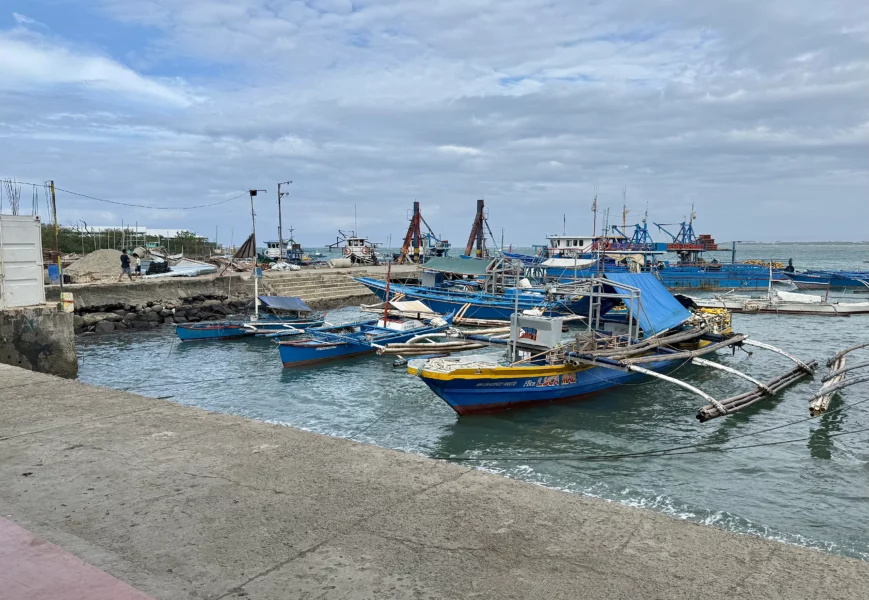
Consequently, the fleet will remain docked this week and likely for the coming weeks as fuel prices remain high.
“With these winds and the high price of diesel fuel, nobody will venture out to sea,” said Baculio, 65.
Baculio said she used to spend about P10,000 on diesel each time her 30-ton fishing trawler, M/B Congcong, left the dock.
Read also: Camiguin flags 19 gas stations for overpricing
In response to geopolitical tensions pushing fuel prices upward earlier this year, her fuel bill surged to around ₱30,000 per trip.
Faced with the steep cost, Baculio and other boat owners decided to temporarily halt their fishing operations.
“We will only end up at a loss. What if we catch only ten banyeras of fish?” she said.
A banyera — a small vat of sardines — sells for about P2,000 to buyers waiting at the Luyongbonbon pier.
With fish stocks in the area already declining over the past year, Baculio said earning enough to even cover the P30,000 fuel cost has become a risky gamble.
The economic ripple effect has been immediate.
Read also: Oro flags 9 gas stations for overpricing
Jacalan said many fishermen have secured their boats at the pier and started looking for temporary work in nearby factories and commercial establishments.
Furthermore, many wives have taken on odd jobs to help keep their households afloat as the primary income source disappears.
“Seventy percent of my 4,000 constituents are fishermen. With this crisis, everyone is now looking for work,” Jacalan said.
“Many of them know carpentry. I hope this skill will help them find jobs.”
Fishing remains the economic backbone of Opol, a fast-growing first-class municipality about 11 kilometers west of Cagayan de Oro City.
Without it, coastal families who rely on the daily harvest from municipal waters are left waiting — and hoping — for the tide to turn.