A major financial burden is finally being lifted for Filipino healthcare students. Starting with the 2026 national budget, a dedicated P500-million allocation will now cover Related Learning Experience (RLE) fees, eliminating the steep “hidden costs” of clinical rotations.
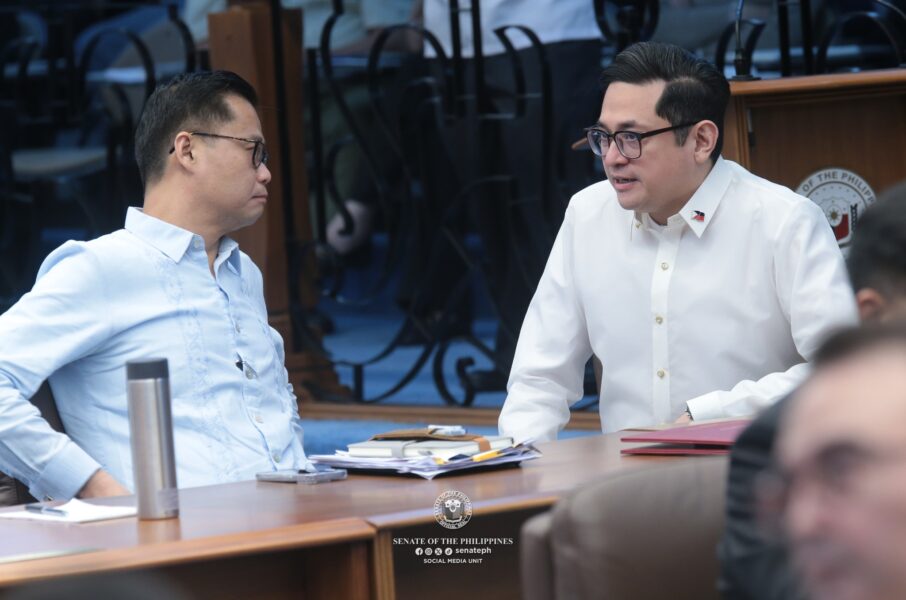
Championed by Senator Bam Aquino, this strategic addition to the P1.38-trillion education budget aims to stop the financial exhaustion of nursing and allied health students—and give them a reason to stay in the Philippines.
Breaking the Debt Cycle
For years, students have faced staggering out-of-pocket costs ranging from P100,000 to P200,000 over a four-year course just to complete mandatory hospital duties and laboratory requirements. These fees often force families into heavy debt or students out of school entirely.
Senator Aquino, author of the landmark Free College Law, emphasized that this boost gives future healthcare heroes a genuine choice.
“The current setup forces our nursing students to go abroad, so the reform is pwede nang isama [should be included] the RLE expenses in free college,” Aquino said. “Kahit libre pa yung kolehiyo o kahit may scholarship pa sila, they still have to pay for the RLE. Ito yung binabayad nila sa mga ospital to be able to get their degree to graduate.”
The senator highlighted the cruel irony of a system where families borrow money to fund studies, only to find that local entry-level salaries cannot cover the loan payments.
“Many of them, either maghahanap ng pera or uutangin mo yan. Di ba, paano mo yan babayaran on a local nurse’s salary? That system is practically pushing our students to go abroad,” Aquino explained. “This is one step to get some more nurses the support, and to give them the option to actually be here.”
Who is Covered?
The fund is lodged under the Higher Education Development Program (HEDP) and covers a broad spectrum of allied health programs. Aside from Nursing and Midwifery, the subsidy applies to students in:
Medical Technology / Medical Lab Science
Pharmacy & Physical Therapy
Occupational & Respiratory Therapy
Radiologic Technology
Nutrition, Dietetics & Psychology
Dentistry
Biochemistry & Speech-Language Pathology
How to Access the Funds
This year, approximately 20,000 students are expected to benefit, receiving between P10,000 and P20,000 each. The process differs slightly depending on your school:
For State and Local Universities (SUCs/LUCs): The process is automatic. Institutions will submit projected costs directly to the Commission on Higher Education (CHED) for funding via UniFAST. Students should no longer see these charges on their enrollment bills.
For Accredited Private Schools: Students can apply for the Tertiary Education Subsidy (TES), which is specifically designed to cover RLE expenses. The 2026 budget mandates CHED to update guidelines to classify RLE fees as “allowable costs.”
While the 2026 budget provides immediate relief, Aquino is also pushing for the passage of Senate Bill No. 123, or the Libreng RLE Act. This would institutionalize the program, ensuring these clinical hours remain free for disadvantaged students in the long term.