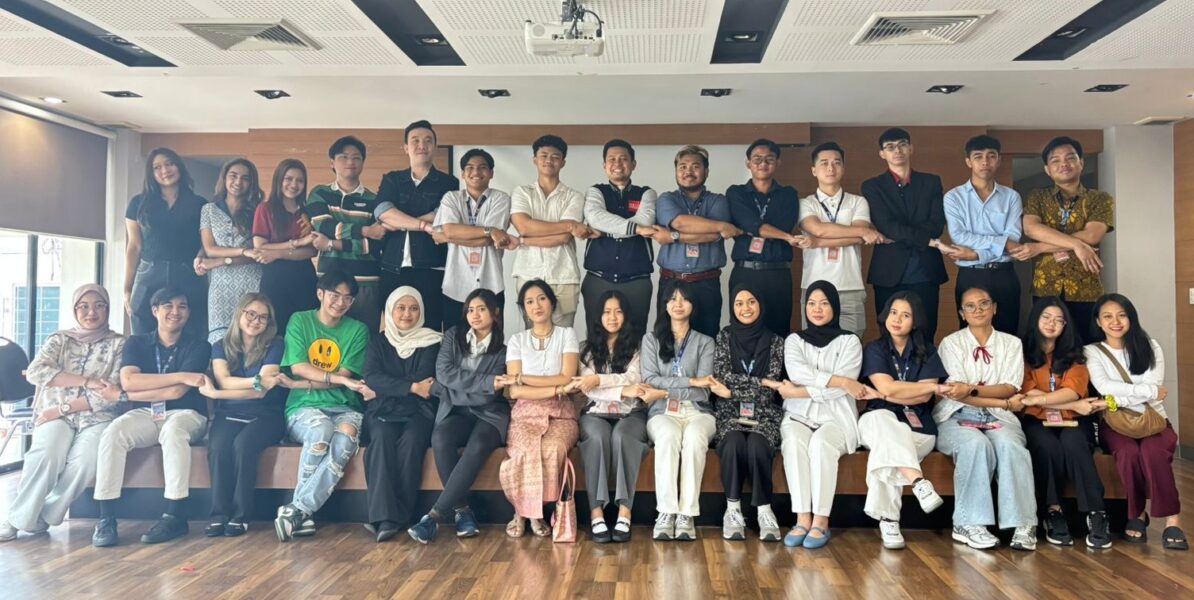
DELEGATES from Taylor’s University attended the Asean Youth Exchange (AYE) 2025 in Bangkok, exploring how the next generation of Southeast Asian leaders is redefining succession to focus on sustainability and cultural identity.
The exchange addressed the urgent need for new leadership, particularly within family businesses, which form the economic backbone of nations like Malaysia. Participants concluded that for these enterprises, succession is shifting from a mere transfer of ownership to the stewardship of purpose, people, and planet.
Stewardship and the SDGs
A central focus of the exchange was embedding sustainability into leadership DNA. During a visit to the United Nations Economic and Social Commission for Asia and the Pacific (UNESCAP), delegates received a stark reminder: the world is far from achieving its 2030 Sustainable Development Goals (SDGs).
This call for action is highly relevant to young successors in Malaysia, whose national development plans are aligned with the SDGs.
Delegates noted that modern leadership must extend beyond the boardroom and tap into social innovation, such as converting food waste or building digital mental health platforms. This ensures the UN's call to "leave no one behind" is met.
“Leadership today must go beyond the boardroom, tapping into social innovation,” a key takeaway from the exchange highlighted, stressing that this is done “not for profit alone, but to preserve community, resilience, and dignity.”
Tradition powers green innovation
Insights from the Thai business landscape demonstrated how legacy businesses are driving green innovation. From solar energy to plastic recycling, Thai family-owned companies showed that profitability and sustainability can coexist without sacrificing generational values — a model highly relevant to Malaysia’s family firms, which contribute a significant share to the nation’s gross domestic product.
The overall message for the young leaders was clear: tradition and transformation go hand-in-hand.
“For young Malaysians from family business backgrounds, this is an invitation not just to inherit, but to innovate,” the Taylor’s University delegates concluded. “By anchoring innovation in family values, the next generation can future-proof their enterprises while honoring the vision of their founders.”
Culture as a competitive edge
Cultural immersion throughout the exchange reinforced the idea that identity is not an obstacle to progress, but its foundation. Visits to Thai heritage sites underscored the belief that in times of global uncertainty, cultural heritage becomes a competitive advantage.
The delegates emphasized the dual role of heritage in business: “Just as family businesses pass down stories, recipes, and rituals, they also pass down the duty to protect what matters — people, culture, and integrity.”
Upon returning, the delegates are tasked with translating this “sense of intergenerational duty” into action.
“The future of Malaysia’s economy will not be built by legacy alone, but by those willing to carry it forward with courage, empathy, and a vision that leaves no one behind,” the statement reads.
The Taylor’s Centre for Family Business (TCFB), a partner in the AYE 2025 organized by the Asean Youth Organization, aims to be the platform for this transformation.