By Angelyn V. Collado
In celebration of International Women’s Month, stories of resilience and determination come to the fore–one of them belonging to a Mindanaoan woman who has spent over a decade navigating life at sea.
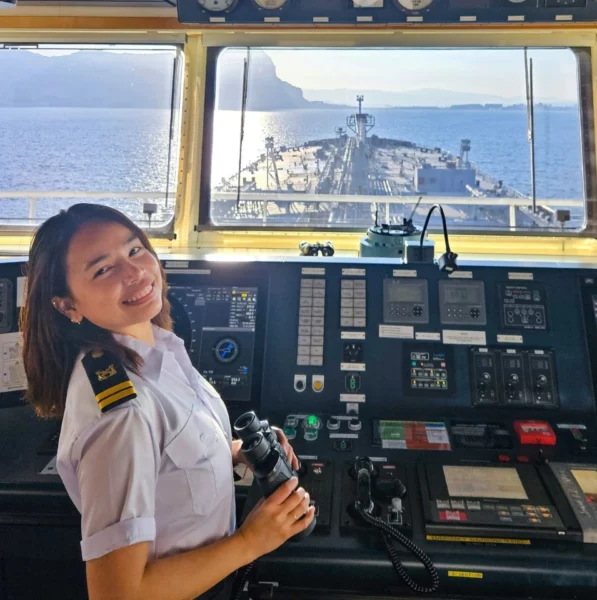
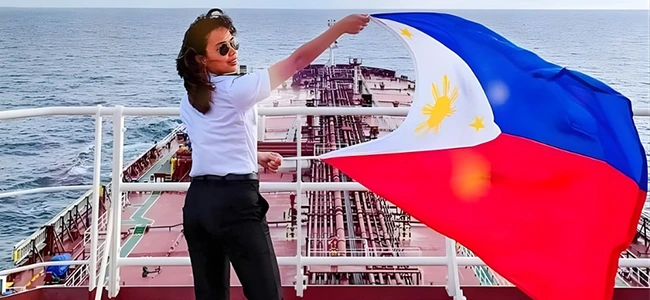
After 12 years at sea, Second Officer KC Abigail Chin-Sood proves that competence—not gender—defines a seafarer.
For decades, the perception that seafaring is a man's job—demanding, high-risk, and physically taxing—has shaped the maritime industry. However, that narrative is gradually shifting as more women step onboard, not to challenge the system loudly, but to quietly and consistently prove they belong.
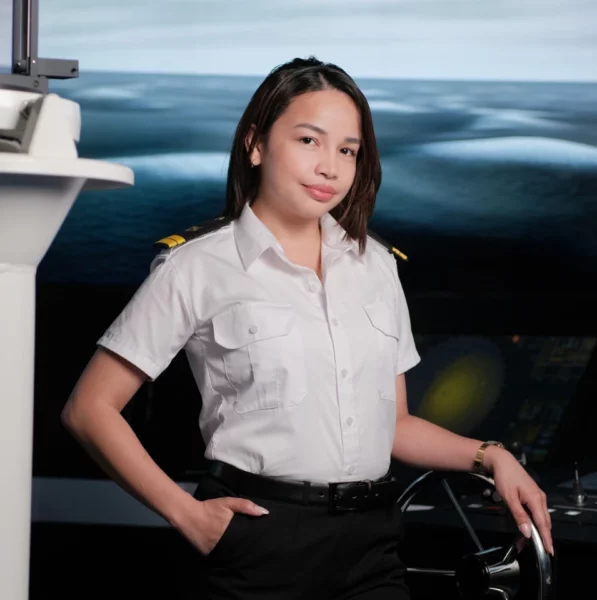
For KC Abigail Chin-Sood, a Mindanaoan seafarer and Second Officer with 12 years of experience on international tanker vessels, this shift is not theoretical. It is something she has lived through—day by day, watch by watch, voyage by voyage.
“Working onboard a ship has no gender,” KC said. “Your competence, discipline, and dedication will define your worth.”
The Philippines remains one of the world’s largest suppliers of maritime labor, yet women continue to make up only a small fraction of the workforce. Entering the profession, for many, is not just about meeting qualifications—but about getting past assumptions.
She encountered that reality early. “During my time in school… they were only looking for male cadets,” she recalled. Even after passing examinations, she and other female applicants were turned away. “We were constantly being rejected simply because we were female applicants.” She described the process as “sipa bato”—going from one company to another without certainty of being accepted.
This entry barrier reflects a broader pattern in uniformed professions, where both policy and perception have historically restricted opportunities for women.
When she finally boarded her first vessel as a cadet, the challenge shifted from access to acceptance. “Lisod,” she said when asked to describe her early experience. “There were people who said I wouldn’t survive onboard because I was too ‘kikay.’”

During her early days onboard, she frequently faced mockery and belittlement from her crewmates. “As a beginner in the industry, you cannot know everything immediately—there is always a learning curve.”
At times, the treatment escalated. “I experienced verbal harassment… and even an incident where someone grabbed my arm.” She chose not to report it then. “I was afraid that speaking up might make people think I was weak… I feared that complaining might affect my chances of sailing again.”
In environments shaped by long-standing gender norms, these experiences show how stereotypes translate into real barriers—what begins as perception often becomes sexism in practice.Preconceptions—that women are weaker, less authoritative, or too emotional—dictate the treatment they receive, especially early in their maritime careers.
Read also: What Your Go-To Date Spot Says About Your Relationship
KC’s response was not confrontation, but focus.
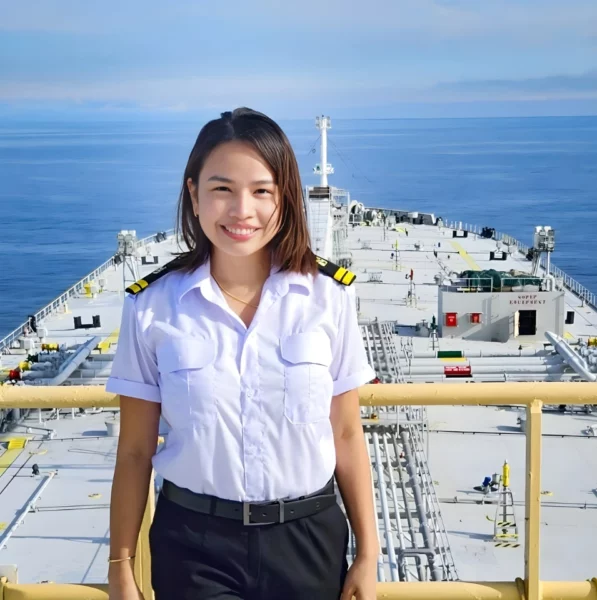
“I always reminded myself that I came onboard to work,” she said. Over time, that persistence allowed her to move forward, gaining the experience needed to rise through the ranks.
Today, she serves as a Second Officer onboard international tanker vessels, where her role centers on navigation and operational safety. She prepares detailed passage plans that guide vessels safely from one port to another in compliance with international regulations. Her responsibilities also extend to watchkeeping, cargo operations, and maintaining safety and onboard systems.
Yet even with rank, some challenges remain.
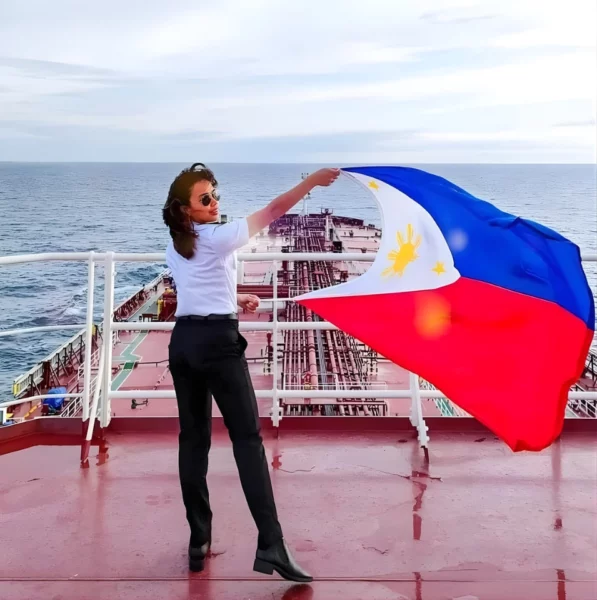
“Even as an officer, there are moments when some crew members… find it difficult to follow instructions,” she said. Authority, in such cases, is not always immediately recognized.
Her approach is consistent:
“I always push myself to give my hundred percent… I am here to work, contribute, and prove that I deserve the position I hold onboard.”
The demands of the profession also extend beyond technical work.
During the COVID-19 pandemic, while her vessel was in Sweden, her father passed away. She was unable to go home.
“Even while dealing with personal grief, I still had to continue performing my duties onboard,” she said. “This profession requires you to be strong—not only physically, but emotionally.”
Despite these realities, she notes that opportunities are improving.
“Many shipping companies are now more open to hiring female seafarers,” she said, a shift from earlier years when women were often excluded outright. The growing presence of women at sea is gradually challenging the idea that such work belongs to only one gender.
Persistence, she said, eventually opened doors.
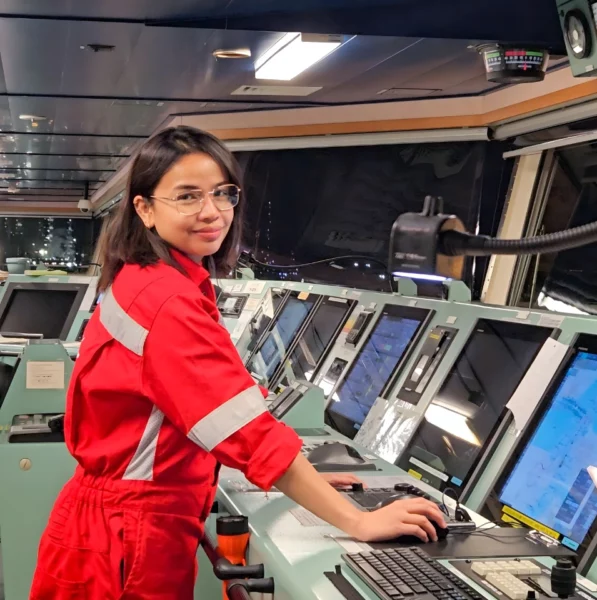
Today, she hopes more young women—especially those from Mindanao—will consider pursuing careers in seafaring.
“Walay pagsulay nga dili nimo malampusan, kaya na nimo” (“There is no challenge you cannot overcome—you can do it”), she said.
Her story is not just about becoming a seafarer. It is about choosing a path, staying on it, and continuing even when the waters are uncertain.
Because the sea was never meant for only one kind of person.
And today, more women are proving they can stand on that bridge just as steady—not asking for space, but confidently taking it.