By Princess Haynee B. Pangcatan
MSU Intern
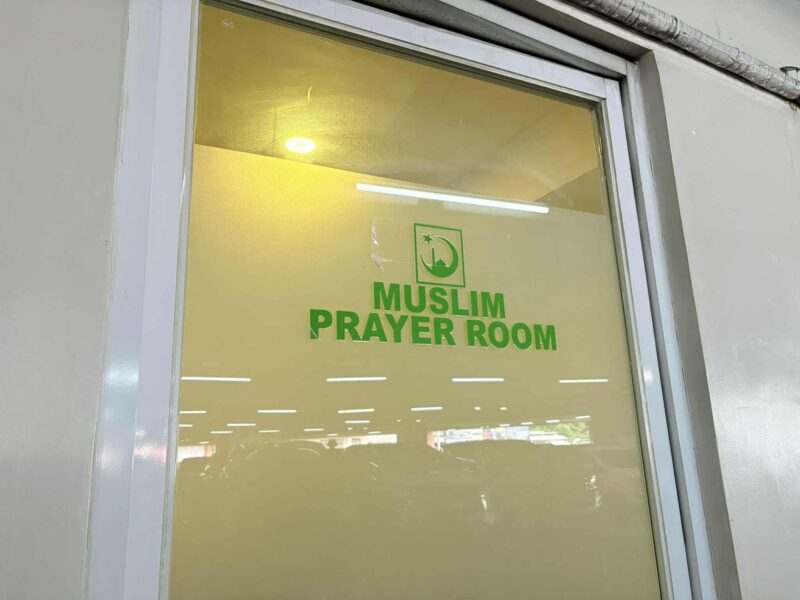
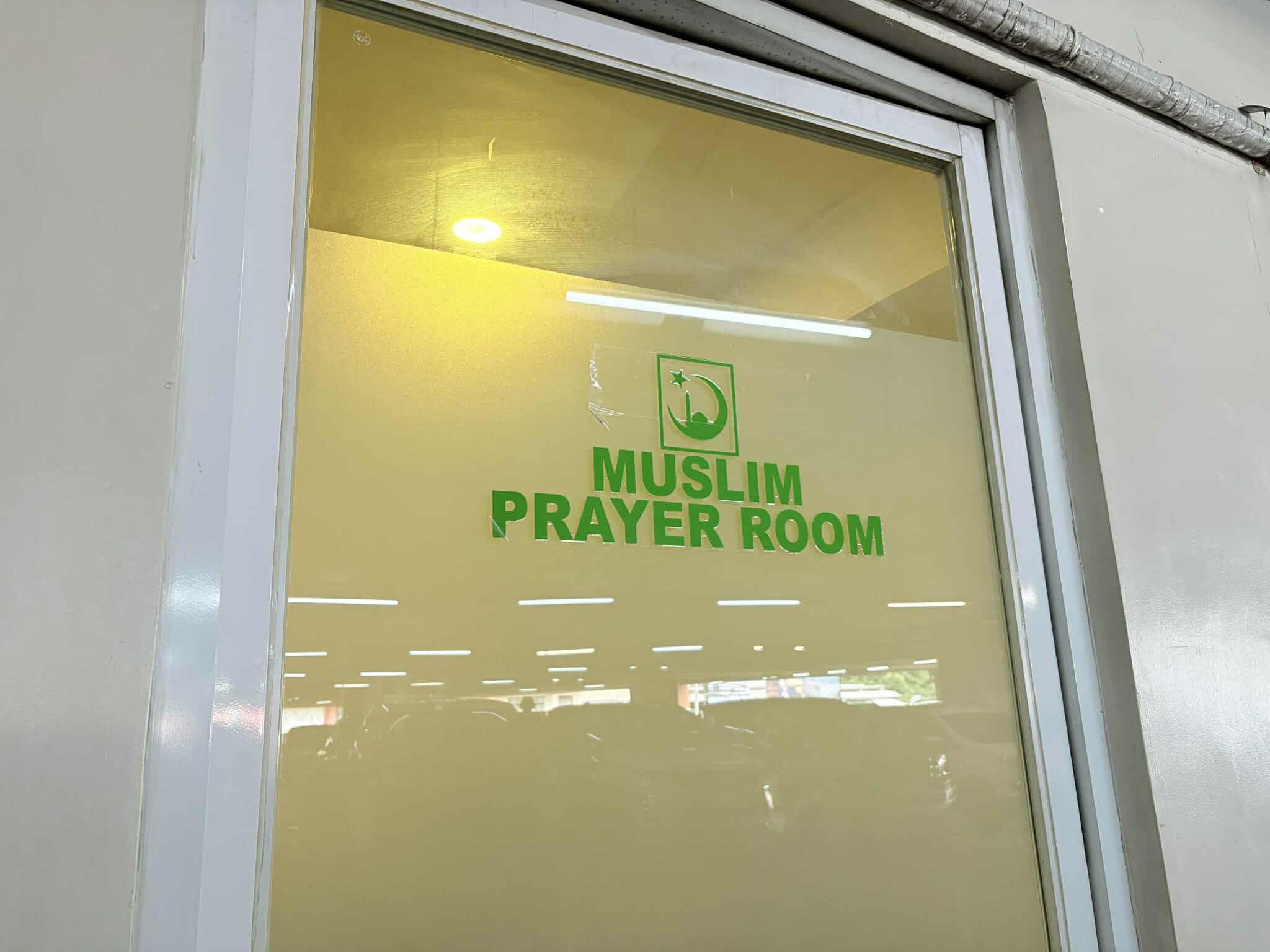
INSIDE the bustling halls of SM Downtown Premier in Cagayan de Oro, tucked away on the second level, lies a room that, for many Muslim shoppers, represents a quiet but meaningful milestone: a prayer space.
The small room — equipped with copies of the Qur’an, prayer mats, and mokna (women’s prayer attire) — offers a much-needed sanctuary for Muslim patrons to pause and reconnect amid the busy mall atmosphere. To the right is an area for ablution; to the left, the main prayer area.
It’s a step in the right direction, especially in a city where public Muslim prayer spaces in commercial areas remain rare. But for some of the faithful who use the space regularly, it’s a step that could go further.
“Mapiya den (Okay lang),” said Saanoden Lomangco, a Meranaw shopper from Marawi City who frequently travels to CDO. The space, he said, is adequate and functional, but lacks one important feature: separation between male and female worshipers.
“So mga babay na dapat misisibay siran (‘Yong mga babae dapat nakahiwalay sila),” he noted, emphasizing that Islamic tradition encourages gender separation during prayer.
When men enter first, he said, some women hesitate to go in out of modesty or discomfort. By contrast, he pointed out, the prayer room in Limketkai Mall provides separate sections for men and women, allowing worshipers to pray with ease.
For Reem Pandapatan, a journalism intern at Gold Star Daily and regular mallgoer, the absence of gender separation is also a source of unease.
“Uncomfortable ako na walang separate space para sa babae at lalake. Okay sana kung public space yan pero private kasi, kaya mas gusto ko nalang sa bahay magpray,” she said.
Despite its potential to serve many, the prayer room remains relatively unknown to a large number of Muslim shoppers. Several individuals approached for interviews were unaware the facility even existed within the mall — a gap in public communication.
Pandapatan suggested the prayer room should be clearly marked with signage across key areas of the mall, preferably in places where Muslim shoppers are likely to pass. “Visibility is also part of inclusion,” she said.
On the mall’s part, efforts are being made to maintain the facility. According to Rosel A. Yare, a housekeeping staff member at SM Downtown, the room is cleaned daily — once in the morning and again in the afternoon.
“Tan-awa lang sa hapon kung gubot,” she added, implying that while the room gets used, upkeep remains a priority.
Still, some say it’s not just about having a space — it’s about having a safe space, one that fully respects the diversity of its users.
In Islam, prayer is not simply a personal act but a communal one, and its setting matters deeply.
Despite these shortcomings, many see the room as a promising beginning.
“Mas maganda kung meron. Madakl a di mamasyo a Muslim na saya dn pakasung igira psambayang. Lalo sakn a da walay akn saya.” (Marami kasing nagpapasyal na Muslim at dito na nakakapunta para magpray, lalo na ‘yong mga walang bahay dito tulad ko.),” Lomangco said, speaking on the importance of such facilities in public areas.
For a mall that caters to a wide range of communities in Northern Mindanao, the inclusion of a Muslim prayer room is a clear acknowledgment of the city’s growing cultural and religious diversity. But as users point out, inclusion goes beyond availability — it requires understanding, consultation and thoughtful design.
And in that regard, there’s still room for SM Downtown to grow.