AN indigenous leader said 94 people have been killed due to land disputes in the Southern Philippines, with South Upi seeing the most fatalities. He added that 78 killings occurred last year in the boundary area between Datu Hoffer and Ampatuan.
In a press briefing here Friday, September 5, Timuay Labi Letecio Datuwata, supreme chief of Timuay Justice and Governance said the conflicts are often fueled by armed groups, some of whom have been identified as members of the Moro Islamic Liberation Front (MILF).
“The violence is concentrated on the perimeters of MILF camps, exacerbating land-grabbing issues for the Teduray people,” Datuwata told reporters.
He noted that some disputes have been settled through the intervention of the Ministry of Indigenous Peoples’ Affairs and the provincial government, which facilitated the payment of blood money and the return of land.
However, despite these efforts, a persistent issue of land grabbing remains, with IPs often caught between warring base commanders.
Datuwata called for the safe return of internally displaced persons (IDPs), who are often targeted during harvest season, to their lands.
He said that a ritual house belonging to the indigenous community was burned down, and many IPs have not been able to return home since.
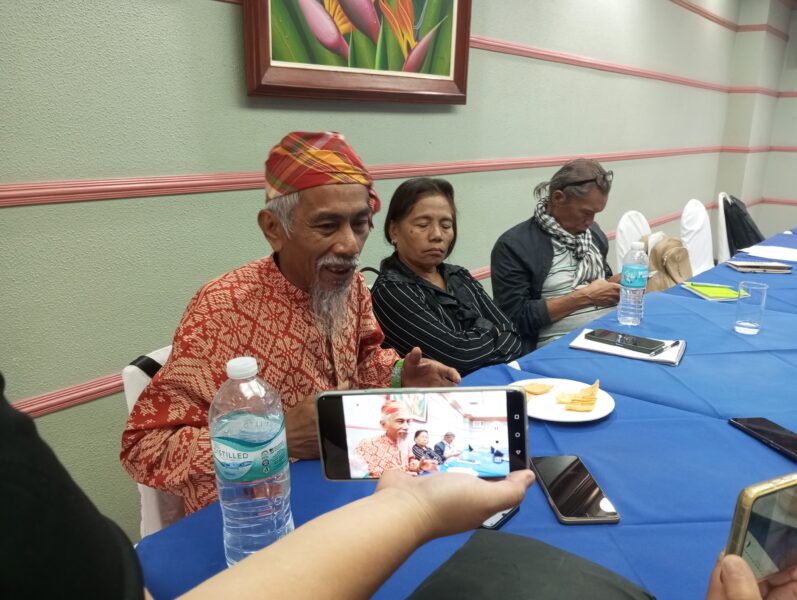
‘Unheard voices’
During the press briefing, Datuwata also addressed the issue of political representation for the Lumad in the parliament of the Bangsamoro Autonomous Region for Muslim Mindanao.
He said IPs were excluded from the nomination process and were only allowed to be observers during a “tribal assembly.”
He added that the nominees were selected by political parties, not the IPs themselves, making their presence feel like a mere formality.
He said the Indigenous Peoples’ Structure, as outlined in the Indigenous Peoples' Rights Act, should be the one to convene the tribal assembly.
Timuay has since questioned the process with the Commission on Elections and said the issue may be brought to the Supreme Court.
Referring to IPs as the “unheard voices,” Timuay explained that they are a peace-loving people who are not armed, a contrast to their local custom of “eat what you kill.”
He also voiced concern that a potential split within the Moro Islamic Liberation Front, whose forces are located in ancestral domains, could lead to further displacement of IPs.
“Let them (MILF) resolve their disputes internally to prevent this,” Datuwata said.