THE renewal of contracts of close to 2,000 Misamis Oriental provincial job order (JO) and casual employees has been suspended as a result of a budget stalemate ― that has been dragging on now for almost a month at the Capitol.
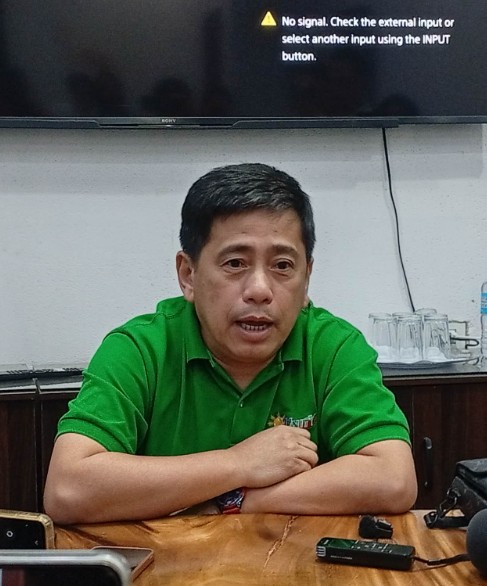
In a phone interview, Special Assistant to the Governor Celso Abucejo confirmed that 1,832 workers — comprising 1,622 JOs and 210 casual employees — are currently affected. He attributed the mass displacement to the provincial board’s decision to slash the executive department’s proposed 2026 budget.
Abucejo said Governor Juliette Uy had intended to renew all contracts last month following their expiration in December 2025. However, with the provincial board cutting the Executive Budget by P1.1 billion, the administration is now uncertain if it can cover the payroll.
“Hantod karon wala pa gi-lift ang suspension sa renewal of contracts,” Abucejo said.
As of press time, he claimed his office is still waiting for the appropriation ordinance from the provincial board noting that Vice Gov. Jeremy Jonahmar Pelaez had told him that deliberations on the 2026 budget were completed as early as Jan. 5.
“Unsa na ‘ta karon? Pebrero na. Lisod kaayo magpatrabaho nga wala diay kay isweldo (What month is it now? It’s already February. It is very difficult to ask people to work when you realize you have no salary to give them),” Abucejo added.
In a memorandum order ― GJTU No. 035-2026 ― Gov. Uy ordered “all department heads/chiefs of hospitals, chiefs of offices” to advise the casual and job order personnel under their supervision “not to report for duty, effective upon receipt hereof until an official notice is issued from the Office of the Provincial Governor.”
The stalemate
The mass displacement is triggered by the provincial board’s decision to reduce the proposed P4.4 billion budget to P3.3 billion. Sanggunian Committee on Appropriations Chair Rommel Maslog argued that the Governor’s proposal was built on “unrealistic” financial projections, noting the province historically collects only about 50 percent of its projected revenues.
Sanggunian Committee on Appropriations Chair Rommel Maslog argued that the Governor’s proposal was built on “unrealistic” financial projections, noting the province historically collects only about 50 percent of its projected revenues.
“Mura kag ga-ihap og kwarta nga wala pa nimo nakolekta (It’s like counting money you haven’t collected yet),” Maslog told Gold Star Daily in an interview on Jan. 23.
Abucejo, however, pointed to a stark disparity in how the board defines “realistic” revenue compared to the previous administration.
In 2025, the same provincial board approved a P5.8 billion budget despite the province having a National Tax Allotment (NTA) of only P2.6 billion. In that instance, the NTA accounted for only 44.83 percent of the total budget, with the board allowing a 55 percent reliance on projected local revenue.
This year, despite the NTA increasing to P3 billion, the provincial board has capped the total budget at just P3.3 billion. This shift means the NTA must now cover nearly 91 percent of all provincial spending, leaving almost no room for the local revenue growth the board previously championed.
“This is the same Sanggunian that sat during the time of [former Governor Pedro] Unabia. I don’t understand their motivation for slashing the budget now,” Abucejo said.
More than enough
Aside from the P3 billion NTA ― which Abucejo called an “automatic income” of the province ― he pointed out that the Capitol’s eight hospitals raised P220 million in actual income for the province last year.
“Wala pa’y bayad ang konsultasyon ana nga panahon,” he said, adding that collectively the eight provincial hospitals project an income of P300 million this year.
The impact of the P1.1 billion reduction is stark: The Provincial Information Office (PIO) was allocated a mere P120,000 for the entire year, while the Governor’s Office saw its budget slashed by 98 percent — from P836 million to just P14 million.
“I think naglisod na sila (board members) unsaon pag distribute sa P14 million, item by item, sa Governor’s Office, nga wala’y mawala nga importante nga services. Mahayan gyud sila sa mga tao (I think they (board members) are finding it difficult to figure out how to distribute the P14 million, item by item, for the Governor’s Office without losing essential services. The people will surely hold them accountable),” Abucejo posited.
He added: “Pwede sila mag delete og item pero dili sila pwede modugang kay technical malversation kana (They have the power to delete an item, but they cannot add to it, as that would constitute technical malversation).”
The apology
While Abucejo offered an apology, he admitted the likelihood of rehiring the displaced workers remains slim under the current fiscal climate. Currently, some 500 workers have reportedly volunteered to continue working without pay, hoping for priority status once the budget is clarified.
For now, Abucejo said the Capitol is operating on the re-enacted budget of 2025.
“Gikan sa salaries and wages; MOOE (Maintenance and Other Operating Expenses; ug medicines para sa atong hospitals kay disbursed gikan sa last year’s budget (Everything from salaries and wages, to MOOE (Maintenance and Other Operating Expenses), and even medicines for our hospitals is currently being disbursed from last year’s budget),” he said.
Under Section 323 of the Local Government Code of 1991 (RA 7160), when the local legislature fails to pass the new appropriation ordinance by the start of the year, the previous year’s budget is automatically re-enacted for essential operations (salaries and MOOE), but usually excludes new capital outlays or increased allocations.
While the law allows the province to operate under a re-enacted budget for essential services and existing salaries, it restricts new spending and creates a precarious gap for contractual renewals.
It is this specific fiscal trap that Abucejo is citing — a stalemate where the Capitol can keep the lights on and the regular payroll moving, but remains legally hamstrung from officially renewing the livelihoods of 1,832 workers without a signed 2026 ordinance.