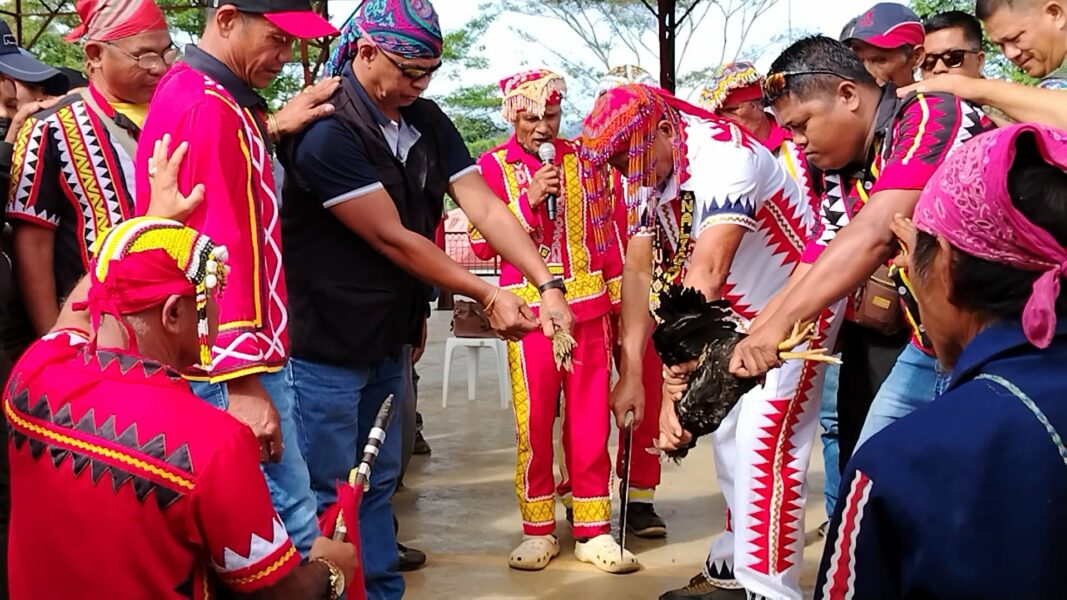
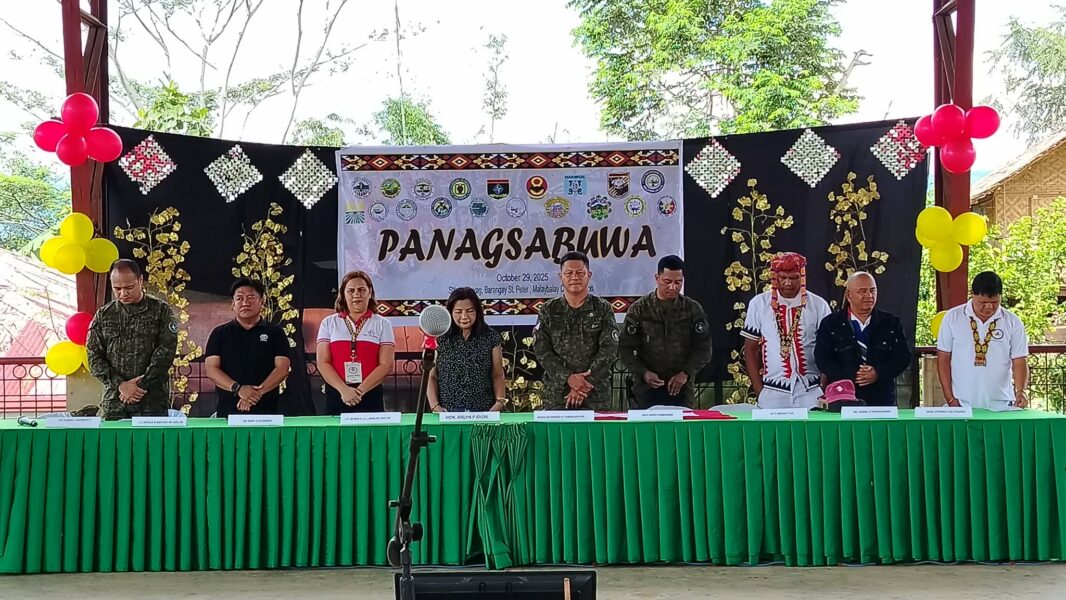
MALAYBALAY City — Tribal leaders, barangay officials, and military officers gathered for a ‘panaghiusa’ ritual at a covered court in Sitio Mahayag, Barangay St. Peter, on Oct. 29.
The ceremony symbolized reconciliation and unity between the Indigenous Peoples (IPs), former rebels (FRs), and government forces.
The sacred event, called ‘panagsabuwa,’ brought together various Datu and Bae from Upper Pulangi and Cabanglasan.
Malaybalay City Chieftain, Datu Sinaligan Harry Sumbongan, emphasized the profound pain the armed conflict had caused his people. He related that the ancestral domain and surrounding forests of Upper Pulangi are their sacred sources of life.
“From our forests, we take our medicine, our food, and all the materials for our rituals. But for a long time, we could not go there because of fear — the armed conflict between the soldiers and the NPA made it dangerous for us to enter our own sacred grounds. It hurts us deeply, because we only wanted to live peacefully in our ancestral domain,” Sumbongan said.
He said the successful ‘panagsabuwa’ finally ended their fear, marking the restoration of good relations and lasting peace in Upper Pulangi.
“We thank the military and former rebels who have accepted the truth and returned to the fold of the government. We are also grateful to the tribal leaders who have joined us in our dream for peace and order in our ancestral domain — something we wish to leave for our next generations,” Sumbongan said.
Cleansing, forgiveness
Sumbongan explained that the specific ritual performed, called ‘panastas,’ symbolizes cleansing and renewal.
“The cutting of the thread connected to the chicken during the ritual represents the release of evil spirits and bad intentions in the past. The blood of the pig buried in the ritual site, symbolized the past transgressions and the beginning of a new chapter of peace,” he said.
Lieutenant Colonel Jeorge R. Jallorina, commander of the 8th Infantry Battalion of the 403rd Infantry Brigade, said the reconciliation was carried out through indigenous customary law to promote forgiveness and solidarity.
“This Panagsabuwa aims to restore trust and friendship among all stakeholders — the IPs, the former rebels and the barangay leaders… True reconciliation begins in the hearts of people who chose to rebuild broken relationships,” said Jallorina.
The reconciliation ritual was conducted alongside the mass surrender of 167 former New People’s Army (NPA) rebels, the distribution of allowances to 8IB scholars, and the signing of the withdrawal of support from the CPP-NPA-NDF.
The event was witnessed by officials including Malaybalay City Mayor Jay Warren Pabillaran, 403rd Brigade Commander Brigadier Gen. Seigfred C. Tubalado, and SWERTE Partylist representative Arlyn P. Ayon.
The reconciliation ritual in Malaybalay stands as a testament to the ongoing peace efforts in Bukidnon, where tradition, forgiveness, and cooperation converge to heal communities once divided by conflict.