CAGAYAN DE ORO CITY — A major international legal victory for workers’ rights has landed right as a local labor crisis unfolds in Misamis Oriental.
The International Court of Justice (ICJ) recently issued a landmark 10-4 advisory opinion declaring that the right to strike is universally protected under international law (ILO Convention No. 87).
While national labor coalitions celebrated the global news, the reality of worker vulnerability is playing out starkly for over 300 employees suddenly displaced in the PHIVIDEC Industrial Estate in Tagoloan.
The local crisis: Sanjia steel shutdown
The global ruling on labor protections comes on the heels of a sudden shutdown at the Philippine Sanjia Steel Corporation plant in Tagoloan.
The Shutdown:
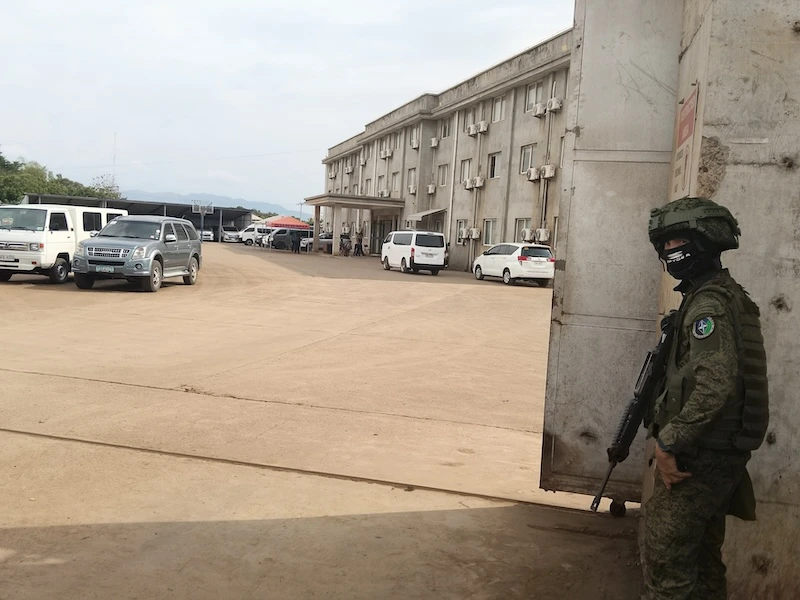
Following a May 15 raid by central office operatives and a May 16 inspection, operations at the locator plant were abruptly suspended.
The Allegations:
Government authorities allege that the plant utilized scrap materials from China contaminated with radioactive elements, specifically uranium and thorium.
They also raised questions regarding undocumented Chinese technical personnel.
The Company's Defense:
In a statement issued May 20, Sanjia Steel fiercely denied the claims.
They asserted that their Chinese technicians are fully documented, their raw materials are high-quality imports from Japan, and they vow a full legal fight to reopen.
You may also like: Mary as Mother of the Church
Meanwhile, over 300 Filipino workers have been left out of a livelihood, gathering outside the gates for prayer rallies out of fear of long-term displacement.
Connecting the dots: Why the ICJ ruling matters to Misor
The tension in Tagoloan highlights exactly why labor leaders like Atty. Sonny Matula, Chairperson of the Nagkaisa Labor Coalition and President of the Federation of Free Workers (FFW), are championing the ICJ's decision.
When local workers face sudden displacement, unsafe conditions, or employer disputes, their ultimate legal leverage is the collective right to organize and, if necessary, stop working.
"The right to strike is not a crime, not a tantrum, and not a nuisance," Atty. Matula stated, connecting global protections to local realities.
"Kaya huwag i-redtag ang mga manggagawang gumagamit ng kanilang kolektibong karapatang huminto sa paggawa dahil sa isang labor dispute" Matula stressed, adding that it's a democratic safety valve when dialogue breaks down and workers are pushed to the wall.
Without the internationally backed right to strike and organize, labor coalitions argue that workers are powerless to demand safety transparency—such as demanding clear facts regarding toxic contamination—or fight back against sudden layoffs.
What happens next for the affected workers?
While Sanjia Steel pursues legal remedies to overturn the suspension, local government agencies have stepped in to manage the immediate fallout.
Both the Department of Labor and Employment (DOLE) and the Department of Social Welfare and Development (DSWD) have promised financial and livelihood assistance to the 300+ displaced locals.
The bottom line:
As Northern Mindanao positions itself as an industrial hub, the Sanjia Steel incident serves as a local reminder of the Nagkaisa Coalition’s core message: workers are not mere algorithms or disposable manpower. Whether in the halls of the World Court or on the ground in Tagoloan, the law must protect the voices and safety of the workforce.