PRESIDENT Ferdinand Marcos Jr. has ordered the immediate rehabilitation of the Maharlika Highway, the country’s degrading vital artery, by tapping billions in projected savings from drastic cost-cutting reforms at the Department of Public Works and Highways (DPWH).
This development holds significant weight for Cagayan de Oro City, which serves as a critical logistics hub for the highway’s Mindanao network.
The directive was disclosed by House Minority Leader and 4Ps party-list Rep. Marcelino ‘Nonoy’ Libanan, who stated that the President’s order was relayed by DPWH Secretary Vince Dizon during the December 9 Legislative-Executive Development Advisory Council (LEDAC) meeting.
According to Libanan, Dizon made it clear that the President personally instructed him to prioritize the restoration of the damaged sections of the highway.
“We welcome this development, especially because we, members of Congress from the Samar provinces, have been very vocal about the delays in repairing the Maharlika Highway,” Libanan’s emailed press advisory reads in part.
Libanan added that Secretary Dizon informed him that the DPWH will utilize the savings generated from sweeping cost reforms to fund the highway’s long-overdue restoration.
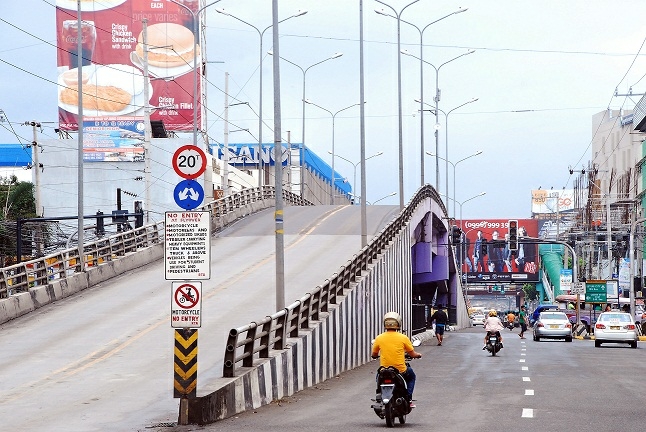
The Oro connection
For Cagayan de Oro, the “Daang Maharlika” is more than just a road; it is an economic lifeline.
While the main trunk of the Asian Highway 26 (AH26) runs through Butuan and Davao, Cagayan de Oro is connected to this backbone via two critical spurs: the Butuan-Cagayan de Oro-Iligan Road and the Sayre Highway.
These corridors handle the heavy volume of goods flowing from the city’s port to the rest of Mindanao. Rehabilitation of the network is expected to alleviate the bottlenecks often seen at the city’s entry points in Barangays Puerto and Tablon, where cargo trucks from the Maharlika route converge with local traffic.
A legacy project
The rehabilitation order carries historical resonance.
The Maharlika Highway — spanning over 3,300 kilometers from Laoag City in the north to Zamboanga City in the south — was the flagship infrastructure project of the President’s father, the late President Ferdinand E. Marcos Sr.
Constructed largely during the Marcos Sr. administration in the late 1960s and 1970s with assistance from the Japanese government, it was designed to be the country’s north-south backbone. It links Luzon, Samar, Leyte, and Mindanao through a complex system of roads, bridges, and RORO (Roll-on/Roll-off) ferry routes.
The highway connects major cities including Tuguegarao, Cabanatuan, Lucena, Naga, Tacloban, Butuan, Davao, and General Santos.
However, decades of wear and tear, particularly in the Samar and Northern Mindanao sections, have turned parts of the “Royal Road” into a logistical choke point.
Funding the fix
To finance the massive repairs, Dizon announced that the DPWH expects to generate up to P60 billion in savings for 2026. This will be achieved by aligning the prices of construction materials — such as steel, gravel, and cement — with prevailing market rates.
The reforms aim to eliminate price inflation, curb corruption, and free up funds for more infrastructure projects nationwide.
Libanan, a native of Eastern Samar where the road is notoriously dilapidated, noted the urgency of the move.
“Libanan himself once delivered a privileged speech berating past DPWH officials for allowing major sections to fall into disrepair. Since 2022, he has repeatedly pushed for the road’s rehabilitation during annual DPWH budget hearings,” the press advisory noted.
Libanan said the President’s directive represents a long-awaited breakthrough for the regions reliant on the highway and a significant step toward safer, more reliable inter-island connectivity.