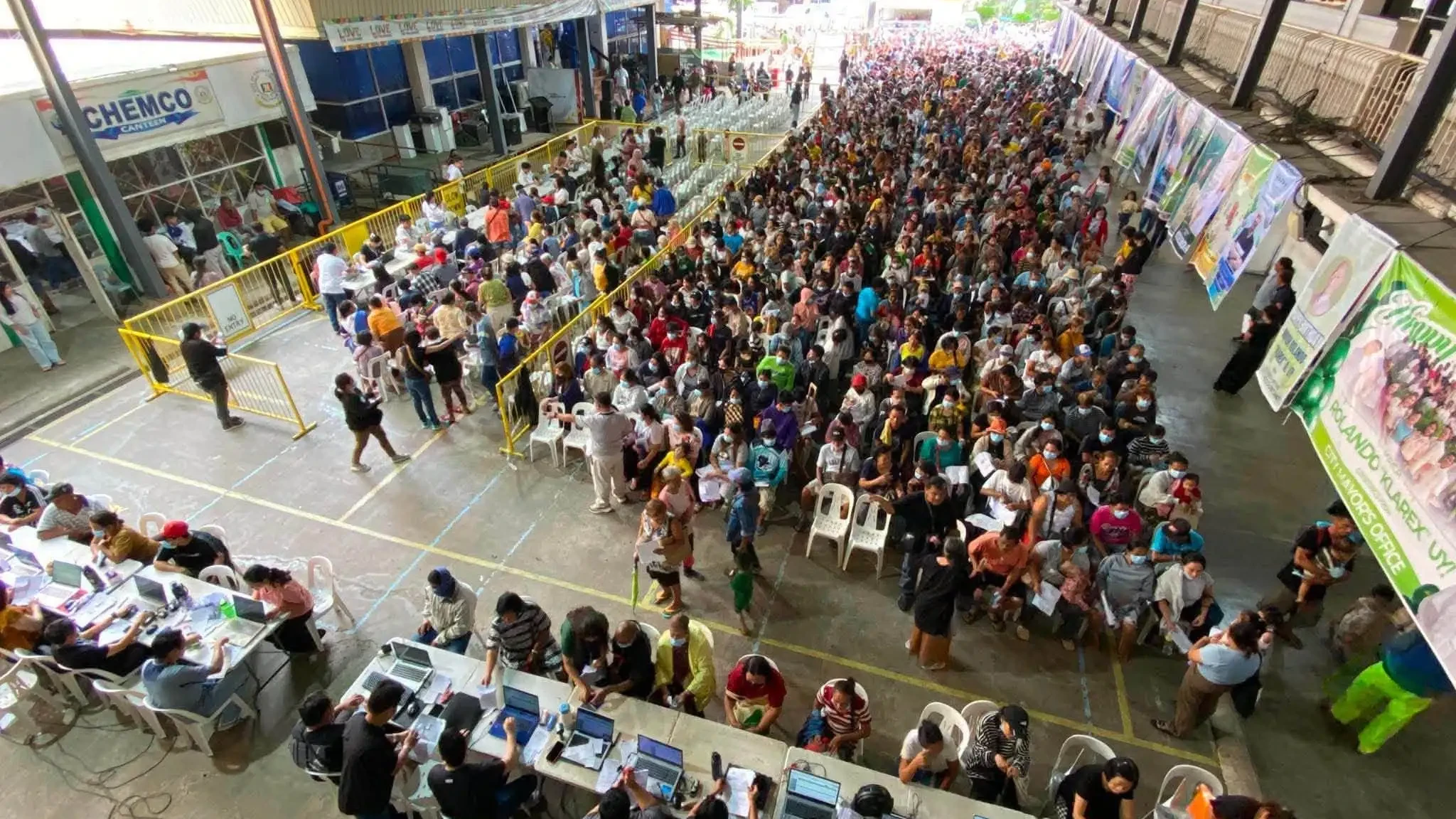
CAGAYAN DE ORO CITY — Long queues at the recent People's Day have sparked debate online, but city officials and supporters say the crowds highlight the need to improve public service—not proof that the program has failed.
Lawyer E.F. Faelnar said a crowded government office can also reflect public trust that City Hall remains willing to listen and respond to residents' concerns.
"A crowded government office is not always a sign of failure. Sometimes, it is a sign that people still believe that someone is willing to listen," Faelnar said in a Facebook post.
She said the purpose of People's Day is not to eliminate complaints but to ensure every citizen has direct access to government services and a chance to raise concerns before city officials.
Her remarks echo those of City Mayor's Office Chief of Staff Sheila Lumbatan, who earlier described People's Day as a key initiative under Mayor Rolando "Klarex" Uy's RISE Agenda—Regional Leadership; Accessibility and Connectivity; Inclusivity and Participatory Governance; Safety, Security and Human Development; and Economic Recovery.
Lumbatan said the program brings government services closer to residents, particularly the less privileged and those living in hinterland barangays, by providing a venue where Kagay-anons can directly seek assistance from City Hall.
She also clarified that the unusually large turnout on July 9 was not the result of an official public invitation from the city government.
According to Lumbatan, no official announcement promised ₱10,000 cash assistance, 10 kilos of rice, or a specific number of beneficiaries. Instead, she said, those claims spread through social media and word of mouth, creating expectations that were never announced by the city government.
Lumbatan also explained that many residents confused two separate People's Day activities—the outreach programs conducted in barangays and the weekly Wednesday People's Day at City Hall, where residents can personally bring their concerns to city offices.
She said the overwhelming turnout on July 9 was unprecedented.
"It was the first time that such a huge crowd showed up all at once. Even us employees were surprised by the turnout," Lumbatan said.
While acknowledging that the experience exposed areas for improvement, Lumbatan said the city can strengthen the program through better scheduling, crowd management, appointment systems, queue numbers, time slots, and, if needed, additional People's Day sessions.
She added that it would be unfair to blame the program, Mayor Uy, or the city government based on information that was never officially announced.
"The long lines were largely driven by unverified claims, not by an official invitation from the LGU," Lumbatan said, urging the public to distinguish verified information from rumors before drawing conclusions.
Faelnar shared the same view, saying the solution is to improve the system rather than abandon the program.
"Fix the process, not the principle," she said.
Commenting on the issue, Mary Angelica Amerkhan likewise urged the public to consider the role of misinformation in the unusually large turnout.
"Let's be fair—a huge part of that 7,000-plus crowd came because of fake news spreading online about ₱10,000 cash and sacks of rice," Amerkhan said in a social media post.
She said no public service system could have accommodated such an unexpected surge without long lines forming.
"The focus shouldn't be on cancelling a good program that helps people, but on improving online communication to stop false rumors before they cause chaos at City Hall," she said.
Amerkhan also urged residents to verify information through official City Hall announcements before acting on social media posts.
"Let's look at the official announcements first before believing everything we see on social media," she said.
Meanwhile, an anonymous Facebook page, "Lihok Katawhan," questioned Mindanao Gold Star's earlier headline stating that People's Day provided "easier access" to government services, citing reports of long queues and medical incidents during the event.
Mindanao Gold Star clarified that the phrase "easier access" referred to the availability of multiple government services in one venue, allowing residents to transact with different offices in a single visit. It did not refer to the crowd size, waiting time, or the conditions experienced during the July 9 gathering.
In an earlier statement, Mayor Uy acknowledged that addressing residents' needs and reducing poverty remain among his administration's biggest challenges.
"Much is expected and required of every City Hall department manager and their personnel to serve the public to the best of their capabilities," the mayor said.
For Kagay-anons, the episode underscores two important lessons: verify information through official government channels before responding to online claims, and continue supporting efforts to improve public services through constructive feedback rather than misinformation.
Faelnar said the true measure of government is not the absence of long lines but its willingness to remain accessible to the people.
"The greater failure is not having long lines. It is having citizens with nowhere to go and no one willing to listen," she said. (By Ben Balce, Editorial Lead)