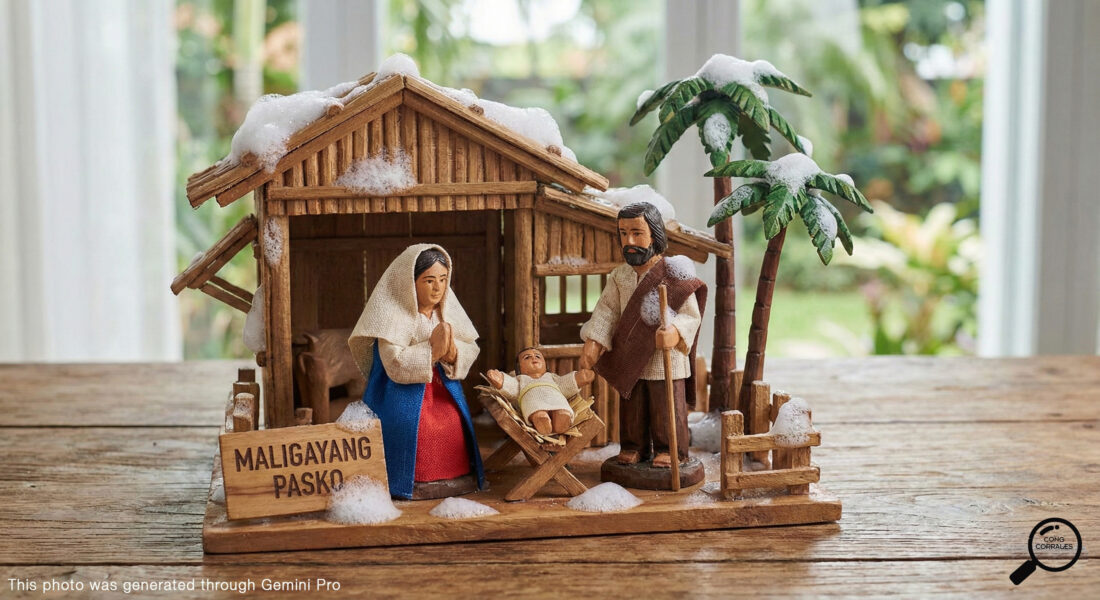
AS you enjoy your hot chocolate amidst the remnants of last night’s Noche Buena, take a closer look at the miniature Nativity scene glowing on your corner table.
The serene image of shepherds, Three Kings, and baby Jesus in a snowy field is a far cry from historical reality. Let’s dive into the facts and uncover the true story behind Christmas.
The Herod glitch
King Herod the Great, mentioned in the Gospel of Matthew, died in 4 B.C., according to Roman historian Flavius Josephus.
This pushes Jesus’ birth to between 6 B.C. and 4 B.C., making our current Christmas celebration four years late.
Sweating shepherds
The Gospel of Luke describes shepherds living in the fields, keeping watch over their flocks at night (Luke 2:8).However, December in Judea is cold and rainy, making it unlikely for shepherds to be camping out.
A more plausible time for the Nativity is spring or early autumn, when shepherds would be tending to their flocks in the fields.
The ‘magic’ star
Astronomy software reveals no single “magic” star in the night sky around 6 B.C.
However, a rare “triple conjunction” of Jupiter and Saturn occurred in 7 B.C., which may have been the sign that led the Magi to Bethlehem.
The three envoys
The Magi were not kings, but Zoroastrian astronomer-priests from Persia (modern-day Iran).
They were likely part of a diplomatic delegation, and their visit to Jerusalem was a significant event that caught Herod’s attention.
The marketing move
So, why do we celebrate Christmas in December?The early church fathers chose to coincide with existing pagan festivals, such as Saturnalia and the winter solstice, to attract more converts.
The grit behind the glitter
While the traditional Nativity scene may be a myth, the story behind it is rooted in history and politics.
It’s a tale of survival, upheaval, and hope – a reminder that the true meaning of Christmas goes beyond the holiday cheer.