By Erwin M. Mascarinas
Correspondent
A GROUP of scientists working for crocodile conservation and doing research has discovered a healthy population of Philippine crocodile (Crocodylus mindorensis) in the river delta system of Lanao del Norte.
From Dec. 10 to Dec. 12, 2019, the Crocodylus Porosus Philippines Inc. (CPPI) checked the Maladi and Miundas rivers in Lanao del Norte and parts of the connecting system in the town of Malabang in Lanao del Sur.
“What we found out was more than what we had expected,” said Rainier Manalo, program head for crocodile research and conservation of CPPI.
Manalo’s group never imagined that hidden in the river system was a healthy population of the endangered Philippine crocodiles.
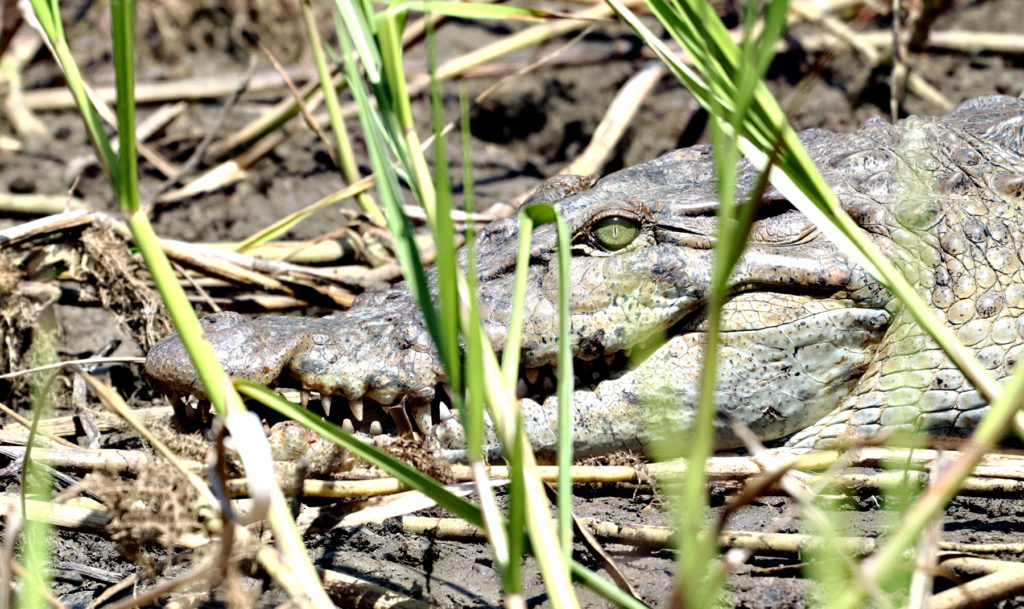
Manalo said it was something new for them given that there are no records of Philippine crocodile sightings in that part of Mindanao.
He said the discovery called for a celebration because the population of the species has been in a decline. Only less than 200 have been recorded in the wild until last month’s discovery.
Manalo estimated that there were at least 20 crocodiles in Malabang and with additional research, there could be more discoveries in the adjacent river deltas towards the mountain areas of Lanao del Sur.
Since 2017, the group has been hearing reports about the species in Lanao del Norte, he said.
CPPI documented newly hatched crocodiles with juveniles and adults in the same river system.
In 2018, biologist and former environment secretary Angel Alcala called on the scientific community to intensify measures in the protection and conservation of the Philippine crocodile, describing the species as nearly extinct.
He said: “Our Philippine crocodile is unique compared to other crocodilian species in the world. Unlike its common cousin the salt-water crocodile (Crocodylus Porosus), our crocodile is shy and very secretive and does not form into groups; the only time they are with another crocodile is when they mate. The problem with that is, if not protected, they will not be able to breed normally,” said Alcala.
The Philippine crocodile, which can grow up to 10 feet long, is a smaller cousin of the more abundant saltwater crocodile (Crocodylus Porosus), which can grow up to 20 feet long.
CPPI said the Philippine crocodile has a shy and very unusual personality compared to other species. It is said to be nonaggressive.
In Mindanao, scientists have only identified part of Liguasan Marsh as the area with a population of Philippine crocodiles in Muleta, Pulangi rivers and parts of Lake Sebu.
In 2013 and 2017, PCCI released around 66 crocodiles in Pilar town, Siargao in the hope of increasing the population in the wild.