By Eman D. Pangcatan
MSU Intern
IN a world where anyone can pretend to be the news, even the truth needs protection.
Despite increased efforts by social media companies to safeguard news organizations, impersonation and disinformation remain persistent threats.
Fake pages posing as legitimate outlets such as BBC, ABS-CBN, CNN, and regional media like Gold Star Daily continue to circulate hoaxes and misleading content across platforms.
Earlier this year, Gold Star Daily, a long-standing publication in Mindanao, was impersonated on Facebook by an account that posted false stories using the outlet’s name and logo.
It was not an isolated case.
Impersonator pages mimicking top global and national news brands routinely appear online, targeting audiences during election seasons, disasters and political unrest.
Tech companies including Meta, X (formerly Twitter), YouTube, and TikTok have implemented verification badges, fact-checking partnerships, domain monitoring tools and community reporting features to address the issue.
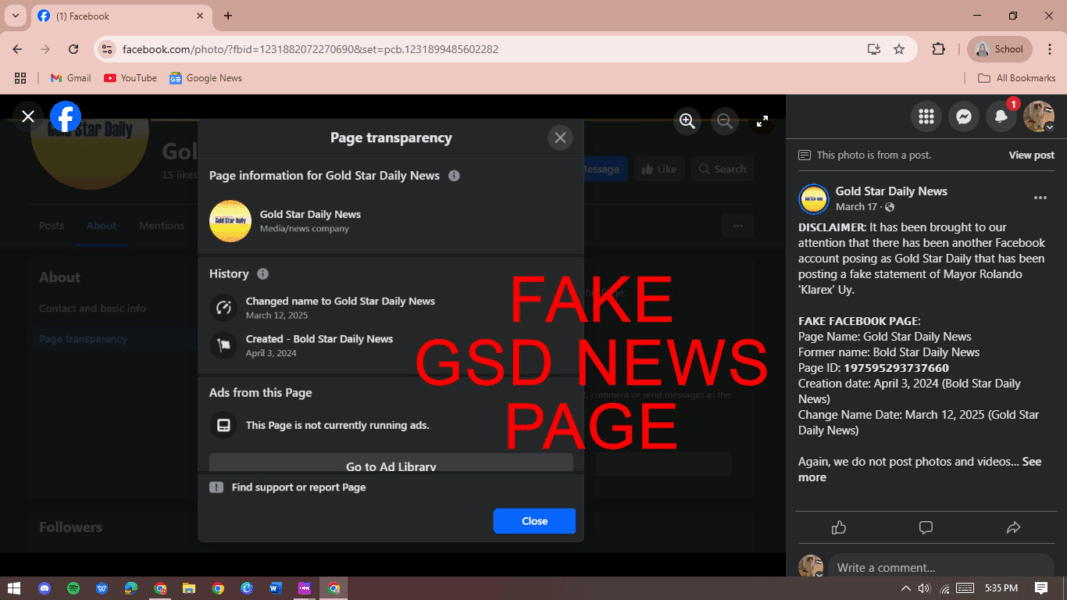
However, experts and journalists say these measures often come too late.
“These safeguards are helpful, but the disinformation usually spreads faster than the fact checks. By the time something gets flagged, the damage is done,” said a staff editor from a regional news desk who requested anonymity for fear of being targeted.
While official accounts can apply for verification, the process remains lengthy and inconsistent — particularly for small or independent media organizations.
Meanwhile, fake pages can operate for days or weeks before detection.
Impersonation is just one aspect of a broader digital problem that includes voice phishing, identity theft and other cybercrimes that have become more frequent in recent years.
As more users rely on social media for news, the risks of consuming inaccurate or manipulated information have intensified.
Social media platforms encourage users to check blue badges, inspect URLs, use fact-checking tools and report suspicious content. But critics argue that such an approach puts too much responsibility on the public.
“The system is largely reactive. Users are asked to spot the fakes, but the tools to stop them aren’t fast or strong enough,” said a digital security advocate based in Metro Manila.
To strengthen defenses, media advocates are calling for streamlined verification processes for accredited media outlets, especially in developing regions; faster takedown procedures for proven impersonator accounts; transparent algorithms that do not amplify misinformation; public digital literacy campaigns that go beyond schools and target all demographics; and national laws with clearer penalties for digital impersonation and identity fraud.
Despite existing efforts, disinformation and fake media pages continue to thrive.
For some news organizations, the challenge isn’t just getting their stories heard — it’s making sure audiences know which stories are actually theirs.
“The truth doesn’t just need to be told anymore. It needs to be defended,” the advocate added.