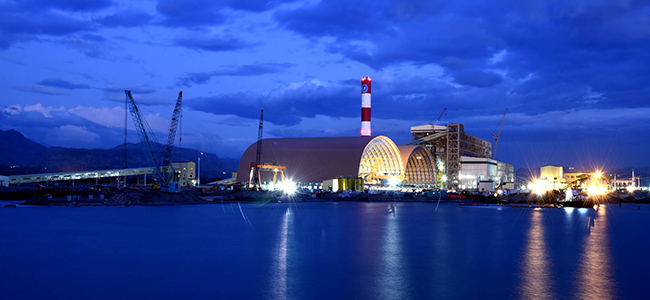
MISAMIS ORIENTAL — A climate justice organization has questioned the sustainability claims of Filinvest Development Corp. (FDC), arguing that its newly announced solar power project in Misamis Oriental remains small compared to the company’s expanding coal operations.
The Philippine Movement for Climate Justice (PMCJ) described the 21-megawatt solar facility under FDC Utilities Inc. as a limited step that does not substantially alter the company’s overall energy portfolio, which remains largely coal-based.
While PMCJ acknowledged that any addition to renewable energy capacity is welcome, it said the scale of the solar project is minimal relative to FDC’s existing and planned coal-fired power plants.
FDC currently operates three coal-fired power plants with a combined capacity of 405 megawatts. Two additional coal units are expected to come online this year, increasing the company’s total coal capacity to 675 megawatts.
FDC Misamis Power Corp. is targeting the testing and commissioning of one expansion unit by December 2026.
The company has described its Misamis Oriental solar farm — equipped with 34,000 panels — as the largest in Mindanao. However, PMCJ argued that presenting the project as a major sustainability milestone could create the impression of a broader energy transition that has yet to occur.
Community concerns
Residents living near the coal facilities continue to raise concerns about the impact of industrial operations on their livelihoods.
Nora Galceran, a member of the Old Balacanas Fisherfolk Association, said their community experienced significant changes following the establishment of the coal-fired power plant in Villanueva.
“Back then, life was simple. The sea provided enough for our family, and the municipal waters were once rich with fish before industrialization reached Villanueva,” Galceran said.
She added that some displaced families were encouraged to shift to farming despite lacking land ownership, noting that parts of the relocation area fall under the administration of the PHIVIDEC Industrial Authority.
PMCJ National Coordinator Ian Rivera said the new solar project does not address the broader environmental and social issues linked to coal operations.
“A small solar installation does not erase the carbon footprint of coal plants that continue to operate daily,” Rivera said. “This does not represent a genuine transition away from fossil fuels.”
Call for phaseout plan
Rivera stressed that meeting global climate targets would require a significant reduction in fossil fuel dependence.
“To stay within the 1.5°C goal, fossil fuel projects in the Philippines must be phased out before 2050. Renewable energy development must be accompanied by a clear plan to retire coal facilities,” he said.
PMCJ cited coal as a major contributor to greenhouse gas emissions, air pollution, and health risks, particularly in communities located near power plants.
Edwin Tesaluna, PMCJ senior renewable energy officer, urged FDC to outline a concrete and time-bound coal phaseout strategy.
“If the company is serious about renewable energy development, it should redirect investments toward large-scale renewable projects and ensure a just transition for workers and affected communities,” Tesaluna said.
The group is also calling on regulators, financial institutions, and local government units to carefully examine corporate sustainability claims and adopt policies that accelerate the country’s shift toward renewable energy.
“As the climate crisis intensifies, renewable energy must become central to our power system. A meaningful transition requires aligning investments with science-based climate goals,” Tesaluna added.