By Froilan Gallardo
Special Correspondent
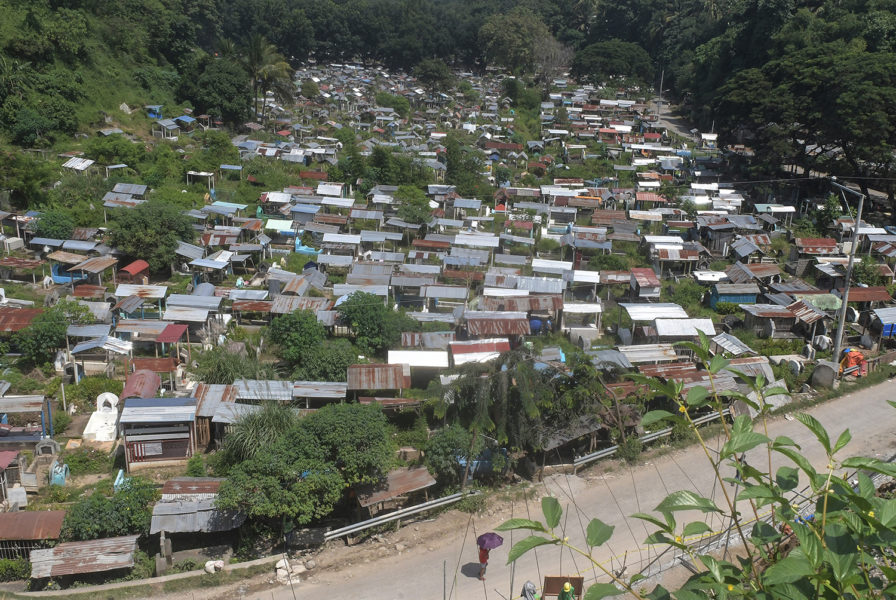
THE city government here is closing its 39-year-old public cemetery that a government report found to be “reeking with the embalming chemical, formaldehyde.”
Engr. Armen Cuenca, chief of the Cagayan de Oro Local Environment and Natural Resources (Clenro) said they have eyed an alternate site within the 19.2-hectare Bolonsiri public cemetery where they could transfer the dead bodies that would be dug up.
He said the new alternate site of about ten hectares is located within Bolonsiri cemetery that would be constructed complete with sewage treatment technology to prevent the formaldehyde from seeping into the ground.
“We can not do anything more with the rest of the nine hectares,” Cuenca said
“We are hoping that the natural filtration on the ground prevented the Formaldehyde from damaging the water table in the surrounding community,” Cuenca added.
The Department of Environment and Natural Resources in its 2019 report said Formaldehyde, used in preserving dead bodies, has been seeping to the ground since Bolonsiri public cemetery started accepting the dead for burial in 1982.
Since 1982, the DENR said estimated that 1,000 bodies are buried every year at the cemetery.
The DENR said three liters of formaldehyde are used to preserve a single dead body or 3,600 liters of Formaldehyde or 18 drums are being flush to the ground every year.
The report said the Formaldehyde can be hazardous especially if it seeps into the groundwater.
“This area (Bolonsiri cemetery) has reached its maximum capacity. There is a need to redesign and develop into a more efficient and environment-friendly memorial park,” the DENR said.
The Civil Registry Office in Cagayan de Oro recorded that it has given burial permits to 5,680 from 2015 to 2019.
Cuenca said the city government has no record of how many more were buried between 1982 and 2015.
“Judging on how crowded the graves in this cemetery, we estimated that more than 50,000 are buried here,” Cuenca said.
He said the cemetery included the more than 1,000 residents who died of the Covid-19 since the pandemic started in 2020.
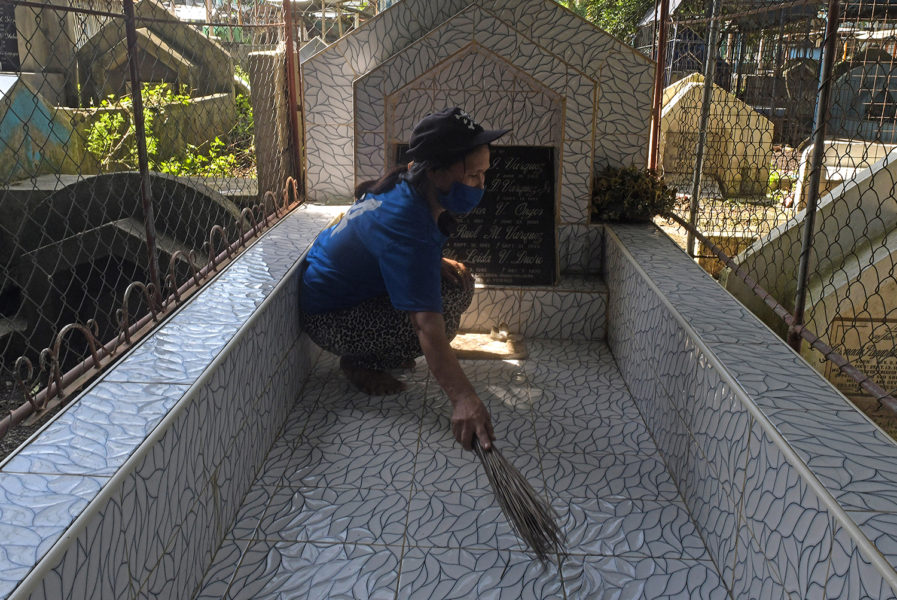
Cuenca said Patient no. 40, the first person who died of the Covid-19 in Cagayan de Oro is also buried here.
Patient no. 40 and the other Covid-19 victims are buried on top of a hill overlooking the cemetery.
“We will not touch the graves of the Covid-19 victims. It is still too early,” he said.
Cuenca said the removal of the old graves will start as soon as the winning bidder, Jejor Construction Corporation will be given an order to proceed by the city government next month.
He said a columbarium where the bones of the dead will be stored would be constructed in the ten-hectare new cemetery.
Cuenca said all the new tombs and graves would be sealed to prevent Formaldehyde from seeping into the ground.
“Construction of the columbarium is expected to be finished by February 2022,” Cuenca said adding the construction will be in phases.
This is the third time that the public cemetery in Cagayan de Oro was transferred, according to local historian Nanette Roa
She said the side of the St. Agustine Metropolitan Cathedral where the Bishop’s residence now stood, was the location of the first public cemetery at the turn of the 20th century.
As Cagayan de Oro grew, Roa said the cemetery was transferred beside Xavier University along Hayes Street.
Roa said the cemetery along Hayes Street had two sections, the Catholic section, and the Iglesia Filipina Independiente section.
She said Bolonsiri public cemetery started accepting the dead for burial in 1982 during the term of then-Mayor, the late Senator Aquilino Pimentel.
Roa said it had two sections, one for the Muslims and the other for the Catholics and Christians.