By Cong B. Corrales,
and Sheila Mae Butlig
Gold Star Daily
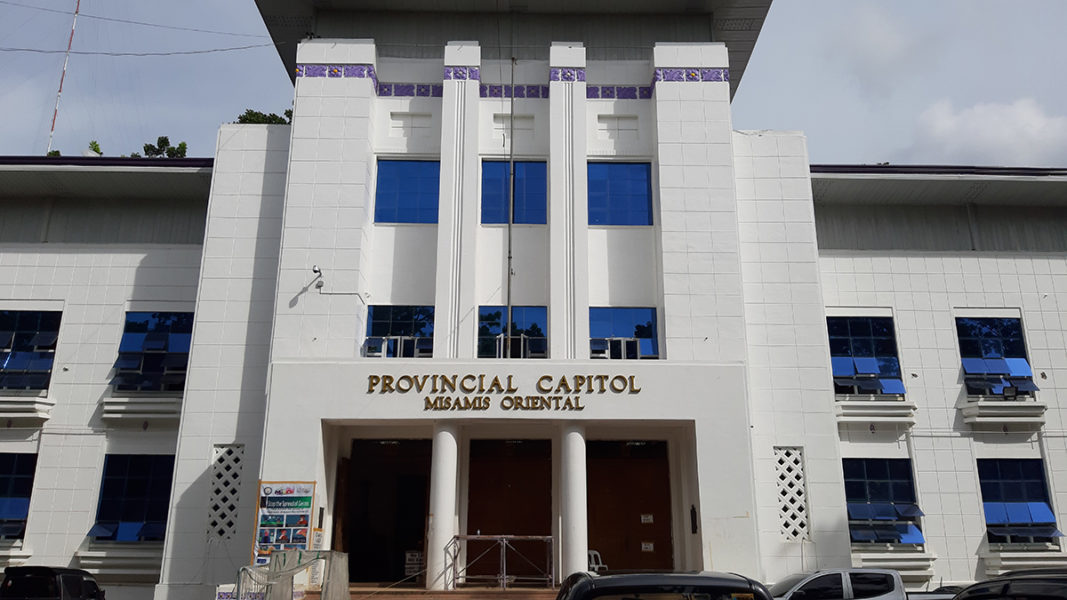
A deepening labor crisis has gripped the Misamis Oriental Provincial Capitol as 1,832 casual and job order (JO) employees were abruptly suspended effective Friday, Jan. 23.
The mass displacement is the fallout of a bitter P1.1 billion budget deadlock between Governor Juliette Uy and the Sangguniang Panlalawigan (SP).
The suspension has plunged Capitol operations into disarray, leaving a skeleton force of regular employees overwhelmed and drawing sharp condemnation from a former government labor arbiter, who branded the move “illegal and arbitrary.”
In an exclusive interview with the Gold Star Daily, Celso Abucejo, special assistant to the governor, confirmed Thursday that 1,622 JOs and 210 casual employees were ordered suspended because the provincial government could no longer guarantee their wages.
The fiscal paralysis stems from the provincial board’s decision to slash the executive department’s proposed P4.4 billion 2026 budget down to P3.3 billion.
“Lisod kaayo magpatrabaho nga wala diay kay isweldo (It’s very difficult to demand work when you don’t have the money to pay them),” Abucejo said, characterizing the directive as a necessary “belt-tightening” measure.
He further noted that the affected workers’ contracts had technically expired on Dec. 31, 2025.
Related Story: Misor cuts hundreds of jobs amid budget crunch
‘Hell right now’
Under Memorandum Order GJTU No. 035-2026, signed by Provincial Administrator Ruel J. Gayoso, department heads were instructed to advise non-regular personnel “not to report for duty... until an official notice is issued.”
While hospital personnel remain exempt to protect critical health services, regular staff are struggling to bridge the gap.
“The Capitol is hell right now,” said ‘Romy,’ a regular employee who requested anonymity for fear of reprisal. “We are drowning in work, and to make it worse, there is still no salary. It’s a mess.”
The move has also fueled internal resentment. Another employee, Joseph, questioned the administration’s narrative of insolvency.
“If the Capitol is truly broke, why is it that the Governor’s own handpicked JOs and casuals still have a budget for their salaries?” he asked.
The budget battle
Defending the legislature’s cuts, SP Committee on Appropriations Chair Rommel Maslog argued that the Governor’s P4.4 billion proposal was built on “unrealistic” financial projections.
He noted that the province has historically collected only about 50 percent of its projected revenues.
“Mura kag ga-ihap og kwarta nga wala pa nimo nakolekta (It is like counting money you haven’t collected yet),” Maslog said, insisting that the budget must be grounded in verifiable income to remain sustainable.
The impact of the P1.1 billion reduction is stark: The Provincial Information Office (PIO) was allocated a mere P120,000 for the entire year, while the Provincial Local Environment and Natural Resources Office (PLENRO) saw its P31 million request gutted to just P830,000.
‘Sign under protest’
The mass suspension has raised significant legal red flags.
Lawyer Beverly Selim-Musni, a council member of the Union of People’s Lawyers in Mindanao (UPLM) and a former National Labor Relations Commission (NLRC) labor arbiter, argued that an indefinite suspension without specific legal grounds constitutes illegal dismissal.
“If services were rendered, they are deemed employed. Otherwise, the governor would not have needed to issue a formal order of suspension,” Selim-Musni explained.
She advised displaced workers to continue reporting for duty until they are individually served with a formal notice to avoid accusations of “abandonment of work.”
She further urged those forced to accept the memo to sign it “under protest” to preserve their right to back wages and benefits.
“This is a wholesale case for money claims,” Selim-Musni added, encouraging the displaced workers to organize and form a union to protect their rights.
While Abucejo offered an apology on behalf of the provincial government, he admitted that under the current fiscal climate, the likelihood of rehiring the displaced workers remains slim.
As of press time, the Governor’s office has not issued a formal rebuttal to the legal challenges posed by labor advocates.