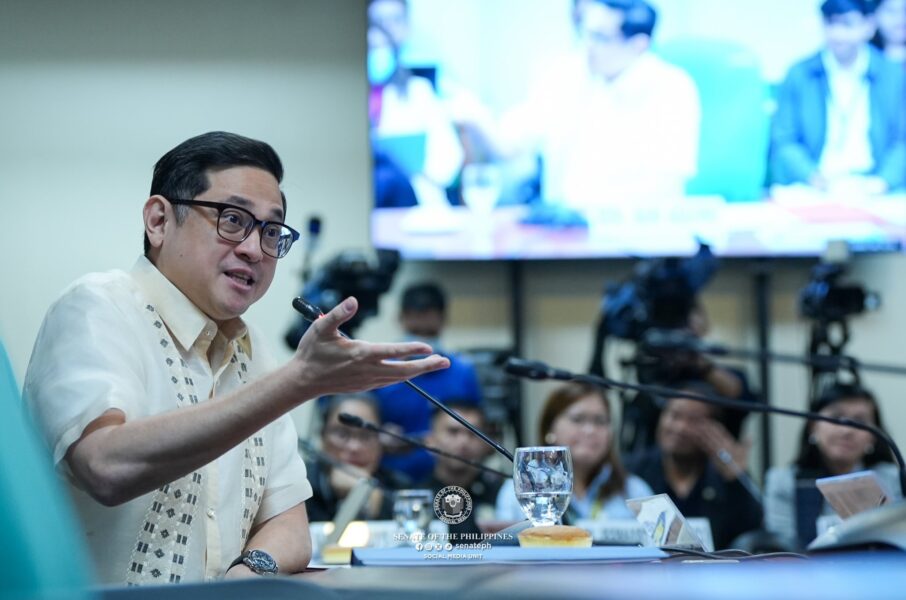
SENATOR Benigno Paolo ‘Bam’ Aquino IV is leading a push to establish a robust legal safety net for the Philippines’ nuclear energy ambitions, warning that public support remains fragile and strictly tied to the promise of lower electricity bills.
As chairperson of the Senate Committee on Science and Technology, Aquino is steering deliberations for Senate Bill No. 1206, known as the Philippine Nuclear Liability Act. The landmark measure seeks to modernize the country’s aging 1968 framework by aligning it with the Vienna Convention on Civil Liability for Nuclear Damage.
Aquino emphasized that before a single megawatt is generated, the government must ensure private operators — not the public — are held financially accountable for any potential accidents or meltdowns.
“This bill supports the players to come in dahil magkakaroon ng mas malinaw na regime kapag may aksidente, kapag may mga claims, pag may liabilities so this will support the industry to come in… were up already,” Aquino said during the hearing. “This will cover. But actually, even if we don’t push through with plants, the law will already cover all of the other uses of nuclear. So that’s clear.”
The bill proposes a multi-tiered compensation system. It ensures that funds for environmental cleanup and victim compensation are readily available, effectively shielding Filipino taxpayers from the catastrophic costs of a nuclear incident.
The hearing coincided with a Department of Energy (DOE) report identifying several potential host sites for the country’s first nuclear facilities.
DOE Director Patrick Aquino confirmed that technical evaluations are ongoing in Labrador, Pangasinan; Camarines Norte; Masbate; Palawan; and Bataan, the site of the mothballed Bataan Nuclear Power Plant.
The urgency behind the bill is driven by economics. The Philippines continues to grapple with some of the highest electricity rates in Southeast Asia, averaging P9.86 per kilowatt-hour. Energy officials noted that while uranium fuel costs approximately $30 million, the equivalent amount of coal power costs nearly $800 million — a staggering difference that could translate to significant savings for households.

While a 2024 survey showed nearly 70% of Filipinos support nuclear energy, the senator cautioned officials against complacency, noting that public favor is driven by the hope for cheaper bills rather than deep-seated trust in the technology.
“Yan yung pinakauna sa mga pamilyang Pilipino, na meron tayong source ng mas murang kuryente,” Aquino said.
Aquino pointed out the necessity of securing full approval from local government units and community stakeholders due to the critical nature of nuclear facilities. He urged regulators to exercise extreme caution when selecting both business partners and future plant locations.
The push for this liability law follows the late 2025 enactment of Republic Act 12305, which created PhilATOM, the country’s first independent nuclear regulator.
Officials noted that while the Philippines aims to have its first operational plant by 2032, Aquino’s liability bill is the final legislative “gate” required to unlock serious private-sector investment from power giants like Meralco and Aboitiz.