CAGAYAN DE ORO CITY — Tropical Storm “Basyang” (international name: Penha) changed course early Friday, sparing Cagayan de Oro City and Iligan City, where emergency responders had earlier been overwhelmed by distress calls from residents stranded in flooded and darkened streets.
Weather Services Chief Ann Fortich of the Philippine Atmospheric, Geophysical and Astronomical Services Administration (PAGASA) said Basyang veered northward toward the Bohol Sea after making landfall in Bayabas town, Surigao del Sur, at 11:50 p.m. Thursday.
Fortich said the storm shifted toward Bohol and southern Cebu instead of continuing its projected path toward Cagayan de Oro and Camiguin.
“Basyang would have severely impacted Cagayan de Oro and Iligan. This storm had the potential of Sendong,” Fortich said, referring to the deadly 2011 tropical storm that killed more than 1,000 people in the two cities.
She added that although the storm changed direction, it still brought torrential rains and strong winds before making landfall.
Evacuations and Casualties
Authorities said Basyang forced the evacuation of 9,339 families, or about 32,750 individuals, from 15 towns in Misamis Oriental to gyms and schools on Thursday night.
City Information Officer Jade Adecer said four people were killed in a landslide in Barangay Agusan on Thursday evening.
Paul Lariosa and his wife, Rufa, were asleep when loosened soil buried their shanty in Purok 1, Sambulawan, Barangay Agusan.
Rescuers later recovered the bodies of the couple’s niece, a 14-year-old girl, and an 11-month-old baby from the debris, Adecer said.
He added that a total of 643 families, or 2,298 individuals from 14 barangays, were evacuated to temporary shelters as rescue teams worked under extreme weather conditions and in complete darkness.
Flooded Roads, Ongoing Risks
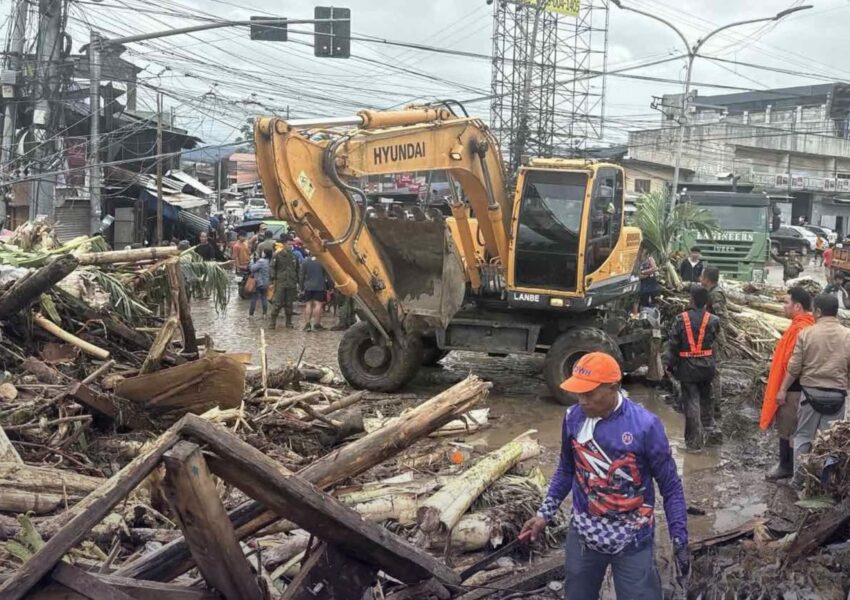
As of 3 p.m. Friday, a portion of the national highway in Sitio Baloy, Barangay Cugman, remained flooded and was passable only to trucks and buses.
Authorities urged residents to remain alert, as intermittent rains and saturated ground conditions continue to pose risks of flooding and landslides in low-lying and mountainous areas.