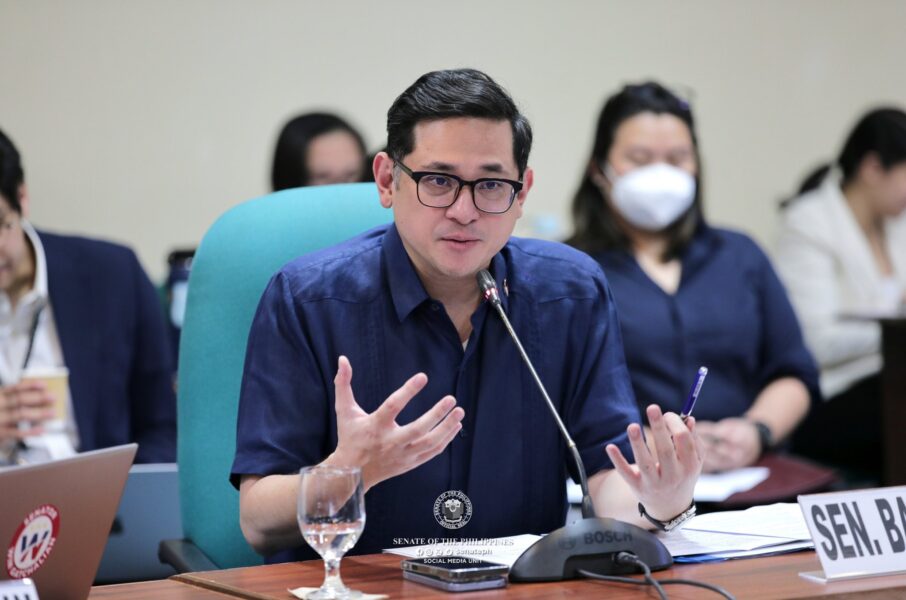
SENATOR Paolo Benigno ‘Bam’ Aquino IV, chairman of the Senate Committee on Basic Education, yesterday, Oct. 21, slammed the Department of Public Works and Highways (DPWH) for completing only 22 classrooms in 2025 — a far cry from its 1,700-classroom target for the year.
“It breaks my heart to say this, but only 22 classrooms were built,” Aquino said during a Senate budget hearing.
He added: “Our current classroom backlog is 146,000. If we continue at this rate, we’ll reach 200,000 by 2028. Secretary, what are we going to do about this? It’s already October 2025.”
The senator called the agency’s performance “unexplainable” and “heartbreaking,” warning that such delays would worsen the country’s education crisis and leave more Filipino students without proper learning facilities.
Cost concerns, possible overpricing
Beyond the low completion rate, Aquino also raised concerns over potential overpricing in classroom construction costs.
He cited figures presented during the hearing showing the DPWH quoting about P3.5 million per classroom — significantly higher than the P2 million or less estimated by independent engineering groups for disaster-resilient designs.
“The DPWH must review not only its material costs but also its designs,” Aquino said adding that “overdesign” has often been used to justify inflated project costs, emphasizing that such practices must stop.
DPWH response, commitment
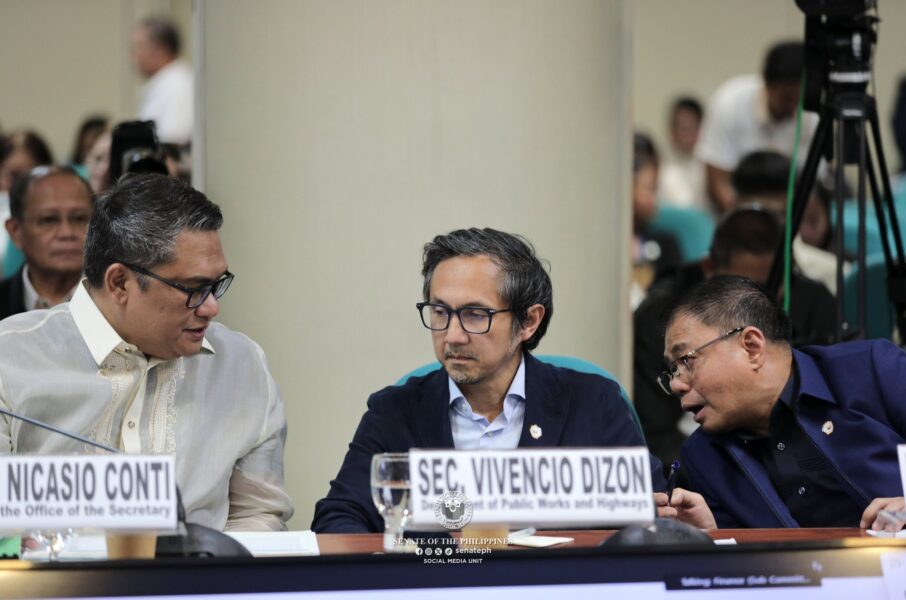
DPWH Secretary Vince Dizon acknowledged the “deplorable” performance and admitted that the completion rate was unacceptable.
He said the department would investigate the delays — whether caused by funding bottlenecks or bureaucratic issues — and pledged to accelerate construction.
“We will get to the bottom of this. We are exploring ways to speed up classroom construction, including partnerships with local government units,” Dizon told the committee.
Dizon also expressed full support for Aquino’s proposed Classroom-Building Acceleration Program (CAP) Act, a measure certified as urgent by President Ferdinand Marcos Jr.
The bill seeks to decentralize classroom construction by empowering local governments to directly undertake the projects.
Bam pushes for decentralization
Aquino argued that transferring the classroom-building mandate from the DPWH to local governments would ensure faster and more efficient delivery.
“It’s very clear to me that we need to take this responsibility away from the DPWH,” he said.
He said local governments should be empowered to build classrooms in their own communities, explaining that the CAP Act aims to provide local governments with the necessary tools and funds to do so by reallocating resources from flood control projects.
The senator added that with proper funding, local governments could build “far more than 22 classrooms” in the same period.
Aquino called for unity among Congress, the Department of Education, and the public to pass the CAP Act swiftly.
“If we don’t address this backlog now,” he warned, “we’ll only make the problem worse.”